 comparison
Is a Vinyl Fence Worth It for Dogs? 2026 Review
Table of Contents
- Is a Vinyl Fence Worth It for Dogs? The Short Answer
- Vinyl Fence Pros and Cons for Dogs
- Vinyl vs. Wood Fence for Dogs
- Vinyl vs. Chain-Link: Which Contains a Dog Better?
- How Tall Should a Fence Be for a Dog?
- How to Stop a Dog From Digging Under a Fence
- Verdict: When a Vinyl Fence Is Worth It for Your Dog
- Frequently Asked Questions
Last Updated: October 12, 2026
Is a Vinyl Fence Worth It for Dogs? The Short Answer
For most dog owners, yes. The trade-off is upfront cost: you pay more than for chain-link, and a poorly built vinyl fence can fail a determined dog at the gate or bottom rail.
If you are asking is a vinyl fence worth it for dogs, the answer depends on three things: your dog's size and behavior, the construction quality of the panels, and how the fence is installed.
Vinyl Fence Pros and Cons for Dogs
Vinyl fencing is made from PVC compounds formed into panels, posts, and rails. For dog owners, its main advantages are durability and low maintenance; its drawbacks are cost and the fact that cheap vinyl can crack under impact.
Where Vinyl Wins
- No splinters. Wood fences splinter and crack over time, and a splinter near nose height is a real injury risk for a curious dog.
- No rot and no corrosion. Vinyl does not absorb water, so it will not rot at the base like wood or rust like chain-link.
- No exposed nail heads. Wood fencing relies on nails and screws that can work loose and catch a collar or a paw. Vinyl panels typically lock together with concealed fasteners.
- Low maintenance. According to Lowe's wood vs. vinyl fence buying guide, vinyl usually costs more upfront than wood but needs little to no maintenance over its life. No staining, no sealing, no preservative reapplying.
Where Vinyl Falls Short
- Higher upfront cost. Vinyl generally costs more than wood or chain-link at installation, the single biggest reason buyers hesitate.
- Impact cracking in cold weather. Vinyl gets more brittle in freezing temperatures (pubmed.ncbi.nlm.nih.gov). A hard hit from a large dog or a lawnmower can crack a panel.
- Repair requires matching parts. A cracked panel or bent rail needs a replacement in the same profile and color; off-brand panels often will not match.
- Cheap vinyl is a false economy. Thin-walled panels and hollow posts flex and fail. This is where most complaints about vinyl fencing come from.
Vinyl vs. Wood Fence for Dogs
Vinyl beats wood for dog containment on almost every measure except upfront price. Wood wins on initial cost and cheap single-board repair; vinyl wins on safety, lifespan, and post-installation work.
When we compare vinyl vs. wood fence for dogs, the deciding factor is usually the dog itself. A dog that chews will destroy a wood rail, and a dog that digs will undermine either material unless the installer addresses the bottom of the fence.
| Factor | Vinyl Fence | Wood Fence |
|---|---|---|
| Splinters and injury risk | None | Moderate to high |
| Rot resistance | Does not rot | Needs rot-resistant species or treatment |
| Maintenance | Rinse occasionally | Stain or seal every few years |
| Chewing and scratching | Highly resistant | Vulnerable |
| Upfront cost | Higher | Lower |
| Repair approach | Replace full panel or rail | Replace single board |
| Typical lifespan | 15-20+ years | 10-15 years with upkeep |
| Long-term value | Strong | Depends on upkeep |
The cost picture most articles skip
A wood fence is cheaper on day one, but the gap narrows after installation. Wood needs staining or sealing every few years, boards rot at the base, rails split, and pickets break, and a dog that scratches or chews accelerates all of it.
We will not hand you a fake break-even year, because it depends on your climate, your dog, and how much maintenance you do yourself.
Where wood still wins for dog owners
- Cheap single-board repair. If a dog chews one picket, you replace one picket. Vinyl repairs usually mean swapping a whole panel or rail section that must match the profile and color.
- Lower entry price. If cash flow matters more than lifetime cost, wood gets a boundary up for less.
- Easier to modify. Adding a gate, height extension, or custom section is simpler with wood.
Where vinyl pulls ahead for dogs
- No splinters at nose height. A splintered picket is a real injury risk for a dog that pushes its face against the fence.
- No exposed fasteners. Wood nails and screws work loose and can catch a collar or paw; vinyl panels lock together with concealed fasteners.
- No rot at the base. Wood rots where it meets soil and mulch; vinyl does not absorb water, so the bottom stays solid.
- Better scratch and chew resistance. Solid vinyl resists teeth and claws far better than a softwood picket.
Vinyl vs. Chain-Link: Which Contains a Dog Better?
Vinyl contains a dog better than chain-link in most residential settings, mainly because it blocks the visual trigger that starts most escape attempts. Chain-link is cheaper and nearly indestructible, but a dog can see through it, climb it, and work at the bottom edge. A chain-link fence with a proper tension wire and concrete-set bottom is extremely hard to breach, but it has two problems for pet owners:
- Visibility. A reactive or territorial dog that can see everything on the other side of the fence tends to bark and lunge far more. Solid vinyl removes that trigger.
- Climbing. Determined dogs can climb chain-link where the fence meets a corner or a gate. Vinyl panels give far less purchase.
For a small dog or a calm dog, chain-link is a perfectly good, budget-friendly choice. For a large dog, a reactive dog, or a dog that has already escaped a chain-link yard, solid vinyl privacy fencing is the better containment tool.
How Tall Should a Fence Be for a Dog?
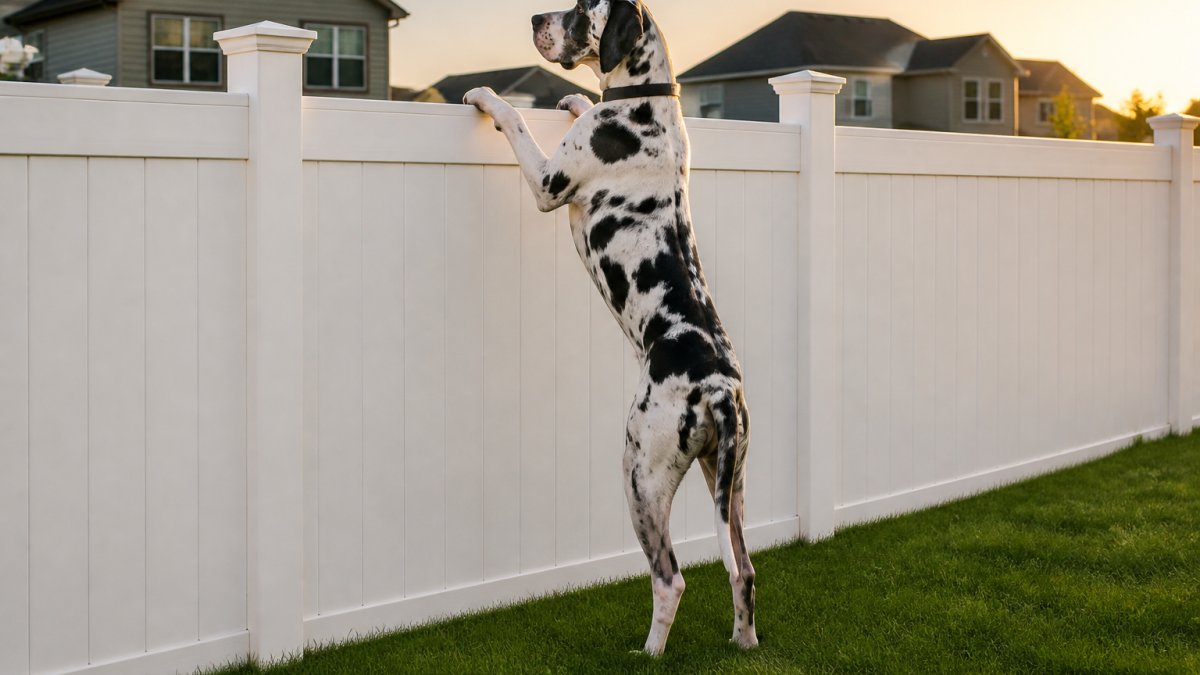
For most dogs, a four-foot fence is enough. For a large dog or one that jumps, plan on six feet. The rule is: measure your dog standing on its hind legs, then add a foot of margin.
| Dog Size | Minimum Fence Height | Notes |
|---|---|---|
| Small dog (under 25 lb) | 3-4 ft | Rarely clears four feet |
| Medium dog (25-60 lb) | 4 ft | Watch for digging, not jumping |
| Large dog (60 lb+) | 6 ft | Jumpers need the full six feet |
| Determined jumper | 6 ft plus | Add a lean-in or roller top |
Height is only half the equation. A six-foot fence with a two-inch gap under the bottom rail and a sagging gate will not contain a dog that wants out.
How to Stop a Dog From Digging Under a Fence
Stopping a dog from digging under a fence means closing the gap at the bottom, not just raising the fence. Digging is a common escape method, and it defeats any fence material if the base is left open.
Why dogs dig at fences
Dogs dig at a fence line for predictable reasons: to reach something they can see or smell, to chase a trigger, to cool off in loose soil, or because a successful escape reinforced the behavior. The fix has to match the reason: block the sightline for a trigger-driven digger, redirect a bored one, and physically close the bottom for a dog that has already escaped.
The reinforcement options, ranked by effectiveness
- L-shaped wire apron. Run welded wire or hardware cloth outward from the fence line at the base, then cover it with soil or mulch. A dog digging down hits the wire and stops. This is the most reliable retrofit because it works on any fence material and does not require removing posts.
- Bury a bottom rail or set a concrete footer. Set a horizontal rail at or just below grade, or pour a concrete strip under the gate and along the fence line. Concrete under the gate is the single most important spot, because gates are the number one dig point.
- Gravel trench. Packed gravel along the fence line discourages digging and improves drainage at the post base, protecting posts from rot and frost heave.
- Block the sightline. A dog often digs to reach something it can see or smell on the other side. Solid vinyl removes that motivation, one reason vinyl privacy fencing outperforms chain-link for diggers.
- Give the dog a digging zone. A sandbox or designated digging area redirects the behavior. It works better than punishment for most dogs, but supplements physical reinforcement rather than replacing it.
The gate is the weak point
Most digging escapes happen at the gate, not the middle of the fence line. The gate has the most ground clearance, flex, and traffic. Three things close it:
- Concrete footer under the gate. A concrete strip at grade under the gate leaves no soil to dig through.
- A drop rod or center support. A sagging gate opens a gap at the bottom; a drop rod or center support post keeps the gate square and the bottom clearance consistent.
- A latch a dog cannot work. Dogs can learn to nose or paw a simple latch open. A self-latching, dog-resistant latch with a positive lock is worth the upgrade.
Inspection checklist for diggers
Walk the fence line monthly and check:
- Bottom clearance at the gate and along the fence line. Anything wider than a couple of inches invites a small dog to dig.
- Soil erosion at the post base. Water and digging remove soil, and an exposed base means a post that will lean.
- Loose rails and panels. Flex at the bottom rail is where thin vinyl fails first.
- Fresh digging signs. Scratches, loose soil, and paw prints tell you where to reinforce before the dog gets through.
Verdict: When a Vinyl Fence Is Worth It for Your Dog
A vinyl fence is worth it for dogs when you want a safe, low-maintenance, escape-resistant boundary and will pay more upfront.
It is not worth it if your budget is tight and your dog is small and calm, chain-link will do the job for less.
If you are going vinyl, spending money on construction quality is recommended.
Choosing the right fence for a dog comes down to details most buyers never see: post depth, gate hardware, and how the bottom of the fence is finished.
Frequently Asked Questions
Can dogs chew through a vinyl fence?
A determined chewer can damage vinyl, especially thin panels or exposed bottom rails. Vinyl is harder than wood and has no splinters, so most dogs lose interest. The risk rises with puppies, anxious dogs, and dogs left alone against the fence for hours. Buy thicker panels with reinforced bottom rails, and block access to the fence line with a garden bed. If your dog already chews wood, expect the same behavior on vinyl and plan for supervision or a chew deterrent.
Is vinyl fencing cheaper than wood?
Vinyl usually costs more upfront than wood. Lowe's buying guide notes vinyl has a higher initial cost but needs little to no maintenance over time, while wood requires staining, sealing, and repairs. Over 10 to 15 years, vinyl's lower maintenance often closes the gap, especially if you would otherwise pay for staining every few years. Get a written quote for your specific layout before deciding.
Can a dog dig under a vinyl fence?
Yes. Digging is a dog behavior problem, not a fence material problem. Vinyl panels sit above grade, so a motivated dog can tunnel underneath. The fix is to bury a bottom rail or pour a concrete footer along the fence line, then add gravel or pavers in a 12-inch strip. For persistent diggers, run a buried wire or hardware cloth L-footer.
Is vinyl fencing a good choice for dogs?
For most dog owners, yes. Vinyl does not splinter, rot, or corrode, so there are no nail heads or rusted wire to injure a dog. It cleans easily with a hose, which matters for pet owners dealing with mud and waste. The main limitations are chewing on thin panels and digging under the bottom rail. Choose a six-foot height, reinforced bottom rail, and a self-closing gate, and vinyl handles small, medium, and most large dogs well.