 comparison
Wood vs Vinyl Fencing Cost: Which Is Worth It?
Table of Contents
- Wood vs Vinyl Fencing Cost: A Side-by-Side Comparison
- Wood Fence Installation Cost Per Foot: What Drives the Price
- Vinyl Fence Maintenance Requirements: What You'll Actually Spend
- Average Lifespan of Wood vs Vinyl Fence: Durability and Replacement Costs
- DIY vs. Professional Installation: Where the Real Costs Hide
- HOA, Permits, and Regional Labor Variance: Costs Competitors Miss
- Curb Appeal and ROI: Does Wood or Vinyl Add More Home Value?
- Which Fence Material Should You Choose?
- Frequently Asked Questions
Last Updated: September 19, 2026
Wood vs Vinyl Fencing Cost: A Side-by-Side Comparison
The wood vs vinyl fencing cost decision starts with one number: the upfront price gap. Wood fencing typically runs $12 to $50 per linear foot installed, while vinyl fencing cost generally lands between $25 and $60 per linear foot, according to Optima Fence and Deck's material cost analysis. That spread tells only part of the story. At Fence Company Lincoln, we've installed both materials across residential and commercial properties for over 30 years, and the homeowners who regret their choice almost never picked wrong on sticker price. They picked wrong on total cost of ownership.
Below, we'll break down upfront costs, maintenance, lifespan, and the hidden line items most quotes skip.
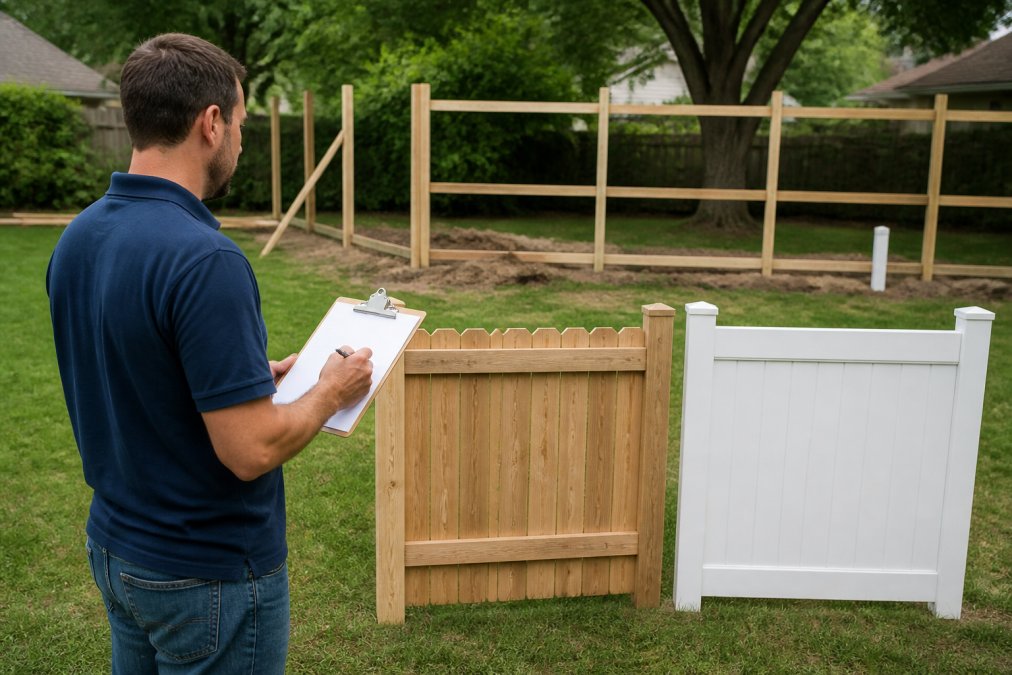
Upfront Installation Cost Comparison
Vinyl costs more upfront. A wood fence installation cost per foot starts lower because the material itself is cheaper and widely available. Pine fencing runs $16 to $22 per linear foot installed, while cedar climbs to $22 to $30 per linear foot, based on Scheiderer Fence's regional cost breakdown. Picket wood fencing can dip as low as $10 to $16 per linear foot, per Bryant Fence's pricing data.
Vinyl flips the script on the back end. Here's the upfront picture:
| Cost Factor | Wood Fence | Vinyl Fence |
|---|---|---|
| Material cost per linear foot | Lower | Higher |
| Installation labor | Comparable | Comparable |
| Typical upfront range | $12-$50 | $25-$60 |
| Best for | Tight budgets, natural look | Low-maintenance priorities |
Long-Term Maintenance and Total Cost of Ownership
Total cost of ownership favors vinyl over a 15-20 year horizon. Wood requires staining and sealing every two to three years, plus repairs for rot, insect damage, and warping. Vinyl needs an occasional rinse with a garden hose.
That math changes if you sell within five years. A wood fence that's still in good shape can deliver the same curb appeal at a lower entry price. The longer you stay, the more vinyl's maintenance-free profile pays you back.
Wood Fence Installation Cost Per Foot: What Drives the Price
Wood fence installation cost per foot swings widely based on four variables: wood species, fence height, terrain, and local labor rates.
- Species: Cedar resists rot and insects better than pine, so it costs more. Pressure-treated lumber sits in the middle.
- Height: A 6-foot privacy fence uses more material and deeper posts than a 4-foot picket.
- Terrain: Sloped or rocky ground slows installation and adds labor hours.
- Ground contact: Posts set in concrete last longer but cost more to install.
Vinyl Fence Maintenance Requirements: What You'll Actually Spend
Vinyl fence maintenance requirements are minimal: rinse it once or twice a year, and wipe down stubborn dirt or mildew with mild soap. No staining. No sealing. No board replacement from rot.
Wood demands annual upkeep. Expect to stain and seal every two to three years, and budget for occasional board swaps where moisture absorption takes its toll. Over a decade, that ongoing spend closes much of the upfront gap.
Vinyl's weather resistance and UV protection keep color from fading in most climates. Extreme cold can make cheaper vinyl brittle, so material grade matters more than the label.
Average Lifespan of Wood vs Vinyl Fence: Durability and Replacement Costs
The average lifespan of wood vs vinyl fence differs by roughly a decade. A well-maintained wood fence lasts 10 to 15 years. Vinyl commonly reaches 20 to 30 years.
Replacement costs follow the same pattern. Wood fences need partial repairs more often, especially at the base where rot and decay start. Vinyl panels rarely fail, but individual panels can crack from impact and are replaceable without rebuilding the whole run.
DIY vs. Professional Installation: Where the Real Costs Hide
DIY saves on labor but rarely on total cost. Material runs 40-60% of a professional quote, but you'll need post-hole diggers, a level, concrete, and a weekend or three. Mistakes in post depth or spacing cost more to fix than the labor you saved.
Professional installation adds labor, contractor fees, and project management. In exchange, you get correct post depth, straight lines, and structural integrity that survives wind and frost heave.
| Approach | Upfront Cost | Risk | Best For |
|---|---|---|---|
| DIY | Materials only | High (post depth, alignment) | Simple, short runs |
| Professional | Materials + labor | Low | Privacy fencing, slopes, long runs |
HOA, Permits, and Regional Labor Variance: Costs Competitors Miss
Most cost guides quote a national average and stop. That number is nearly useless for budgeting because two hidden variables, local approval costs and regional labor rates, can swing your total by thousands.
Permits. Many municipalities require a permit for fences over a certain height, commonly four to six feet, and fees typically run $25 to $150 depending on the jurisdiction and the fence's height and location. Some jurisdictions also require a survey or plot plan, which can add $300 to $600 if you don't already have one. Fences set on or near a property line, or in a front yard, often trigger stricter review. Skipping the permit risks a stop-work order and, in some cases, forced removal of a finished fence.
HOA approvals. HOAs frequently restrict material, color, height, and placement. Wood is sometimes banned in favor of vinyl or composite for uniformity, and vinyl color choices may be limited to a pre-approved palette. Approval timelines vary widely, and starting installation before written approval means removal and rebuild costs fall entirely on you, no warranty covers it.
Regional labor variance. Installation labor is the single biggest swing factor in a quote. In a high-demand metro, labor can run double what it costs in a rural area for the same fence. The mechanism is straightforward: crew availability, prevailing wages, and travel distance all push hourly rates up in dense markets. A quote that looks high locally may be standard elsewhere, which is why national averages mislead.
How to use this. Before you compare wood and vinyl quotes, get three local bids on the same fence spec, confirm the permit fee and HOA requirements in writing, and ask each contractor whether their quote includes permit pulling and site survey. Those three line items are where budgets quietly break.
Curb Appeal and ROI: Does Wood or Vinyl Add More Home Value?
Both materials boost home value when installed well. Wood appeals to buyers who want a natural, paintable look. Vinyl appeals to buyers who want a clean, low-maintenance boundary.
Aesthetics matter more than material for ROI. A straight, well-set fence with quality hardware raises curb appeal regardless of type. A leaning, weathered fence drags value down, even if it's premium cedar.
For rental properties, vinyl's low annual upkeep usually wins. For a home you'll sell in a few years, wood's lower entry cost can make more sense.
Which Fence Material Should You Choose?
Pick vinyl if you plan to stay long-term, want minimal annual upkeep, and value a maintenance-free boundary. The higher upfront investment pays back through lower total cost of ownership.
Pick wood if you're budget-focused, selling soon, or want the natural look and paintability that vinyl can't match.
Whichever you choose, installation quality decides how long it lasts.
Frequently Asked Questions
Is it cheaper to install a wood or vinyl fence?
Wood fencing typically costs less upfront than vinyl. Wood fence installation runs roughly $12 to $50 per linear foot depending on species and height, while vinyl ranges from $25 to $60 per linear foot. However, vinyl's higher upfront cost can be offset over time because it requires far less maintenance. For a 150-foot privacy fence, the initial gap can be several thousand dollars, so budget matters when choosing between them.
What are the downsides of vinyl fencing?
Vinyl fencing costs more upfront than wood, and some homeowners find it less customizable in terms of stain colors and finishes. While modern vinyl extrusion includes UV protection, extreme temperature swings can cause slight expansion and contraction. Vinyl also can crack under heavy impact, and repairing a damaged panel sometimes requires ordering a matching replacement. Despite these drawbacks, vinyl fencing cost often pays off through decades of low maintenance.
What lasts longer, a wood or vinyl fence?
Vinyl typically outlasts wood. A well-maintained wood fence averages 10 to 15 years, while vinyl often lasts 20 to 30 years or more. Wood is vulnerable to rot, decay, moisture absorption, and insect damage, especially at ground contact points. Vinyl resists these issues naturally. The average lifespan of wood vs vinyl fence depends heavily on installation quality, climate, and whether the wood is pressure-treated or cedar.
Does a vinyl fence increase home value more than wood?
Both materials can boost curb appeal and home value, but vinyl's low maintenance and clean appearance often appeal to buyers who want a move-in-ready property. Wood offers aesthetic versatility and a natural look that some buyers prefer. Real estate professionals note that a well-installed fence of either material improves property boundaries and privacy, which are key selling points. The ROI depends on your local market and buyer preferences.
How much does 100 feet of vinyl fencing cost?
At $25 to $60 per linear foot, 100 feet of vinyl fencing runs approximately $2,500 to $6,000 installed, depending on height, style, and regional labor rates. Privacy fencing with taller panels and decorative tops falls at the higher end. Requesting multiple project quotes helps you compare contractor fees and material grades. Keep in mind that post-installation costs for vinyl are minimal compared to wood's annual staining and sealing.