 comparison
Is a Vinyl Fence Worth the Investment in 2026?
Table of Contents
- Vinyl Fence Pros and Cons: What You Gain and Give Up
- Vinyl Fence Cost Per Foot: Upfront Price vs. Total Cost of Ownership
- Wood Fence vs Vinyl Fence Maintenance: The Real Time and Money Difference
- Durability, Lifespan, and Climate Performance
- Does a Vinyl Fence Increase Property Value and Curb Appeal?
- Long-Term Repairability and Environmental Disposal
- Installation Considerations and Why Contractor Choice Decides the Outcome
- Conclusion: Is a Vinyl Fence Worth the Investment for You?
- Frequently Asked Questions
Last Updated: September 13, 2026
Vinyl Fence Pros and Cons: What You Gain and Give Up
Whether a vinyl fence is worth it depends on how long you plan to stay and how much you value your weekends. This guide from Fence Company Lincoln breaks down the numbers, from upfront cost to 20-year total cost of ownership.
The short version: vinyl fencing costs more on day one and less every year after. A vinyl fence is built from polyvinyl chloride (PVC) formulated with UV inhibitors and impact modifiers, so it holds color and shape through freeze-thaw cycles, hail, and summer sun. Below, we'll show you how to run the math for your property, including the maintenance hours most buyers forget to count.
Where Vinyl Wins
Low maintenance is the headline, and it holds up. Vinyl never needs painting or staining, resists rot and termites, and cleans up with a garden hose. Its real advantage shows up in year five, when wood needs its second or third round of sealing and vinyl needs nothing.
- Maintenance-free surface: no sanding, sealing, or repainting
- Rot and termite proof: moisture and insects do not degrade the material
- Color stability: UV resistance keeps panels from graying the way untreated wood does
- Aesthetic versatility: privacy panels, picket styles, rail systems, and decorative post caps
Where Vinyl Falls Short
Vinyl is not indestructible. It can crack under hard impact in sustained cold, and cheap, thin panels are the usual culprit, thickness separates a fence that lasts decades from one that fails in a single bad winter. Vinyl also offers fewer colors than paint, and you cannot change your mind later without replacing panels.
Vinyl Fence Cost Per Foot: Upfront Price vs. Total Cost of Ownership
Vinyl fence cost per foot runs higher than pressure-treated wood at installation and lower once you count two decades of maintenance.
A useful benchmark: vinyl fencing generally runs in the range of $25 to $60 per linear foot installed, depending on height, style, and gate count, while wood typically lands between $20 and $45. Those ranges come from material and labor cost breakdowns published by Barrier Boss. Treat them as planning ranges, not quotes. Your actual number depends on site conditions, fence height, and how many gates you need.
The upfront premium is real. Industry analysis from Frederick Fence's wood vs. vinyl cost analysis puts vinyl at roughly 12% more than pressure-treated pine at installation, with maintenance savings that can reach up to 75% over a 20 to 30 year window. That is the trade: pay more now, pay almost nothing later.
The TCO Calculator: Crunching a 20-Year Window
Total cost of ownership (TCO) is the full cost of a fence over its life, purchase, installation, maintenance, repairs, and replacement. Run it per linear foot to compare materials honestly:
| Cost Category | Wood Fence (20 Years) | Vinyl Fence (20 Years) |
|---|---|---|
| Initial installation | Lower upfront cost | Higher upfront cost |
| Painting or staining | Every 2-3 years | $0 |
| Rot and pest repairs | Common at post bases | Rare |
| Panel replacement | Occasional | Occasional, impact only |
| Full replacement | Likely once | Unlikely within 20 years |
The pattern is consistent: wood's line items keep growing, vinyl's stay near zero. Selling within three years? Wood's lower upfront cost often wins. Past year seven, the math flips.
Wood Fence vs Vinyl Fence Maintenance: The Real Time and Money Difference
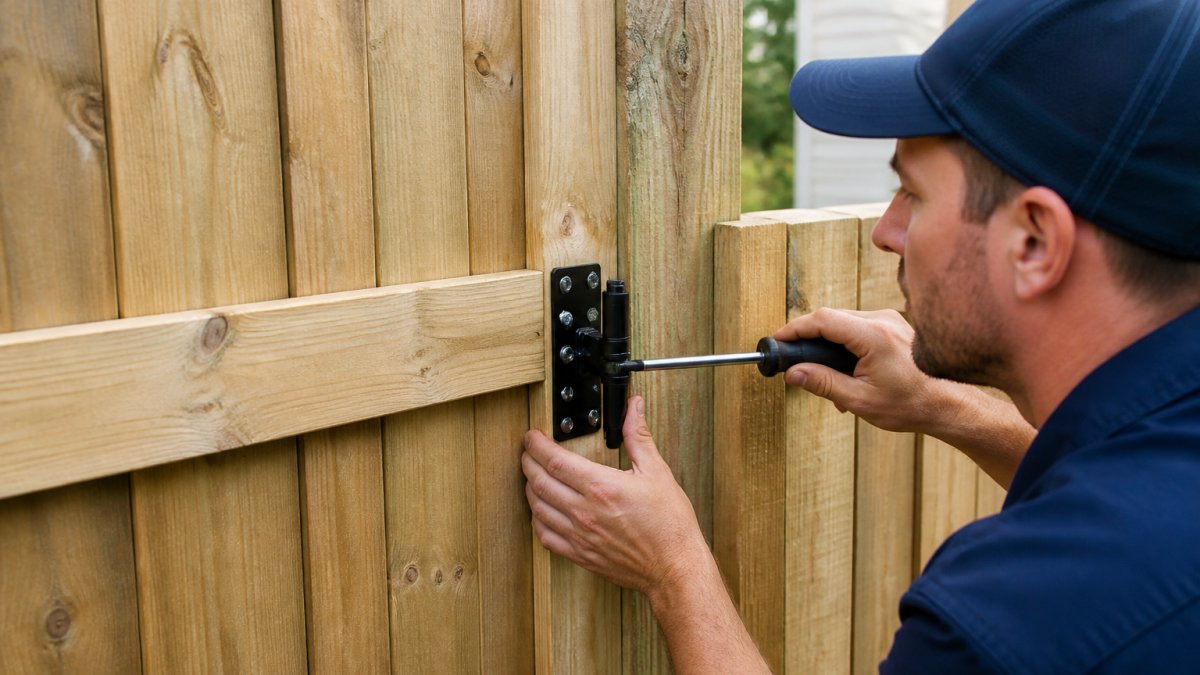
Wood fence vs vinyl fence maintenance comes down to a recurring chore versus a one-time installation. Wood needs cleaning, sealing, and repainting every few years, plus spot repairs where posts meet soil; vinyl needs an occasional rinse. Count the hours, not just the dollars: a typical wood fence takes a full weekend to prep, stain, and seal every two to three years, a lot of Saturdays over 20 years.
- Wood: annual inspection, sealing every 2-3 years, repainting as needed, post-base rot repair
- Vinyl: rinse with a hose, wipe scuffs, inspect after severe storms
- Both: check gates, hinges, and posts annually for structural integrity
Durability, Lifespan, and Climate Performance
A quality vinyl fence typically lasts 20 to 30 years or more, while wood often needs major repair or replacement within 10 to 15. Weatherability decides the outcome, the same fence can last 30 years in one climate and 12 in another.
The Two Failure Mechanisms That Actually Matter
Vinyl does not fail from rot, insects, or moisture the way wood does. It fails from two specific mechanisms:
1. UV degradation (sun-driven). Ultraviolet light breaks down polymer chains at the surface, showing up as chalking, fading, and surface embrittlement on unstabilized PVC. Quality vinyl uses UV inhibitors and titanium dioxide as pigment and stabilizer, which is why it holds color for decades; lower-grade material under-doses these additives, and the difference shows up in years three to seven.
2. Freeze-thaw cycling (cold-driven). Water finds micro-cracks and seams, freezes, expands, and widens them; dozens of cycles per winter fatigue the material. Impact modifiers let the PVC flex under load instead of shattering, a panel with adequate modifier absorbs a strike, a thin one cracks. These mechanisms rarely overlap: a hot, high-UV climate stresses the formulation, a cold, freeze-thaw climate stresses the mechanical structure.
Climate-by-Climate Performance
- Extreme UV (desert Southwest, high-altitude sun): UV stabilization is the entire game. Look for explicit UV-inhibitor claims and a warranty covering fading, not just structural failure.
- Extreme cold and freeze-thaw (Upper Midwest, Northeast, mountain West): Impact resistance and wall thickness matter most. Vinyl gets brittle as temperatures drop, so a strike that dents a panel at 70°F can crack it at 10°F. Post depth matters too, frost heave moves shallow footings and stresses every attached panel.
- Wet and humid climates (Southeast, Pacific Northwest): Vinyl's rot and termite resistance is a clear advantage over wood, and mold wipes off with a diluted cleaner rather than penetrating. Watch for standing water at the post base, a drainage issue, not a material one.
- High wind and hail (Great Plains, Gulf Coast): Post depth, spacing, and concrete footings decide performance more than the panel itself. A well-set vinyl fence handles typical wind loads; a poorly set one fails at the posts regardless of panel quality. Hail is a real risk for thin panels, manageable for thick, impact-modified ones.
- Coastal salt air: Vinyl resists salt corrosion far better than metal and does not absorb salt the way wood does. Rinsing after storms keeps it clean.
What Separates a 30-Year Fence From a 12-Year Fence
Lifespan is a property of the specification, not the material. The variables that move the number:
- Wall thickness (mils). The single biggest predictor. Thin panels crack and bow; thick panels hold their shape. Ask for the mil spec in writing.
- Impact modifier content. More content means more flex before fracture, critical in cold climates and high-traffic yards.
- UV inhibitor package. Determines color retention and surface integrity in sunny climates.
- Post gauge and footing depth. A premium panel on a shallow post still fails. Footings must go below the local frost line in cold climates.
- Manufacturer warranty terms. A lifetime warranty that excludes fading does not cover the failure mode you are most likely to see.
How Vinyl Compares to Wood Over the Same Window
Wood's failure mode is biological and continuous, rot, insects, and moisture work on it every season. Vinyl's is mechanical and event-driven, it sits unchanged until something hits it or the formulation degrades. That is why a well-specified vinyl fence often outlasts two wood fences in the same spot, and a cheap one can fail faster than well-maintained cedar.
Does a Vinyl Fence Increase Property Value and Curb Appeal?
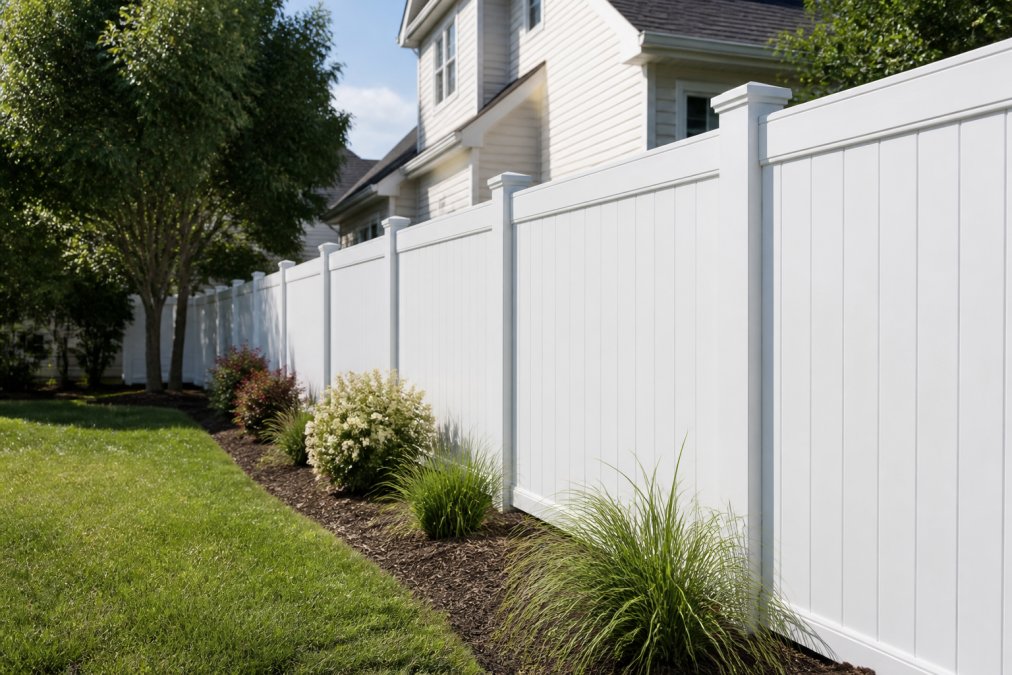
A vinyl fence can support property value, though the gain depends on your market and how well it matches the home. Curb appeal is the mechanism: a clean, uniform fence line reads as maintained and intentional.
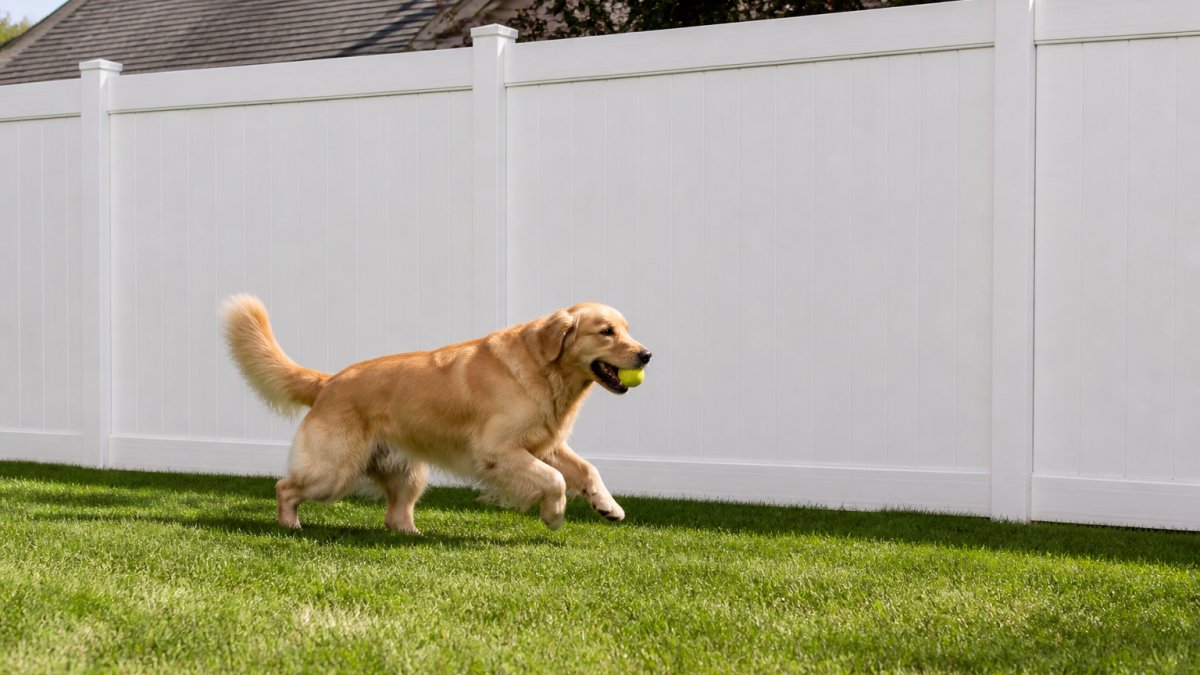
Professional installation of high-durability vinyl has been associated with home value increases in the $5,000 to $15,000 range, according to Tiller Fence and Deck's vinyl fencing overview. That is not a guarantee, and it assumes the fence suits the property. A privacy fence around a pool or a pet containment run in a family neighborhood tends to return more than a decorative fence on a rural lot.
ROI here is about perception as much as material. A leaning, graying wood fence signals deferred maintenance; a straight vinyl fence with intact post caps signals the opposite. For investors, that signal is often worth the upfront premium alone.
Long-Term Repairability and Environmental Disposal
Repairability is where vinyl gets unfair criticism. The real question is not whether it can be repaired, but how the repair works, what it costs relative to wood, and what happens at end of life.
How Vinyl Repairs Actually Work
Vinyl fencing is modular: panels, rails, and posts are separate components, and most damage is isolated to a single panel or picket. That changes the repair math:
- Panel swap: A cracked or impact-damaged panel slides out of the routed posts and a replacement slides in. Posts, rails, and the rest of the run stay in place. No digging, no concrete work.
- Picket replacement: On picket styles, individual pickets can often be replaced without removing the full panel, which keeps the repair even smaller.
- Post replacement: This is the expensive repair, because the post is set in concrete. A post damaged at the base usually means breaking out the concrete footing and resetting, the same job wood requires when a post rots.
The failure modes differ. Wood fails from the bottom up: moisture wicks into the post base, rot spreads, and the section comes out. Vinyl fails from the outside in, a lawnmower, car, falling limb, or hard strike in sustained cold. Vinyl does not rot, so the slow decay behind most wood repairs never starts.
The Color-Matching Catch
Here is the trade-off most articles skip: vinyl fades slightly over years of UV exposure, so a replacement panel from current stock may not match a run installed a decade ago. On white and lighter colors the difference is subtle; on darker colors, tan, clay, gray, black, it can be visible in direct sun.
A few practical ways to manage it:
- Keep spare panels. Many installers leave one or two extra panels and a few pickets from the original run. Stored out of the sun, they age far more slowly than the installed fence and match much better later.
- Replace a full section, not a single panel, when the color gap would be obvious. A whole bay reads as intentional; one mismatched panel reads as a patch.
- Ask about current dye lots if you are adding to an existing fence rather than repairing it. Manufacturers change formulations and color batches over time.
Repair Cost Logic
Per-repair cost is lower for wood, a board is cheap, but frequency is higher, and wood repairs cluster at the post base where the fix is structural. Vinyl repairs are rarer and more predictable, and the most common ones (panel and picket swaps) are the cheapest to perform. Over 20 years, installers see fewer vinyl repairs at a slightly higher average cost versus more wood repairs at a lower average cost, with wood's post-base rot the single most expensive line item on either side.
Environmental Disposal and Recyclability
The honest downside of vinyl is end-of-life. PVC is not widely accepted in curbside recycling and does not biodegrade, the most common objection homeowners raise about going vinyl.
Three things reframe it:
- Service life reduces replacement frequency. A fence lasting 20 to 30 years generates far less waste than a wood fence replaced once or twice in the same window. The comparison is total material consumed per decade of service.
- Manufacturer take-back programs exist. Several vinyl fence manufacturers accept old panels and posts for reprocessing into new vinyl products. Availability varies by region and brand, so ask before you buy.
- PVC is mechanically recyclable. Post-industrial PVC scrap is routinely reprocessed; the bottleneck is residential collection and sorting, not the material.
If disposal is a deciding factor, ask your installer what happens to old fence material on removal, and whether the manufacturer has a reclaim program. That beats a generic recyclability claim.
Installation Considerations and Why Contractor Choice Decides the Outcome
Installation quality decides whether a vinyl fence delivers its lifespan or fails early. The material is half the equation; post depth, concrete, drainage, and gate alignment do the rest.
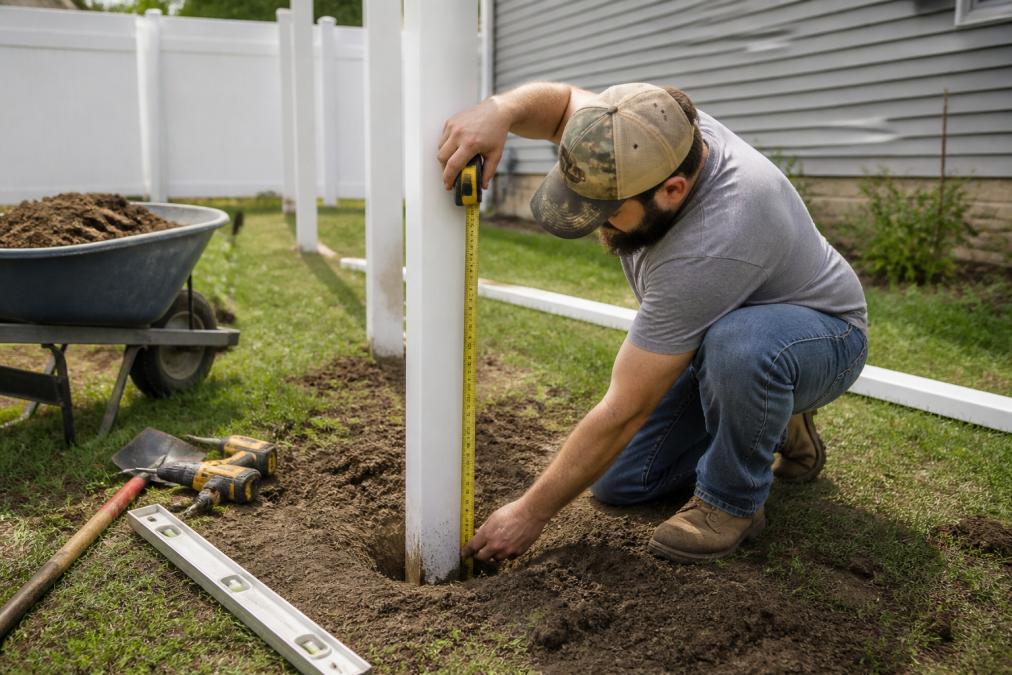
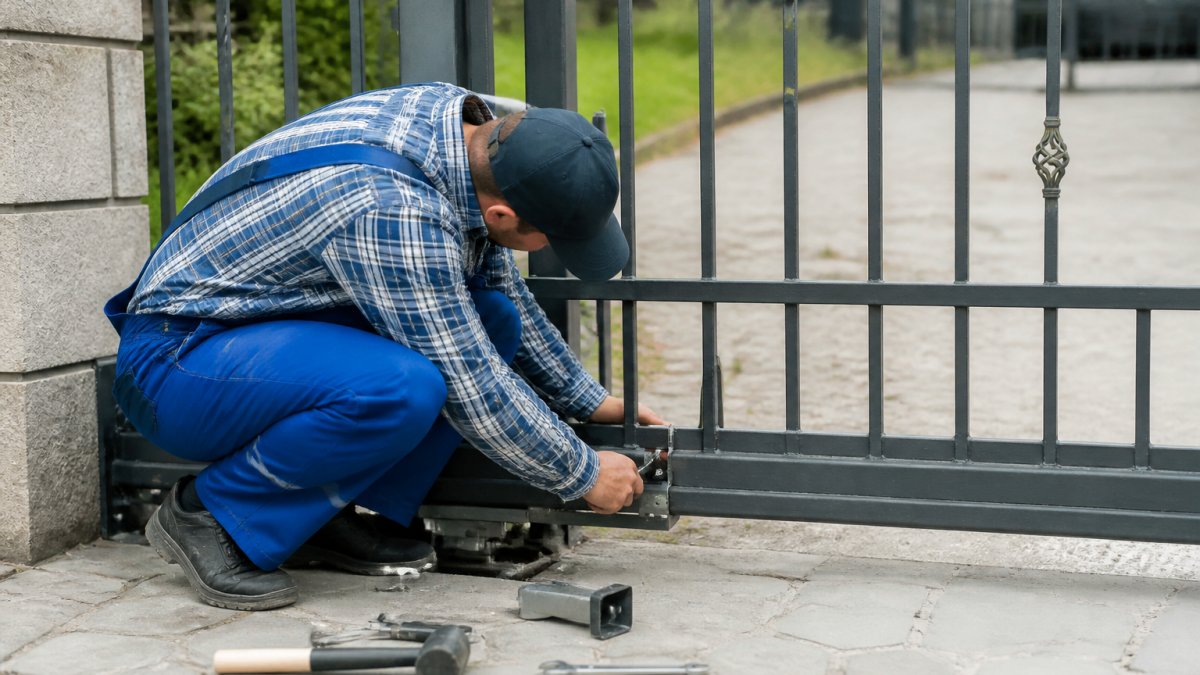
DIY is possible for short runs on flat ground, but vinyl panels are long and awkward, and an out-of-level fence shows every mistake. Most homeowners hire a contractor for slopes, gates, or more than a few sections.
This is where Fence Company Lincoln earns its place in the decision. As a family-owned and operated business with over 30 years of experience, we handle every project from design to completion without subcontracting the work, so the crew that quotes your job is the crew that builds it. We are fully licensed, insured, and bonded, and we offer a price matching policy against competitors, which removes the guesswork from comparing bids. If your last installer left you with leaning posts, that difference matters.
Conclusion: Is a Vinyl Fence Worth the Investment for You?
The honest answer: it depends on your timeline and tolerance for maintenance. If you plan to stay put for years, want a maintenance-free boundary, and value your weekends, vinyl fencing pays you back in saved labor and avoided repairs. If you are selling within a couple of years or on a tight budget, wood's lower upfront cost may serve you better.
Frequently Asked Questions
What lasts longer, a wood or vinyl fence?
Vinyl typically outlasts wood. A well-installed vinyl fence can hold up for 20 to 30 years or more, while a wood fence usually needs replacement in 10 to 15 years, depending on climate and upkeep. Wood is vulnerable to rot, termites, and warping, especially at the base where moisture collects. Vinyl resists all three, which is why its lifespan advantage is one of the strongest arguments for the investment.
How much should I expect to pay for a vinyl fence?
Vinyl fencing generally runs higher than wood on the front end. Your actual vinyl fence cost per foot depends on height, panel style, gate count, site conditions, and removal of any old fence. Request a written quote for your specific property before budgeting.
Do vinyl fences look cheap?
Modern vinyl fencing has moved well past the glossy, plastic look people remember from decades ago. Today's panels come in matte finishes, varied textures, and colors that mimic wood grain, and they pair with decorative post caps and rail systems for a finished appearance. Material thickness matters most: thicker walls hold their shape, resist sagging between posts, and read as a solid, permanent fence rather than a temporary one.
What are the downsides of vinyl fencing?
The main drawbacks are higher upfront cost, limited repairability, and performance that varies by climate. Vinyl can become brittle in extreme cold and may crack on heavy impact, and a damaged section usually means replacing a full panel or post rather than patching it. Very cheap vinyl also fades or chalks over time. Choosing a thicker, UV-stabilized product and a contractor who sets posts deep solves most of these complaints.
Does a vinyl fence increase property value?
A vinyl fence can support property value because buyers read it as a maintenance-free feature rather than an upcoming project. The exact figure depends on your market, the fence's style, and how well it fits the property. Curb appeal and privacy both factor into what a buyer is willing to pay.
If you are weighing vinyl against wood and want a straight answer instead of a sales pitch, get a quote from a team that has installed all four major fence materials for three decades. Fence Company Lincoln provides expert installation and repair, high-quality product standards, and comprehensive project management from design to completion, with no subcontractors and no surprises. Get started with Fence Company Lincoln and secure your property with a fence built to outlast the mortgage.