 how-to
Commercial Security Fencing Lifespan: What to Expect
Table of Contents
- How Long Does Commercial Security Fencing Last?
- Lifespan by Fencing Material: A Comparison
- Commercial Chain-Link Fence Lifespan
- Powder-Coated Steel Fence Lifespan
- What Affects the Lifespan of Commercial Security Fencing
- Commercial Fence Maintenance and Inspection Schedule
- Security Fence Repair or Replacement: When to Decide
- Conclusion
- Frequently Asked Questions
Last Updated: October 5, 2026
How Long Does Commercial Security Fencing Last?
Most commercial security fencing lasts 10 to 30 years, depending on material and installation.
Two fences of the same material can have very different service lives, a properly installed chain-link fence on a dry, level lot may outlast a steel fence set too shallow in wet ground.
At Fence Company Lincoln, we've installed and repaired commercial fencing for over 30 years. We've seen what makes a fence last and what shortens its life.
Lifespan by Fencing Material: A Comparison
The material you pick sets the ceiling for lifespan; installation and upkeep decide whether you reach it.
Here's a quick look at how the main commercial options compare:
| Material | Typical Lifespan | Best For | Upkeep Level |
|---|---|---|---|
| Powder-coated steel | 20-30+ years | High-security sites | Low |
| Composite | 25-30+ years | Privacy and appearance | Very low |
| Chain-link (galvanized) | 15-20 years | Budget perimeter security | Low |
| PVC-coated chain link | 20-30 years | Corrosive environments | Low |
| Wood | 10-15 years | Low-security boundaries | High |
Wood Fencing
Wood fencing usually lasts 10 to 15 years in commercial use, often less at the base, because wood absorbs water.
Posts rot first: ground contact keeps them damp, and decay sets in from the bottom up.
Termites and carpenter ants treat untreated posts as food, and weather causes warping, splitting, and fading.
For commercial security, wood is rarely the best choice, limited physical security and frequent repairs. Where privacy matters more than security, it can work, but plan on eventual replacement.
Composite Fencing
Composite fencing typically lasts 25 to 30 years or more, making it one of the longest-lasting commercial options.
It holds color well and needs no staining or sealing, an advantage for property managers juggling multiple sites.
The trade-off is upfront cost. Composite costs more than wood or basic chain-link. It also can fade or crack under extreme temperature swings, though modern formulations handle this better than early versions.
Commercial Chain-Link Fence Lifespan
A commercial chain-link fence lifespan runs about 15 to 20 years for standard galvanized material, and 20 to 30 years when it's PVC-coated.
PVC-coated chain link adds a bonded vinyl layer over the galvanized core, boosting corrosion resistance and extending service life, and comes in colors some commercial sites prefer.
Chain-link remains the workhorse of commercial security fencing, affordable, see-through, and quick to install.
Powder-Coated Steel Fence Lifespan
Powder-coated steel fence lifespan often reaches 20 to 30 years, and higher on well-drained sites.
Steel also delivers strong physical security, hard to cut, climb, or push over, and steel posts and welded mesh beat chain-link on strength.
The catch is damage: if the coating is scratched to bare metal, rust starts there. Touch-up paint handles small nicks; larger gashes need prompt repair.
What Affects the Lifespan of Commercial Security Fencing
Installation quality and site conditions affect lifespan more than most buyers expect, the same fence can last 15 or 30 years based on those two factors alone. On commercial sites, the variables are more specific and punishing than generic "weather and wear" advice.
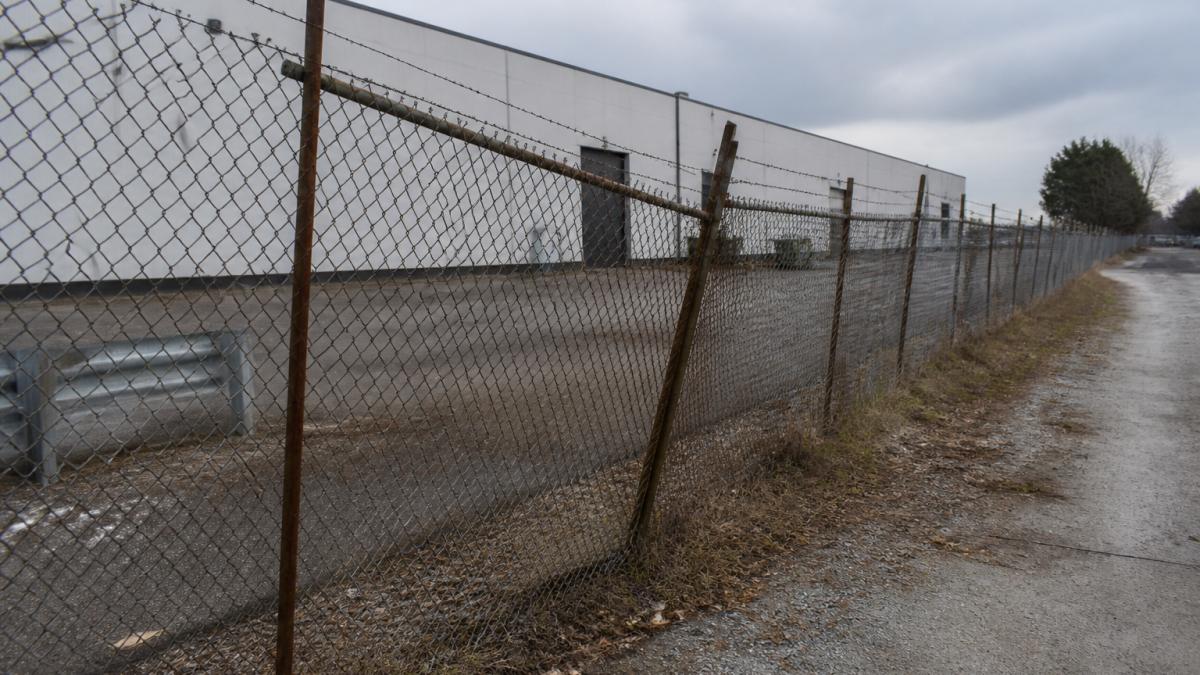
Installation Quality and Post Depth
Properly installed fences last far longer than rushed ones. Post depth is the single biggest factor.
A common mistake is skipping proper concrete footings.
Tension and alignment matter too: strung too tight stresses wire and posts, too loose sags and catches wind. Both shorten service life.
Gate hardware is the most overlooked installation detail. A gate hung on undersized hinges or a single post sags within a season and drags, stressing the frame every time it opens.
Commercial Site Conditions That Shorten Service Life
Commercial sites face specific exposures that change lifespan estimates in predictable ways:
- Coastal salt and salt spray. Salt accelerates corrosion on galvanized and bare-steel components. Fences within a few miles of the coast typically need PVC-coated or hot-dip galvanized systems to reach the upper end of their range.
- Industrial pollutants and chemical runoff. Manufacturing, agricultural, and chemical storage sites expose fencing to airborne corrosives and runoff that break down coatings faster than rain alone. Stainless or heavy-coated systems are common in these environments.
- Freeze-thaw cycles. Repeated freezing and thawing of saturated soil heaves posts and cracks concrete footings. This is the leading cause of leaning posts in cold-climate commercial lots.
- Soil chemistry and drainage. Sandy, well-drained ground keeps posts dry. Clay and low-lying areas hold water against the base, which rusts steel and rots wood faster. High-water-table sites are the worst case.
- Vehicle and equipment impact. Forklifts, trucks, mowers, and plows strike posts and panels on working sites. A single hard hit can bend a post, crack its footing, and start a corrosion point that spreads for years.
- Wind and snow load. Open commercial lots on exposed corners take more wind than sheltered residential yards. In snow country, drifting snow piles against the fence line and holds moisture against the base.
Matching material and coating to the site is how you get the longest service life: a budget galvanized chain-link fence that performs fine inland may fail in half the time on a coastal or industrial site.
How Site Conditions Affect Security, Not Just Appearance
Lifespan isn't only about whether the fence is still standing, it's about whether it still does its job. Corrosion thins wire until it can be cut by hand, loose fittings let panels be lifted, and weakened posts can be pushed over.
A fence that looks acceptable from the road may already have lost meaningful delay and deterrence value. For commercial security, the real question isn't "how long will it last?" but "how long will it keep performing?", and the gap between those numbers is where security gaps open.
Commercial Fence Maintenance and Inspection Schedule
Regular commercial fence maintenance separates a fence that lasts 15 years from one that lasts 30, catching small problems before they become replacements. A residential-style "walk the yard once a month" checklist undersells what a commercial perimeter needs.
Commercial sites have more gate traffic, vehicle exposure, longer runs, and higher stakes, so the inspection cadence and criteria for action should reflect that.
A Commercial Inspection Cadence
| Frequency | Task | What to Look For |
|---|---|---|
| Monthly | Walk the full perimeter | Loose panels, bent posts, gate drag, debris piled at the base |
| Quarterly | Check posts and footings | Leaning posts, cracked or heaved concrete, rust staining at the base |
| Twice a year | Inspect coating and finish | Scratches, chips, fading, early rust bloom, coating peel |
| Twice a year | Test gates and hardware | Sag, misalignment, worn hinges, latch failure, operator function |
| Annually | Full structural review | Corrosion depth, tension, anchor condition, mesh integrity |
| After any impact | Spot inspection | Bent posts, cracked footings, stretched mesh, displaced panels |
Two additions matter: inspect after every vehicle or equipment impact, since a hit that looks cosmetic often cracks the footing below grade, and inspect gates more often than the fence line, because gates take the most abuse and fail first.
What to Actually Check, and Why
A useful inspection targets the components most likely to fail first:
- Post bases. Look for rust staining, cracked concrete, soil pulled away from the footing, or a post that moves when pushed. Base failure is the leading cause of premature replacement.
- Tension wire and bottom rail. These carry the load on chain-link and often corrode before the mesh. A slack bottom rail means the fence can be lifted.
- Mesh and wire. Check for cut, stretched, or corroded wire. Corrosion that has thinned the wire is a security issue, not just a cosmetic one.
- Gates and operators. Test for sag, drag, and latch engagement. On automated gates, check the operator, safety sensors, and emergency release.
- Coating and finish. Touch up scratches and chips before rust starts. Small touch-ups are the cheapest maintenance you'll ever do.
- Vegetation and drainage. Clear growth and debris away from the base. Standing water against a post is a slow-motion failure.
Repair vs. Replace: A Practical Threshold
Tie maintenance decisions to security performance, not appearance:
- Repair if damage is isolated, a few leaning posts, a sagging gate, minor coating scratches, or if corrosion is surface-level and the wire or post still has full structural strength.
- Replace if rust has eaten through wire or mesh in multiple spots along a run, if posts are failing at the base across a long stretch, or if the fence no longer delays or deters, even if it still looks intact.
The real test is whether the fence still performs its security function. A perimeter that can be breached by hand has stopped earning its keep, regardless of how it looks.
Lifecycle Cost: Why Maintenance Beats Replacement
Most buyers compare fences on purchase price. The better comparison is total cost of ownership over the fence's service life, purchase, installation, maintenance, repairs, and eventual replacement.
A lower-cost fence that needs frequent repairs and fails early can cost more over 20 years than a higher-cost system needing almost no attention. Coating choice, post depth, and hardware quality drive most of that difference, so spending more upfront on heavier gauge, better coating, and proper footings typically reduces lifetime cost.
For property managers overseeing multiple sites, a simple maintenance log per property, inspection dates, findings, repairs, and costs, makes it obvious when a fence is approaching the end of its economic life and should be budgeted for replacement rather than patched again.
Security Fence Repair or Replacement: When to Decide
For property managers, the smart move is to plan replacement before failure. A fence that's near the end of its service life is a security gap waiting to open.
Conclusion
Every commercial fence reaches a point where repair no longer pays and replacement becomes the only real option. The question is whether you plan for that day or get surprised by it.
At Fence Company Lincoln, we've spent over 30 years helping property owners get the longest life out of their fencing.
Get started with Fence Company Lincoln and secure your property with fencing built to last. Send us a message to request your quote.
Frequently Asked Questions
What is the average life expectancy of commercial security fencing?
Most commercial security fencing lasts 10 to 30 years, though the range varies by material. Wood fencing typically lasts 10 to 20 years, composite fencing 20 to 30 years, and powder-coated steel or welded mesh can reach 30 to 50 years or more. How well the fence is installed and how much weather exposure it faces will shift those numbers. A properly installed fence with a protective coating and routine maintenance will sit at the top of its range.
How long does a commercial chain-link fence last?
A commercial chain-link fence lifespan usually falls between 15 and 25 years. Galvanized chain link holds up well, but PVC-coated chain link lasts longer in humid or coastal conditions because the coating blocks corrosion. Steel posts, concrete footings, and installation quality matter as much as the mesh itself. Fences on exposed sites with heavy weather exposure often need occasional repairs well before the mesh fails.
How can you tell when a commercial fence needs to be replaced?
Look at the fence condition, not just its age. Rust that has eaten through the mesh, posts that lean or wobble, gates that sag and no longer latch, and fabric that pulls away from the frame all point toward replacement rather than repair. If more than a few sections show structural damage, or if the cost of security fence repair or replacement starts to favor replacement, it is usually time to install new fencing.
Can a damaged security fence be repaired instead of replaced?
Yes, in many cases. Bent posts, torn fabric, sagging gates, and surface rust can often be fixed with new hardware, a fresh protective coating, or a replaced panel, which extends service life at a fraction of the cost of a full replacement. Repair makes sense when damage is isolated and the rest of the fence is sound. Once corrosion or physical damage spreads across multiple sections, replacement is the better long-term value.