 listicle
Top 10 Commercial Fence Installation Tips for Warehouses
Table of Contents
- Warehouse Fence Installation at a Glance
- Tip 1: Match Commercial Fence Installation Requirements to Your Site Layout
- Tip 2: How Deep Should Fence Posts Be Buried for Warehouse Fencing?
- Tip 3: Pick the Best Fence Materials for Industrial Properties
- Tip 4: Choose the Right Fence Height, Gauge, and Mesh Size
- Tip 5: Plan Access Control and Automated Entry from Day One
- Tip 6: Add Bollards and Vehicle Impact Protection at Every Gate
- Tip 7: Build a Maintenance Schedule That Prevents Costly Repairs
- Frequently Asked Questions
Last Updated: September 17, 2026
Warehouse Fence Installation at a Glance
Commercial fence installation at a warehouse is not the same job as fencing a backyard. It is a security system, a traffic control tool, and a liability shield, and mistakes show up fast under truck traffic. This guide from Fence Company Lincoln distills the tips that separate a perimeter lasting decades from one leaning within a year.
For a quick overview before the details:
| Tip | Focus | Why It Matters |
|---|---|---|
| 1 | Site layout and permitting | Prevents rework and code violations |
| 2 | Post depth and footings | Stops posts from leaning or heaving |
| 3 | Material selection | Matches durability to site conditions |
| 4 | Height, gauge, and mesh size | Balances security with visibility |
| 5 | Access control planning | Avoids costly gate retrofits |
| 6 | Bollards and impact protection | Protects gates from vehicle strikes |
| 7 | Maintenance schedule | Catches small repairs before they spread |
Tip 1: Match Commercial Fence Installation Requirements to Your Site Layout
A warehouse perimeter fence fails most often because it was laid out before anyone studied how trucks move through the property. Commercial fence installation requirements start with the site: where trucks enter, where they queue, and where drivers need clear sight lines.
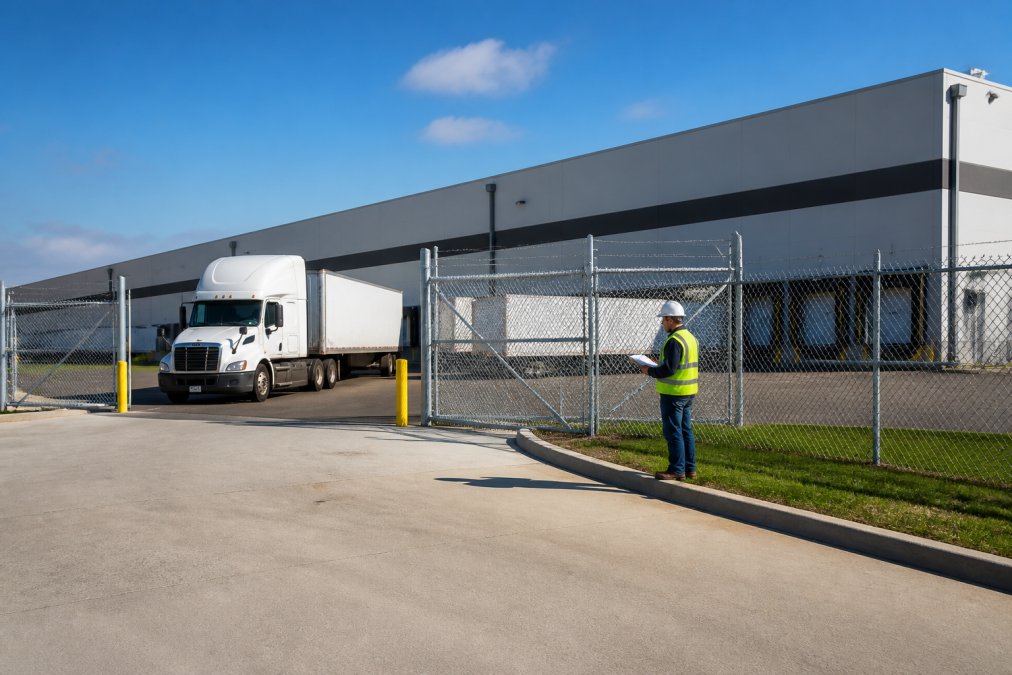
Truck Traffic Flow and Sight Lines
Walk the property during peak delivery hours before marking a single post hole. Note turning radii, backing zones, and blind corners. A fence line cutting across a truck's turning path will get struck, and one blocking a driver's view of a pedestrian crossing is a safety problem. Gate placement should follow traffic flow.
Zoning and Permitting Before You Dig
Warehouse fencing usually falls under local zoning and site plan rules that vary by jurisdiction. Check with your planning office before ordering materials: height limits, setbacks, and screening requirements all affect design. Pulling permits up front costs far less than tearing out a finished fence.
Tip 2: How Deep Should Fence Posts Be Buried for Warehouse Fencing?
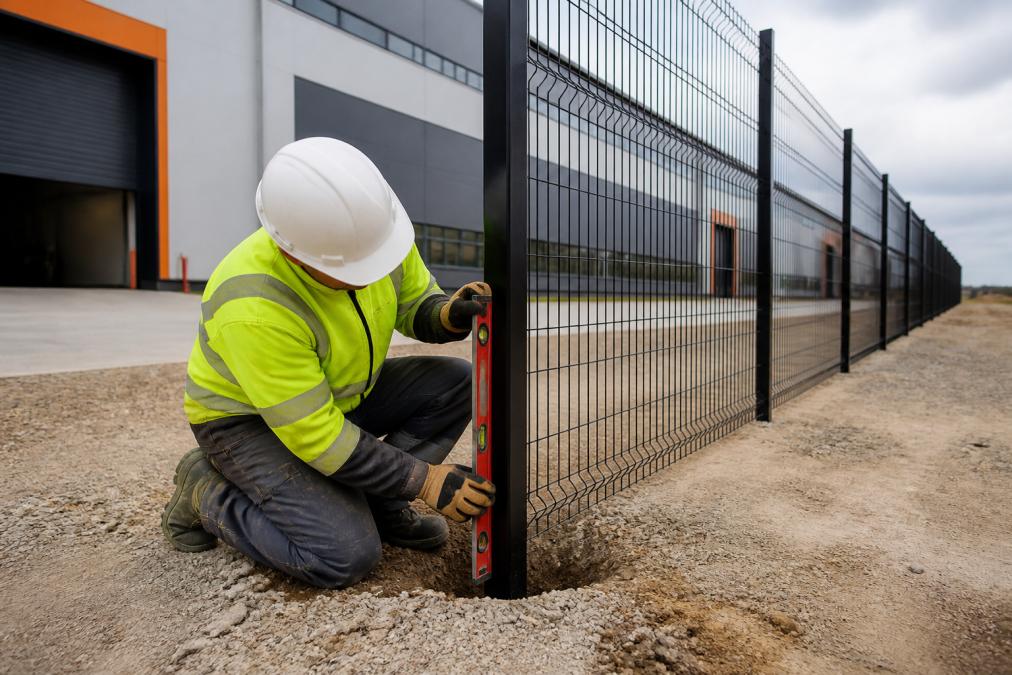
Post depth is the most common place contractors cut corners, and the first thing that shows up as a leaning fence. A rule of thumb is to bury posts one-third of their above-ground height, but frost depth, soil type, and wind load push that number up on a commercial site.
Concrete Footings and the Frost Line
In freezing regions, footings must extend below the local frost line or the ground will heave them upward season after season. Your building department can give the frost depth for your area. Pair that depth with properly sized concrete footings and posts hold their line for decades.
Tip 3: Pick the Best Fence Materials for Industrial Properties
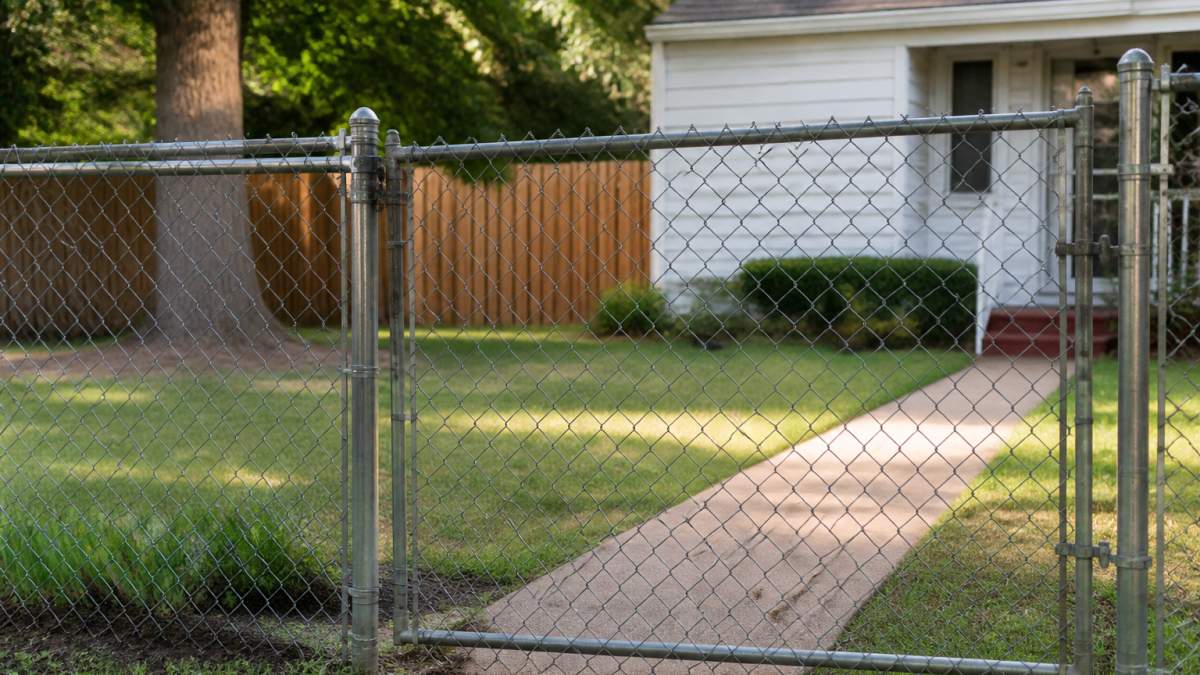
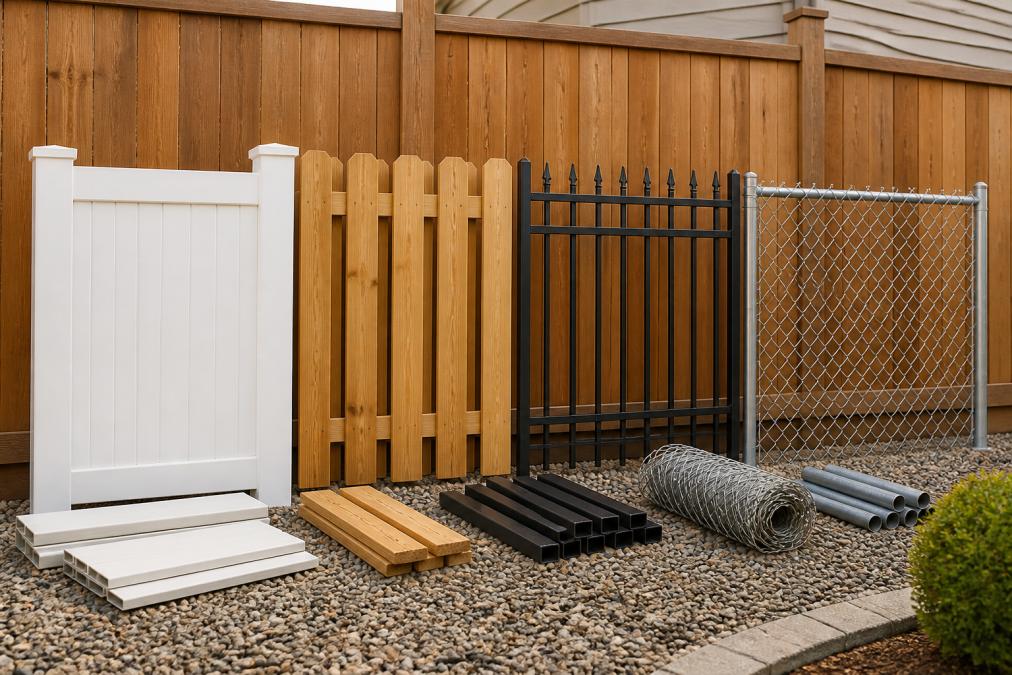
The best fence materials for industrial properties balance durability, repairability, and cost against what the site needs. Chain link remains the workhorse for large warehouse perimeters: affordable, quick to install, and easy to patch after a vehicle strike. But "chain link" is not a single product, and the specification decides whether the fence lasts ten years or thirty.
Chain Link: The Specification That Actually Matters
Two chain link fences can look identical on a bid sheet and perform nothing alike. The variables that matter:
- Wire gauge (fabric): Lower numbers are thicker. 11.5-gauge is light residential grade. 9-gauge is the common commercial standard for warehouse perimeters. 6-gauge is used where cutting and vehicle impact are real threats. Thicker wire resists bolt cutters, absorbs impact without permanent deformation, and holds tension longer.
- Coating: Hot-dip galvanized after weaving (GAW) delivers the heaviest zinc coating and the longest service life in humid or coastal air. Galvanized-before-weave (GBW) is lighter and cheaper but corrodes faster at cut ends and welds. Vinyl-bonded over galvanized core adds color and a second corrosion barrier, useful near loading docks where exhaust and chemical exposure accelerate rust.
- Framework: Line posts, terminal posts, and top rail carry the load. Schedule 40 pipe is the commercial baseline; heavier wall thickness is warranted where wind load or vehicle contact is high.
- Selvage and knuckle: Twisted (barbed) selvage at the top edge deters climbing; knuckled selvage is safer where workers brush against the fence. On a warehouse perimeter, twisted top and bottom selvage is standard.
Steel Ornamental and Welded Wire
Steel ornamental (wrought-iron style) fencing is heavier duty and harder to cut than chain link. It suits high-security yards and sensitive inventory, with spear or flat tops depending on the aesthetic and security goal. Welded wire mesh with small openings (often 2 in. x 2 in. or smaller) is harder to climb and cut than standard chain link diamond mesh, common for secure storage cages and equipment yards.
Aluminum and Vinyl: Where They Fit
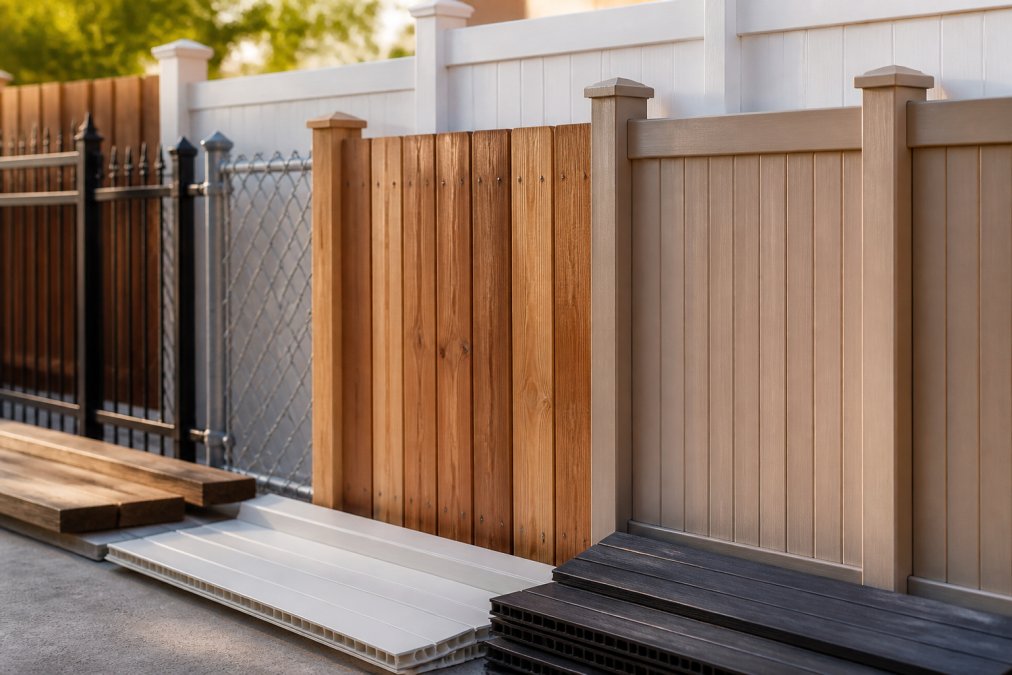
- Aluminum: Resists rust well and offers a more finished look for customer-facing areas, entry plazas, and office frontage. It is not a perimeter security product; it bends under vehicle impact and is easy to cut.
- Vinyl (PVC): Low maintenance and clean-looking, but less suited to heavy industrial abuse. Vinyl becomes brittle in cold weather and can crack under impact. It works best in low-traffic, decorative applications.
The Trade-Off Most Buyers Get Wrong
A common mistake is choosing material by appearance alone. On a site with constant truck traffic, repairability matters more than looks. A chain link panel damaged by a backing trailer can be cut out and replaced in an afternoon; a bent ornamental steel section may need a welder and a custom fabrication order. Ask your contractor how repairs are performed before you sign.
Tip 4: Choose the Right Fence Height, Gauge, and Mesh Size
Fence height, wire gauge, and mesh size decide how much security the fence delivers. A taller fence with tighter mesh and heavier gauge slows intruders; a light residential-grade fence on a warehouse perimeter is mostly decoration.
Match these specs to the risk:
- Height: Commercial perimeters commonly run taller than residential fences, with added security topping where needed.
- Gauge: Lower gauge numbers mean thicker wire. Heavier gauge resists cutting and impact better.
- Mesh size: Smaller openings are harder to climb and cut. Larger mesh keeps costs down on low-risk boundaries.
Tip 5: Plan Access Control and Automated Entry from Day One
Automated entry should be designed into the fence layout, not bolted on after the fact. Retrofitting a gate means new footings, new wiring runs, and often a partial rebuild of the fence line. Designing it in versus adding it later is typically the difference between one trench and three.
Gate Type and Position
- Gate position: Where vehicles and pedestrians actually enter, with clear approach lanes and enough stacking room that a truck never blocks a public road.
- Gate type: Slide gates suit wide openings and tight spaces because they travel parallel to the fence line. Swing gates work where there is room to swing and are simpler to automate on smaller openings. Vertical-lift and bi-fold gates suit sites where ground space is at a premium.
- Operator sizing: Match the operator to gate weight and cycle count. A gate opening 200 times a day needs a different operator class than one opening 20 times. Undersizing the operator is the most common cause of premature gate failure.
Access Control Hardware
- Credential readers: Keypads, proximity card readers, and long-range RFID for fleet vehicles that should not require a driver to roll down a window.
- Intercom and video: A video intercom lets a guard or remote operator verify a driver before granting entry, standard at distribution and logistics sites.
- Loop detectors and photo eyes: Buried inductive loops and safety photo eyes prevent the gate from closing on a vehicle or person. These are safety devices, not conveniences, and most operators require them for compliant operation.
Integrating Smart Security Systems
This is where most fence guides stop, and where a modern warehouse perimeter starts. Physical barriers and electronic security are no longer separate systems.
- IP cameras and AI analytics: Modern IP cameras run analytics at the edge, detecting loitering, perimeter crossing, and vehicle dwell time without a human watching a monitor. Mounting cameras on fence posts or dedicated poles during installation avoids running new conduit later.
- Sensors on the fence line: Vibration and fence-mounted intrusion sensors detect an attempt to cut or climb the fabric and trigger a camera preset or alert. They need power and data at the fence line, which is why the trench matters.
- IoT gate access: Cloud-managed access control lets you issue, revoke, and audit credentials remotely and tie gate events to camera footage. A delivery driver's credential can be time-limited to a scheduled window, and every entry is logged.
- Unified platform: The goal is one system where a gate event, a camera clip, and an access log are linked. Designing the fence and gate to support that from day one costs far less than stitching separate systems together later.
Power, Conduit, and Network
Run wiring during installation, when trenches are already open. Plan for:
- Line power to the gate operator, sized for its actual draw, not the minimum on the spec sheet.
- Low-voltage conduit for access control, intercom, and safety devices.
- Network conduit (fiber or copper) back to the head-end or IDF, with spare capacity for future cameras and sensors.
- Grounding and surge protection at the gate, because a gate operator is an outdoor electrical device and a surge can take out the whole access system.
Tip 6: Add Bollards and Vehicle Impact Protection at Every Gate
Bollards are the cheapest insurance you can buy for a gate. A single truck backing into a gate can bend the frame, knock the track out of alignment, and put the whole entry out of service.
- In front of gate posts and tracks, where a misjudged approach does the most damage.
- Along loading dock edges near the fence line.
- At tight turns where trailers swing wide.
Tip 7: Build a Maintenance Schedule That Prevents Costly Repairs
Fence maintenance is boring right up until a gate will not close. A simple routine catches small problems, hinge alignment, latch contact, loose tension wire, before they become full replacements.
A practical schedule:
- Monthly: Walk the perimeter, check gate operation, and look for bent or cut fabric.
- Quarterly: Check hinge alignment, latch contact, and post stability.
- Seasonally: Inspect for corrosion, especially on galvanized and steel components, and touch up damaged coatings.
- After any vehicle strike: Inspect immediately, even if damage looks minor.
Frequently Asked Questions
How deep should a 20-foot fence post be buried?
A 20-foot post is unusual for warehouse fencing, but the general rule for commercial fence installation is to bury one-third of the total post length. For a 20-foot post that means roughly 6.5 to 7 feet in the ground. For typical 8-foot industrial posts, bury at least 3 feet, and go deeper to pass below the local frost line.
Do warehouse fences require specific permits or zoning compliance?
Yes. Most jurisdictions require a building or zoning permit before you install a commercial fence, and some limit fence height, setback, or material type. Before ordering materials, check local zoning rules, submit a site plan if required, and confirm property line locations with a survey. Skipping this step can lead to fines, forced removal, or a denied certificate of occupancy.
How can I integrate access control systems into my warehouse fence?
Plan gate locations during the layout phase so wiring, conduit, and power runs are installed with the fence, not after. Choose automated slide or swing gates rated for your traffic volume, then connect card readers, keypads, or license plate recognition to your existing security system. Bollards at each gate protect the operator and gate hardware from vehicle impact.
What are common mistakes to avoid during commercial fence installation?
The most expensive mistakes are shallow concrete footings, skipped permits, and gates installed without vehicle impact protection. Others include mismatched post gauge, ignoring truck turning radii, and no maintenance plan after handoff. Each shortcut shows up within a year or two as leaning posts, sagging gates, or failed inspections, and repairs usually cost more than doing it right the first time.