 listicle
Best Privacy Fence Materials for Windy Areas in 2026
Table of Contents
- Best Privacy Fence Materials for Windy Areas: Quick Comparison
- Why Wind Resistance Matters for Privacy Fencing
- 1. FenceTrac Steel Frame System
- 2. Cedar Wood Privacy Fencing with Postsaver Pro-Sleeves
- 3. Composite Fencing
- 4. Aluminum Privacy Fencing
- 5. Vinyl Privacy Fencing
- 6. Chain Link with Privacy Slats
- How to Reinforce a Fence for High Winds
- Privacy Fence Wind Load Requirements
- Vegetation as a Windbreak Supplement
- DIY vs. Professional Installation for Wind-Load Safety
- Comparing Wood, Vinyl, and Metal Options
- Maintenance Requirements for Wind-Resistant Fences
- Frequently Asked Questions
Last Updated: September 22, 2026
Best Privacy Fence Materials for Windy Areas: Quick Comparison
Choosing the best privacy fence materials for windy areas comes down to wind load, post depth, and structural integrity. At Fence Company Lincoln, we've installed and repaired fencing for over 30 years, and fences fail at the posts, not the panels. The table below ranks six options by wind performance, maintenance, and cost.
| Material | Wind Resistance | Maintenance | Relative Cost |
|---|---|---|---|
| FenceTrac steel frame | Excellent (engineered to 150 mph) | Low | Higher upfront |
| Cedar with Postsaver sleeves | Good with reinforcement | Moderate | $15-$30 per linear foot |
| Composite | Very good | Low | Higher upfront |
| Aluminum | Very good | Low | Higher than wood |
| Vinyl | Good with proper install | Low | $25-$45 per linear foot |
| Chain link with slats | Excellent (high permeability) | Low | $10-$20 per linear foot |
Quick Picks:
- Best Overall: FenceTrac steel frame, engineered for wind speeds up to 150 mph
- Best Wood Option: Cedar with Postsaver Pro-Sleeves to stop ground-line rot
- Best Budget Pick: Chain link with privacy slats, which lets wind pass through
Why Wind Resistance Matters for Privacy Fencing
Wind doesn't push a fence over. It pushes until the posts give way. A solid privacy panel acts like a sail, and every gust applies lateral force to the post footings. When posts are set too shallow or the concrete footing is undersized, the fence leans, panels crack, and gates stop latching.
Wind load is the pressure a fence must withstand at a given speed, and it rises sharply as speed increases. That's why the American Society of Civil Engineers wind load provisions treat fence design as a structural problem, not a cosmetic one. Most residential fence failures we repair trace back to installation shortcuts, not material defects.
1. FenceTrac Steel Frame System
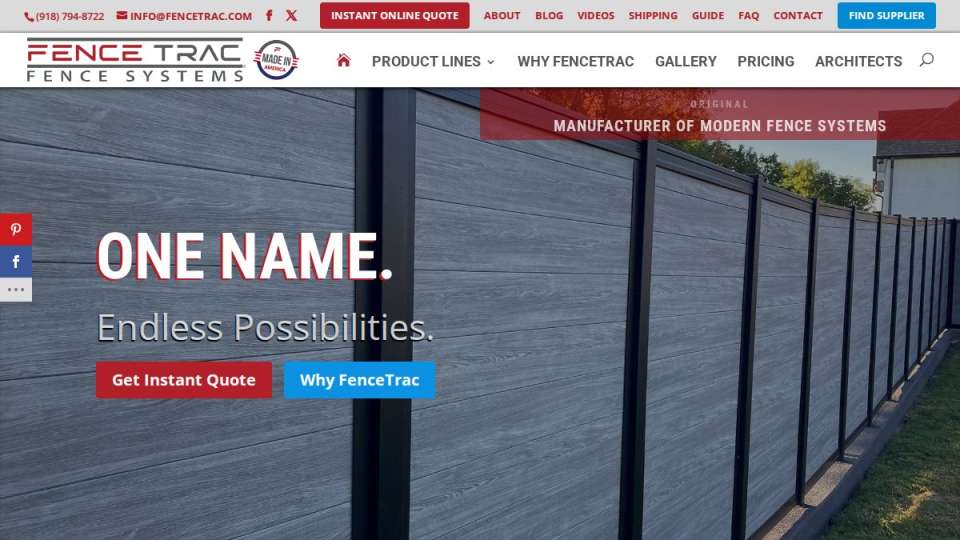
Pros:
- Superior structural durability compared to standard wood fences
- Versatile aesthetic options with custom infill
Cons:
- Requires professional installation for optimal performance
2. Cedar Wood Privacy Fencing with Postsaver Pro-Sleeves
Cedar is naturally rot and insect resistant and remains the traditional choice for privacy. The catch in windy areas is the base of the post, where moisture and oxygen meet wood and rot begins.
Install cedar with a hit and miss or slatted design and you reduce wind load without giving up privacy from most angles. Cedar needs staining every few years, but individual boards are easy to replace.
Pros:
- Aesthetically pleasing natural look
- Easily repairable if individual boards are damaged
Cons:
- Requires regular maintenance
- Susceptible to warping if not properly spaced
3. Composite Fencing
Pros:
- Does not rot, warp, or splinter
- High durability in harsh weather
Cons:
- Higher initial investment cost
4. Aluminum Privacy Fencing
Aluminum fencing delivers a strength-to-weight ratio wood and vinyl can't match, with a powder-coated finish that resists corrosion. It won't rust like iron and holds up to wind pressure far better than most homeowners expect. Privacy-focused panel designs have closed off the old complaint that aluminum offers no seclusion. It costs more than wood or vinyl, but maintenance is minimal.
Pros:
- Excellent strength-to-weight ratio
- Does not rust like iron
Cons:
- Can be more expensive than wood or vinyl
5. Vinyl Privacy Fencing
Vinyl is flexible, which sounds like a weakness until you watch it flex under a gust instead of cracking. Installed with proper wind-load considerations, it holds up well and never needs painting or staining.
Two caveats: vinyl can become brittle in extreme cold, and it requires professional installation to ensure wind-load compliance. Skip the reinforcement and a solid vinyl panel becomes a sail; get it right and you have a clean, uniform fence with minimal upkeep.
Pros:
- Easy to clean
- Resistant to pests and rot
Cons:
- Can become brittle in extreme cold
- Requires professional installation to ensure wind-load compliance
6. Chain Link with Privacy Slats
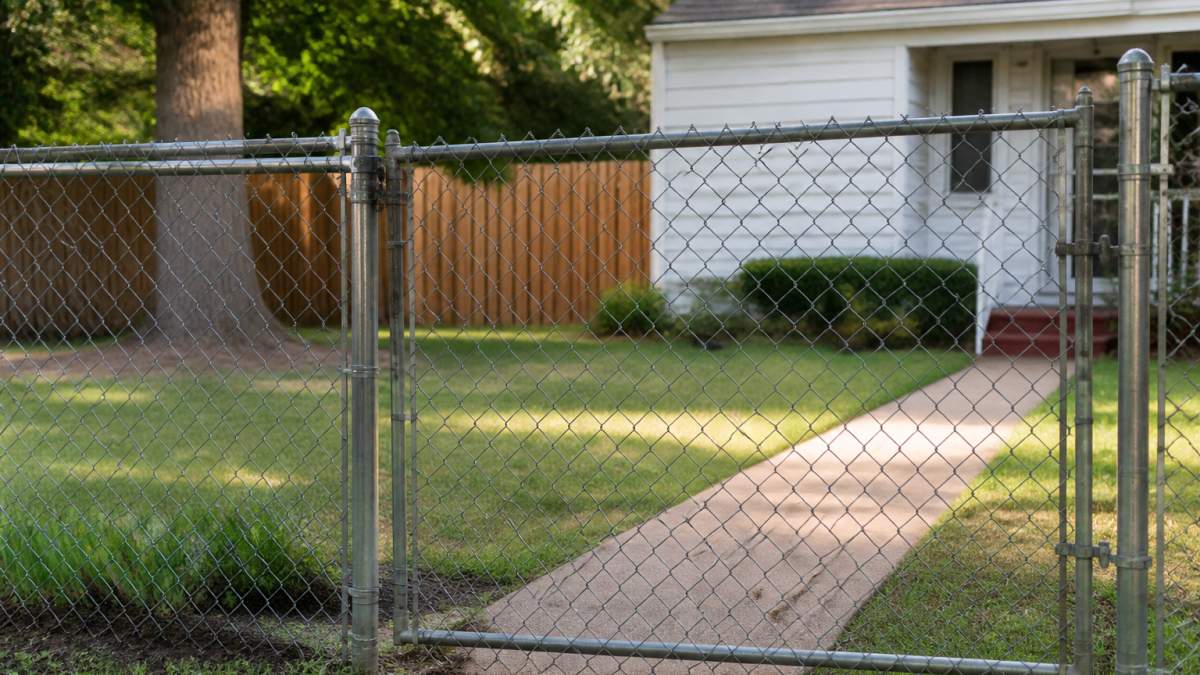
Chain link with privacy slats is the budget option that outperforms its price. The galvanized steel framework is extremely durable, and the open weave lets wind pass through rather than pushing against a solid surface. It's an affordable wind-resistant privacy solution.
The tradeoff is appearance.
Pros:
- Extremely wind-resistant
- Very affordable
Cons:
- Less aesthetic appeal than wood or composite
How to Reinforce a Fence for High Winds
Material trade-offs on reinforcement. Steel frames and aluminum posts resist bending far better than wood of the same dimension, but cost more and require different fasteners. If you're reinforcing an existing wood fence, adding a steel corner or gate post is often the highest-return upgrade without rebuilding the whole run.
Privacy Fence Wind Load Requirements
- Panel permeability. A solid panel takes the full load. A slatted or board-on-board design with 20 to 30 percent open area reduces effective pressure significantly because air passes through instead of stalling against the surface.
- Fence height. Wind pressure acts on the exposed area, so a 4-foot fence takes roughly two-thirds the load of a 6-foot fence of the same length. A shorter fence with a taller hedge behind it can outperform a tall solid fence in a high-wind zone.
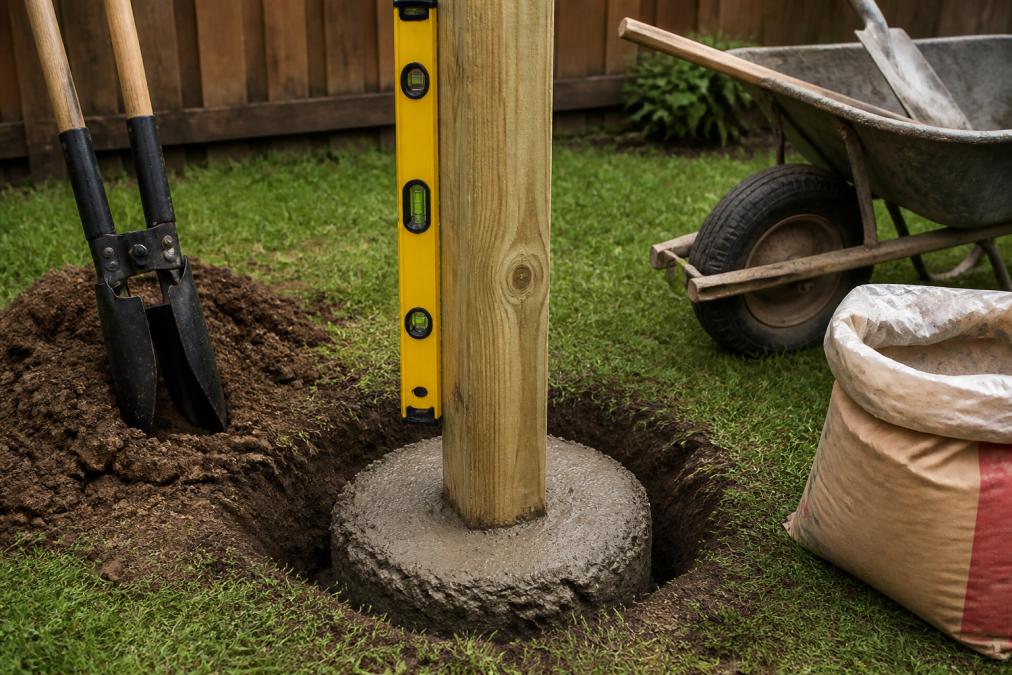
- Post spacing and footing size. Wider footings and closer post spacing spread the load across more soil. Reducing post spacing from 8 feet to 6 feet cuts the load per post by about 25 percent.
Why this matters more than material choice. Two fences built from the same cedar boards can perform completely differently if one has 8-inch footings at 8-foot spacing and the other 12-inch footings at 6-foot spacing. The material is the visible part; the footing and spacing actually resist the wind. When comparing quotes, ask each installer for footing diameter, post depth, and post spacing in writing. A quote that doesn't specify those numbers isn't a wind-rated quote.
Vegetation as a Windbreak Supplement
Planting a windbreak behind a fence reduces the wind pressure the structure faces. A row of dense evergreens or shrubs absorbs and deflects airflow before it reaches the panels, extending the fence's service life. This works best as a supplement to solid construction, not a replacement.
DIY vs. Professional Installation for Wind-Load Safety
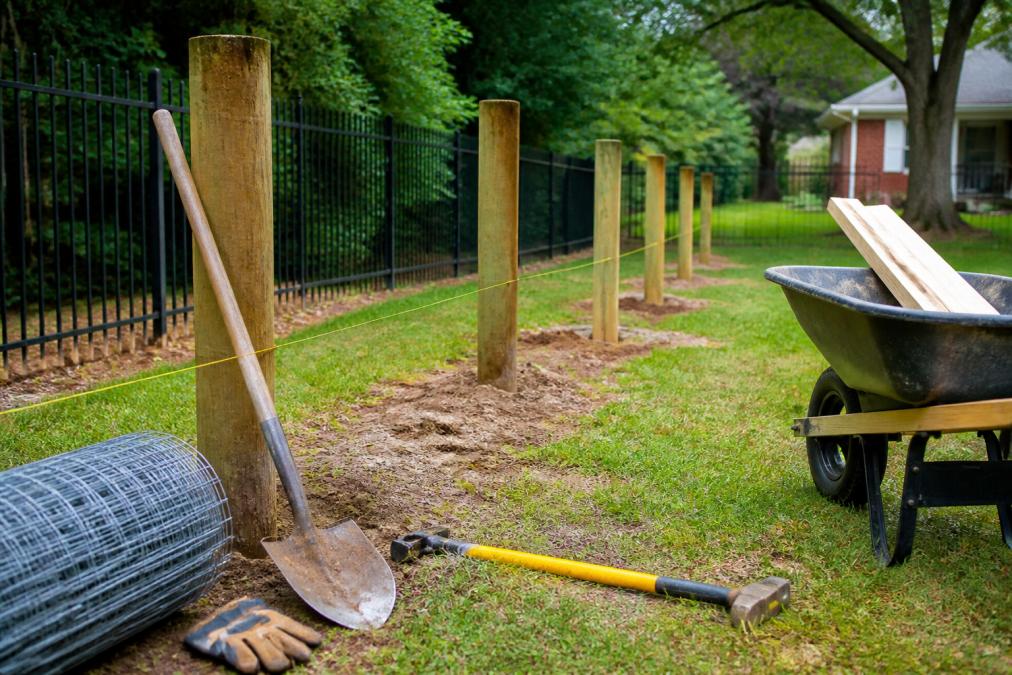
DIY installation can work for low fences in mild wind zones, but high-wind privacy fencing is a structural job. Post depth, footing size, and bracing determine whether the fence survives a storm, exactly the details rushed on weekend projects.
Comparing Wood, Vinyl, and Metal Options
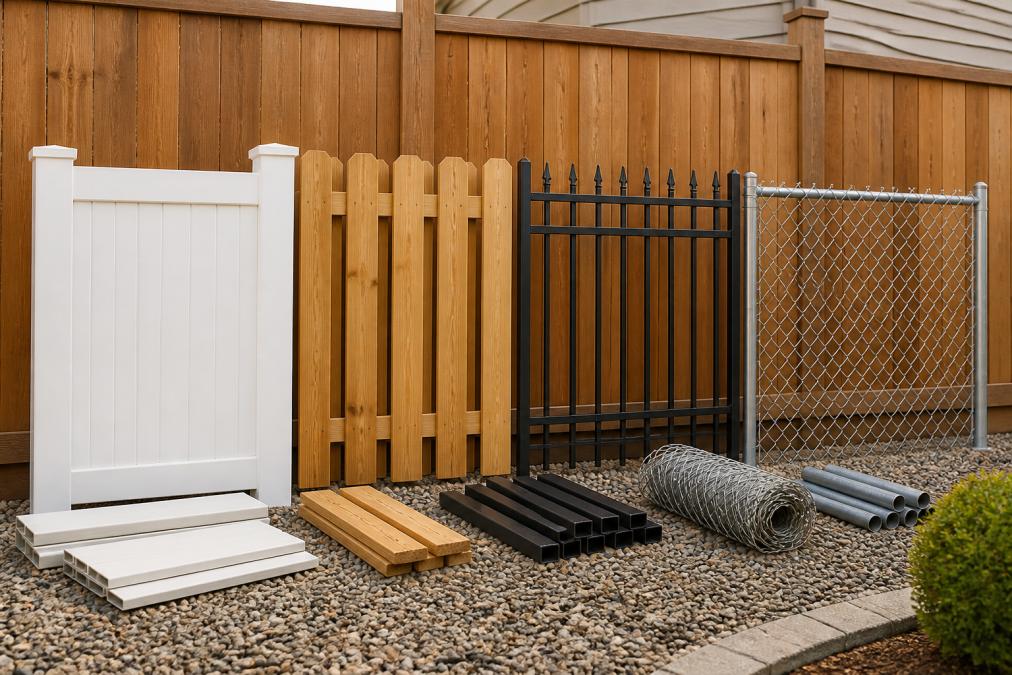
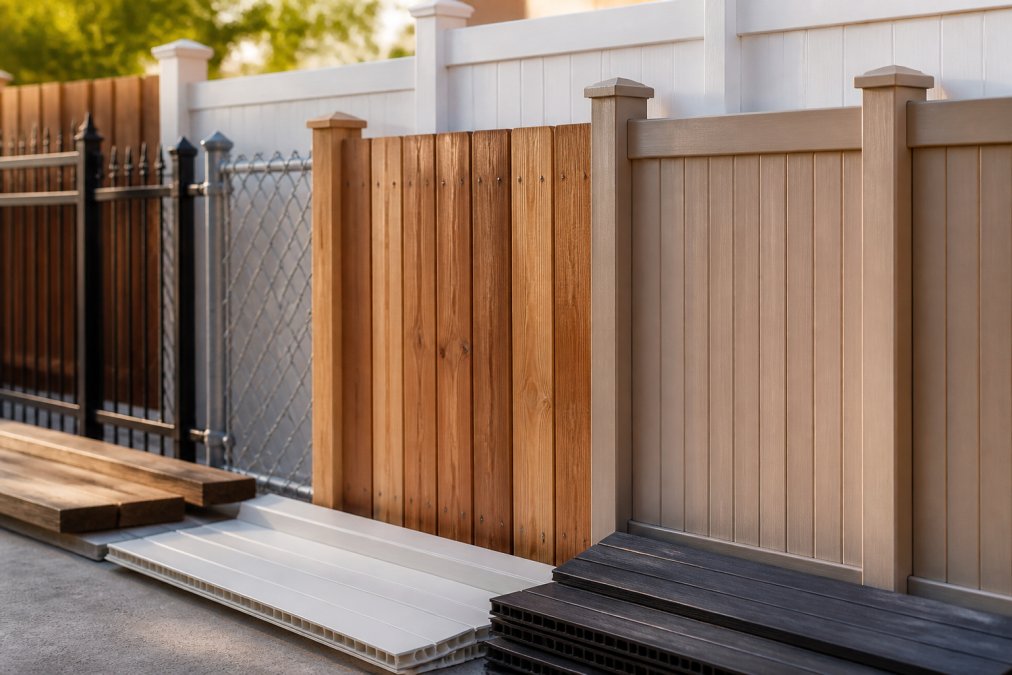
The right material depends on your priorities: wood wins on appearance and repairability, vinyl on low maintenance, and metal on strength.
| Priority | Best Choice | Why |
|---|---|---|
| Lowest maintenance | Composite or aluminum | No painting, staining, or sealing |
| Best appearance | Cedar wood | Natural look, easy board replacement |
| Lowest cost | Chain link with slats | $10-$20 per linear foot |
| Maximum wind resistance | FenceTrac steel frame | Engineered to 150 mph |
| Best balance | Vinyl | Flexible, low maintenance, mid-range cost |
Maintenance Requirements for Wind-Resistant Fences
Wind-resistant fences still need inspection, and the schedule depends on material. Wood needs the most attention, metal the least. What matters most is catching post movement early, before it becomes a full replacement.
- Wood: Inspect annually for rot at the ground line; re-stain every 2-3 years
- Vinyl: Wash once a year; check post caps and rails after storms
- Composite: Rinse as needed; tighten fasteners annually
- Aluminum: Wipe down yearly; touch up powder coating if scratched
- Chain link: Check tension and slat alignment each spring
Frequently Asked Questions
What type of privacy fence is most wind-resistant?
Fences that let air pass through handle wind best. Chain link with privacy slats, hit and miss fencing, and lattice panels rank among the most wind-resistant options because they reduce wind pressure on the structure. FenceTrac's steel frame system also performs well, engineered to withstand wind speeds up to 150 mph. Solid panels catch more wind, so they need deeper posts and stronger footings to stay upright.
Is vinyl or wood better for windy areas?
Both can work if installed correctly. Vinyl resists rot and pests, but it can become brittle in extreme cold and needs professional installation to meet wind-load standards. Cedar wood is naturally rot-resistant and easy to repair board by board, but it requires staining and sealing. For windy areas, cedar with reinforced post-setting or vinyl with proper wind-load engineering both hold up well.
Do you need gaps in a fence for wind?
Gaps reduce wind load significantly. Open-picket designs, slatted panels, and hit and miss fencing let air flow through instead of pushing against a solid surface. This lowers the lateral force on posts and panels, which is the main cause of fence failure in storms. Even small gaps between boards make a measurable difference in how a fence handles gusts.
How deep should fence posts be set for high winds?
Post depth depends on fence height and local wind-load requirements. A common rule is one-third of the post's total length below ground, but windy areas often need deeper footings with concrete. Proper post depth and concrete footing are the foundation of wind resistance. Ask your installer how they calculate depth for your specific soil and wind zone.
How do I reinforce an existing fence for high winds?
You can add diagonal bracing, install post reinforcement brackets, or replace weak posts with deeper concrete footings. Adding a horizontal rail mid-panel also helps. If your fence uses solid boards, consider swapping some for slatted or hit and miss designs to reduce wind pressure. A professional inspection can identify which posts need attention before the next storm season.