 listicle
Steel vs Aluminum Fencing: 5 Key Benefits for Businesses
Table of Contents
- Steel vs Aluminum Fencing: Material Comparison Overview
- 1. Superior Strength and Impact Resistance
- 2. Corrosion Resistance and Long-Term Durability
- 3. Maintenance Requirements and Total Cost of Ownership
- Best Security Fencing for Businesses: Steel's Structural Advantage
- Commercial Fence Installation Cost: Material and Labor Factors
- Aesthetic Appeal, Customization, and Regulatory Compliance
- Making Your Decision: Which Material Fits Your Business
- Frequently Asked Questions
Last Updated: September 3, 2026
Steel vs Aluminum Fencing: Material Comparison Overview
When you're evaluating steel vs aluminum fencing for your business, the choice shapes your security posture, maintenance burden, and long-term investment for years to come. Both materials deliver durability, but they excel in different scenarios. Steel offers superior strength and impact resistance, critical for high-security applications and properties exposed to harsh coastal conditions. Aluminum provides lightweight installation, virtually maintenance-free operation, and excellent corrosion resistance in most environments.
At Fence Company Lincoln, we've installed commercial fencing projects across diverse property types, from manufacturing facilities to retail compounds. The decision between these two materials rarely comes down to a single factor. Instead, it depends on your specific security requirements, climate exposure, aesthetic preferences, and total cost of ownership over the fence's lifespan.
This guide breaks down the five key benefits that separate steel and aluminum fencing for business applications, helping you make an informed choice backed by the real-world performance differences that matter most.
Comparison Table: Steel vs Aluminum at a Glance
| Factor | Steel Fencing | Aluminum Fencing |
|---|---|---|
| Tensile Strength | 50,000+ PSI (superior impact resistance) | 35,000 PSI (lighter, more prone to denting) |
| Corrosion Resistance | Excellent with E-Coat or powder coating | Excellent, naturally resistant to oxidation |
| Maintenance | Annual inspection, touch-up paint if coating damaged | Minimal, powder coat lasts 20+ years |
| Weight per Linear Foot | 8-12 lbs (requires stronger posts, professional installation) | 3-5 lbs (easier installation, lower labor costs) |
| Lifespan | 25-40 years with proper maintenance | 30-50 years with minimal maintenance |
| Cost Per Linear Foot | Higher upfront (installed) | Lower upfront (installed) |
| Customization | Wide range of ornamental styles available | Limited ornamental options, more modern aesthetic |
| Fire Resistance | Noncombustible (Class A rating available) | Noncombustible |
| Best For | High-security, coastal, or severe weather | Budget-conscious, low-maintenance, modern aesthetics |
1. Superior Strength and Impact Resistance
Steel fencing delivers structural rigidity that aluminum simply cannot match. This matters most when security is your primary concern, whether you're protecting a manufacturing facility, equipment storage yard, or high-value inventory.
The tensile strength difference is substantial. Steel ornamental fencing systems typically achieve 50,000+ PSI tensile strength, meaning the material resists deformation under lateral force and impact (astm.org). Aluminum, by contrast, tops out around 35,000 PSI. In practical terms, a vehicle striking aluminum fencing at moderate speed will dent or bend the panels. The same impact on steel fencing causes minimal visible damage, the structural integrity remains intact.
This strength advantage translates directly to security. A determined intruder faces a genuine barrier with steel. The posts won't shift, the panels won't buckle, and the overall perimeter maintains its defensive integrity. For businesses storing equipment, managing inventory, or protecting sensitive areas, this structural advantage justifies the material choice alone.
Rackability, the ability of fence panels to adapt to sloped or uneven terrain, also favors steel in severe grade conditions. Steel's rigidity prevents sagging on hillsides, whereas aluminum panels may require more frequent support or custom installation adjustments. This becomes critical in properties with significant elevation changes.
2. Corrosion Resistance and Long-Term Durability
Both materials resist corrosion, but through different mechanisms, and that distinction matters for coastal environments or properties exposed to salt spray, high humidity, or industrial pollutants.
Steel fencing relies on protective coatings to prevent rust. The industry standard is E-Coat (electrocoat) surface protection or multi-stage powder coating systems. When the coating remains intact, steel fencing performs excellently even in coastal salt-spray conditions.
The vulnerability: if the protective coating is scratched, gouged, or compromised during installation or maintenance, rust can initiate at that point. This requires vigilant inspection and touch-up paint as part of routine maintenance.
Aluminum, by contrast, oxidizes naturally to form a thin aluminum oxide layer that actually protects the underlying metal from further corrosion. This passive protection means aluminum requires virtually no maintenance in most climates. Powder-coated aluminum adds aesthetic durability, keeping the finish looking fresh for 20+ years without repainting (peer-reviewed research).
For businesses in coastal regions or industrial areas with atmospheric corrosion, aluminum eliminates the maintenance burden entirely. For inland properties with moderate exposure, steel's superior strength may outweigh the coating maintenance requirement.
3. Maintenance Requirements and Total Cost of Ownership
The true cost of any fencing material emerges over time. Initial purchase price tells only part of the story, maintenance labor, coating refresh cycles, and replacement panels drive the real expense.
Steel fencing demands annual inspection and occasional maintenance. If you spot coating damage, prompt touch-up prevents rust from spreading. In harsh climates, you may need to refresh the entire coating every 7-10 years, a significant labor expense. For a 500-linear-foot perimeter, recoating can cost thousands in professional labor alone.
Aluminum fencing shifts this equation. After installation, maintenance drops to visual inspection and occasional cleaning. Powder-coated aluminum panels maintain their appearance for 20+ years without repainting. Many manufacturers back aluminum systems with limited lifetime warranties, reflecting the material's durability.
When calculating total cost of ownership, factor in:
- Annual inspection labor
- Touch-up paint and coating materials (steel)
- Full recoating every 7-10 years (steel)
- Panel replacement (both materials, but less frequent with aluminum)
- Installation labor (steel requires heavier equipment and more skilled labor)
For property managers overseeing multiple commercial sites, aluminum's low maintenance profile reduces operational overhead significantly. For a single high-security facility where coating failure poses a real risk, steel's strength may justify the maintenance investment.
Best Security Fencing for Businesses: Steel's Structural Advantage
When security is non-negotiable, steel delivers performance that aluminum cannot replicate. High-security applications, perimeter protection for manufacturing facilities, equipment yards, data centers, or properties storing valuable inventory, demand impact resistance and structural integrity under stress.
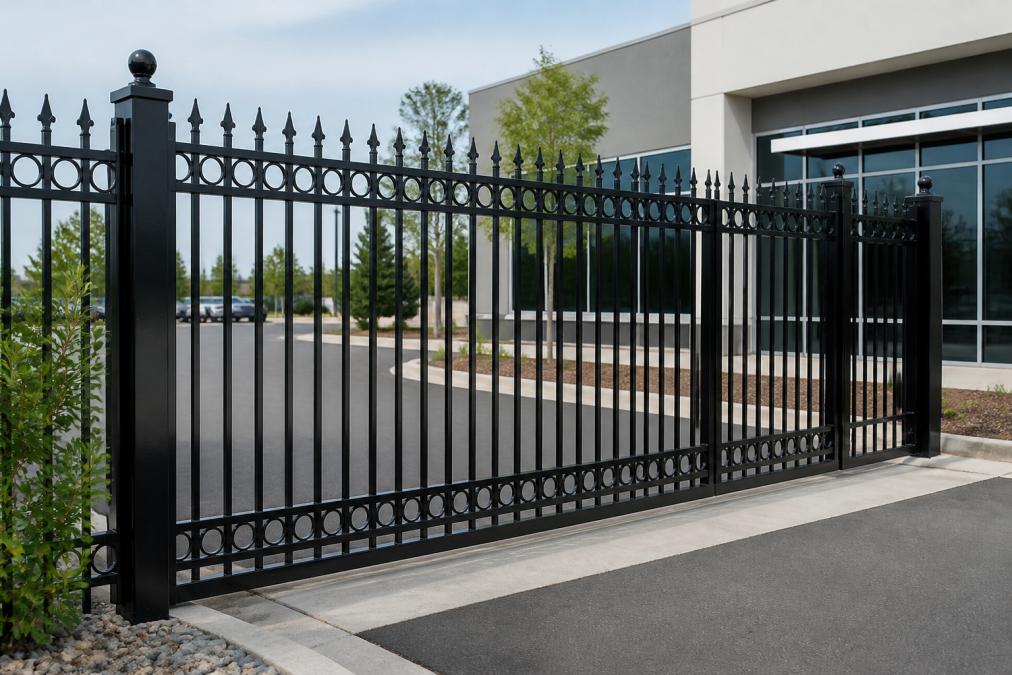
Steel's lateral force resistance means the fence maintains its barrier function even under deliberate attack. A vehicle striking the perimeter at speed causes minimal structural damage. An intruder attempting to force or cut through panels faces significantly higher resistance than with aluminum. For businesses where breach risk carries liability or operational consequences, this advantage justifies the material choice.
Installation quality matters enormously for security applications. Posts must be set deep enough, typically 3-4 feet for commercial-grade fencing, with concrete footings that resist lateral force (astm.org). Fence Company Lincoln manages every installation without subcontractors, ensuring posts are buried to specification and all connections are properly secured. This hands-on approach prevents the corner-cutting that compromises security in rushed installations.
The trade-off is clear: steel's superior security performance comes with higher upfront cost and ongoing maintenance responsibility. For businesses where perimeter breach represents a genuine risk, this is a worthwhile investment.
Commercial Fence Installation Cost: Material and Labor Factors
Commercial fence installation cost varies significantly based on material choice, site conditions, and labor requirements. Understanding these cost drivers helps you budget accurately and compare quotes intelligently.
Steel fencing typically costs more to install than aluminum, primarily because of weight and installation complexity. A steel post weighs 8-12 pounds per linear foot compared to aluminum's 3-5 pounds. This requires heavier equipment, more skilled labor, and longer installation time. Professional installation crews need experience setting steel posts to proper depth and ensuring the structural integrity that security demands.
Site grading and terrain adaptation add to installation labor. If your property has significant elevation changes, rackable panels (which both steel and aluminum offer) simplify installation, but steel's greater rigidity means fewer adjustment complications. Aluminum on steep slopes may require custom bracing or modified post spacing, increasing labor costs.
Aluminum installation typically runs faster and cheaper per linear foot because the material is lighter and requires less specialized equipment. A two-person crew can handle aluminum panel installation more efficiently than steel, directly reducing labor hours.
Concrete footings represent another cost variable. Both materials require proper post foundation work, typically 3-4 feet deep for commercial applications with concrete pour. This cost is roughly equivalent between materials, but the larger post holes required for steel's heavier gauge materials may slightly increase concrete volume.
Fence Company Lincoln provides transparent pricing and includes a price matching policy against competitors. We handle the entire project from design through completion without subcontracting, which eliminates the coordination gaps and hidden costs that often emerge when multiple contractors touch a job. Our fully licensed, insured, and bonded team ensures installation meets specification and local building codes.
Aesthetic Appeal, Customization, and Regulatory Compliance
Business properties communicate through their perimeter. Fencing serves security and containment functions, but it also signals professionalism, stability, and attention to detail to customers, employees, and neighbors.
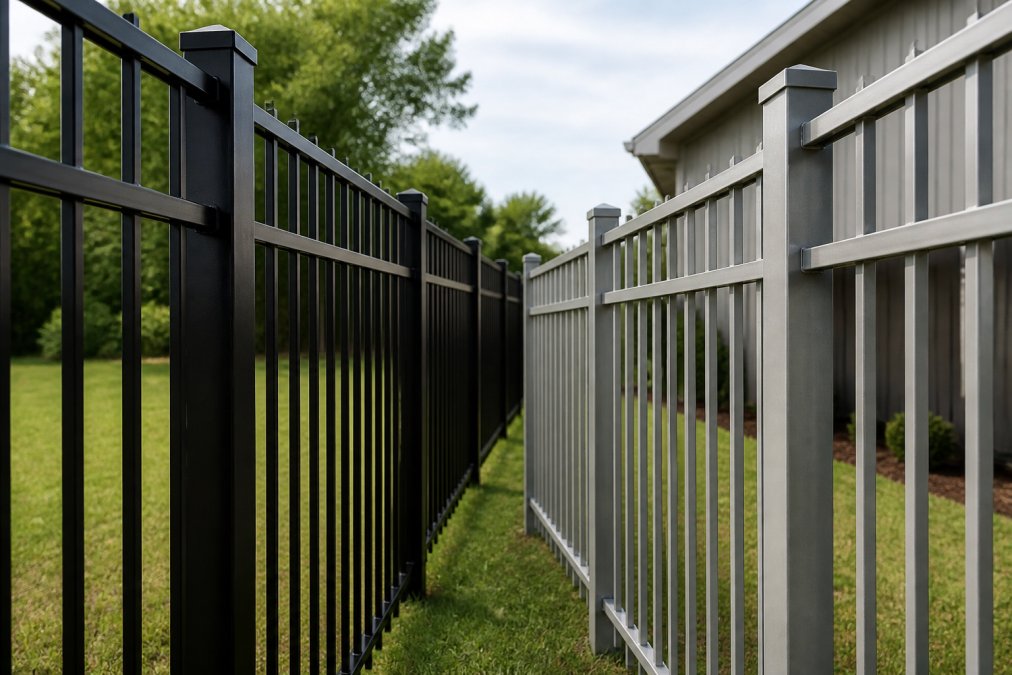
Steel ornamental fencing offers significantly more customization and aesthetic variety. Manufacturers offer dozens of styles, from classic pickets to modern geometric patterns, in multiple heights. Steel's strength allows for more intricate designs without compromising structural integrity. The material accepts powder coating in virtually any color, giving you flexibility to match brand identity or architectural aesthetics.
Aluminum ornamental fencing is more limited in style options. Most aluminum systems favor clean, modern lines. While this suits contemporary commercial architecture perfectly, it offers less variety for businesses seeking traditional or ornamental aesthetics.
Regulatory compliance varies by jurisdiction and property type. Some municipalities require specific fence styles for commercial districts. Others mandate minimum heights for security applications. A few jurisdictions have fire resistance requirements, particularly in wildfire-prone regions, where noncombustible materials are mandated.
Local building codes also specify post spacing, depth requirements, and lateral force ratings. Reputable manufacturers and installers, like Fence Company Lincoln, stay current on these requirements and design systems that comply. We work with you to ensure the final installation meets all local regulations while achieving your aesthetic and functional goals.
Making Your Decision: Which Material Fits Your Business
The choice between steel and aluminum fencing depends on prioritizing your specific needs. Neither material is universally superior, each excels in different scenarios.
Choose steel if:
- Security is your primary concern and impact resistance matters
- Your property is exposed to coastal salt spray or severe industrial pollution (with proper coating maintenance)
- You want maximum aesthetic customization and ornamental design options
- Your property has significant elevation changes where structural rigidity prevents sagging
- You're willing to invest in annual inspection and periodic coating maintenance
- Local fire codes require noncombustible materials
Choose aluminum if:
- Low maintenance is your priority and you want to minimize ongoing operational costs
- Your property is in a moderate climate without extreme corrosion exposure
- Budget constraints favor lower upfront installation costs
- You prefer a modern, clean aesthetic
- You want a 30-50 year lifespan with virtually no maintenance intervention
- You're managing multiple properties where maintenance overhead compounds
The strongest argument for steel centers on security and strength, for high-value facilities or properties where breach risk carries real consequences, the material's impact resistance justifies higher costs. The strongest argument for aluminum centers on total cost of ownership and maintenance burden, for most commercial properties in moderate climates, aluminum's low maintenance profile saves money over the fence's lifespan.
Fence Company Lincoln works with both materials and can guide you through this decision based on your specific property, climate, security requirements, and budget. Our 30+ years of experience means we've seen how both materials perform across diverse applications. We manage the entire installation process without subcontractors, ensuring your fence is built to specification and local code from day one.
Frequently Asked Questions
Q: Is steel or aluminum fencing more durable for commercial use?
A: Steel fencing offers superior tensile strength and structural integrity, making it more resistant to lateral force and impact. Aluminum is lighter and highly corrosion-resistant, ideal for coastal or wet environments. Steel typically lasts 20-50 years with proper maintenance; aluminum lasts 30-50 years with minimal upkeep. Your choice depends on your location's climate and the security level your business requires.
Q: What are the primary maintenance differences between steel and aluminum fences?
A: Steel fencing requires regular inspection and touch-up of powder coating to prevent rust, especially in harsh weather. Aluminum is virtually maintenance-free due to its natural corrosion resistance and durable powder-coated finish. For commercial properties, aluminum reduces long-term labor costs, while steel demands proactive care but provides superior strength and rackability on sloped terrain.
Q: Does steel fencing provide better security than aluminum for businesses?
A: Steel fencing delivers greater impact resistance and structural rigidity, making it the preferred choice for high-security applications. Its weight-to-strength ratio and resistance to deformation under stress provide superior protection. Aluminum, while secure, can bend under heavy impact. For businesses prioritizing maximum security barriers, steel is the stronger option, though both materials meet commercial-grade standards when properly installed.
Q: How does weight impact installation labor for steel versus aluminum fencing?
A: Aluminum is significantly lighter, reducing installation labor time and equipment costs. Steel is heavier, requiring more workers and specialized equipment, which increases commercial fence installation cost. However, steel's superior strength means fewer posts are needed in some applications, potentially offsetting labor expenses. Rackable panel designs on both materials help adapt to uneven site grading, simplifying installation on challenging terrain.
When you're ready to move forward, reach out to Fence Company Lincoln for a detailed consultation. We'll assess your property, discuss your security and aesthetic priorities, and recommend the material that delivers the best long-term value. With our price matching policy against competitors and fully licensed, insured team, you'll get expert installation backed by reliability you can trust.