 ultimate-guide
Residential Fence Installation Near Me: 2026 Cost Guide
Table of Contents
- What Residential Fence Installation Near Me Actually Involves
- Average Cost of Fence Installation Per Foot in 2026
- Comparing Fence Materials: Vinyl, Wood, Chain Link, and Iron
- Residential Fence Permit Requirements and HOA Rules
- How to Prepare Your Yard for Fence Installation
- DIY vs. Professional Installation: A Cost-Benefit Analysis
- How to Choose a Fence Contractor You Can Trust
- Conclusion: Getting Residential Fence Installation Right
- Frequently Asked Questions
Last Updated: September 10, 2026
What Residential Fence Installation Near Me Actually Involves
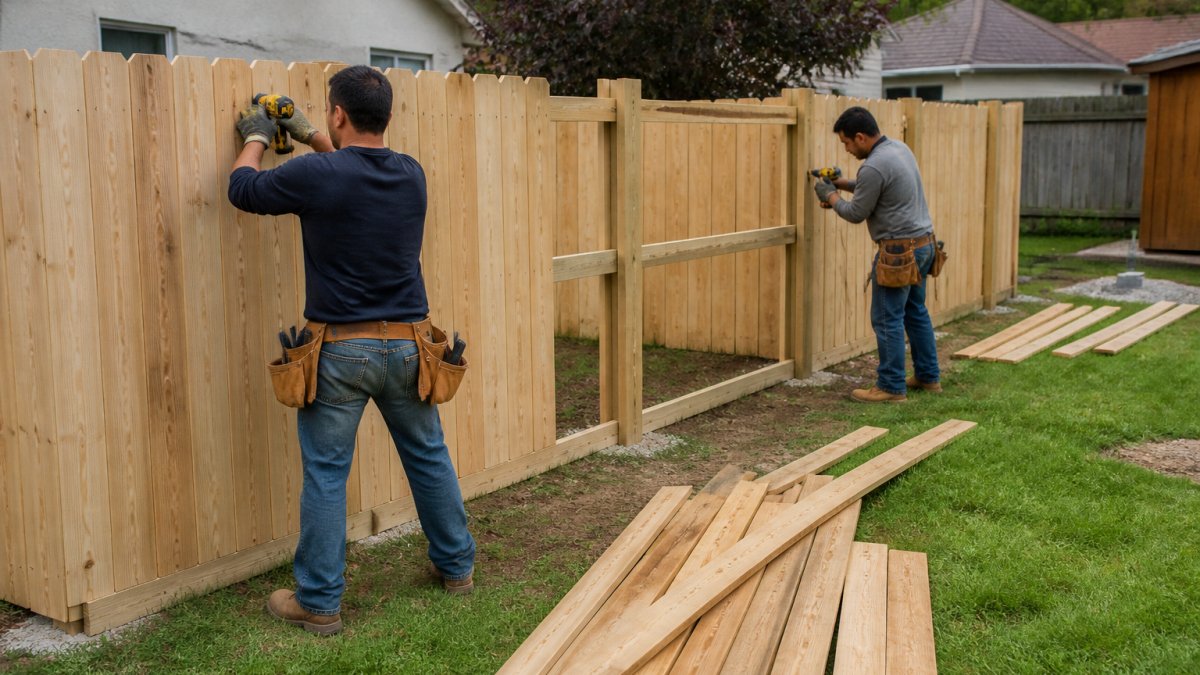
Residential fence installation near me is the process of hiring a local contractor to design, permit, and build a boundary fence on your property, from the first site visit through to the final walkthrough. At Fence Company Lincoln, we've handled these projects for more than 30 years. The difference between a fence that lasts decades and one that leans within a year almost always comes down to what happens before the first post goes in the ground.
The American Fence Association contractor guidance recommends verifying licensing and insurance before any work begins, because a fence is a structural improvement, not a decoration. Most homeowners focus on materials and price. The real variables are post depth, concrete footings, and whether the crew is actually employed by the company you hired.
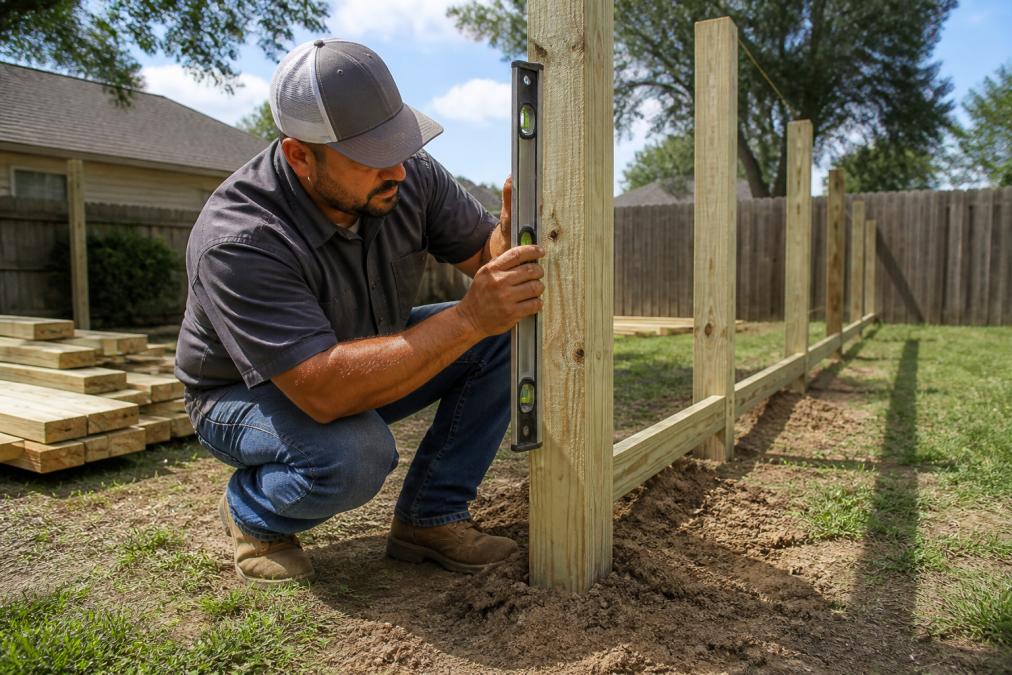
From In-Home Consultation to Final Walkthrough
A typical project moves through five stages. Skipping any one of them is where problems start.
- In-home consultation where the contractor measures property lines and discusses fence height, style, and gate placement
- Written cost estimate broken down by material and labor, not a single lump figure
- Permit filing and HOA approval if your neighborhood or municipality requires it
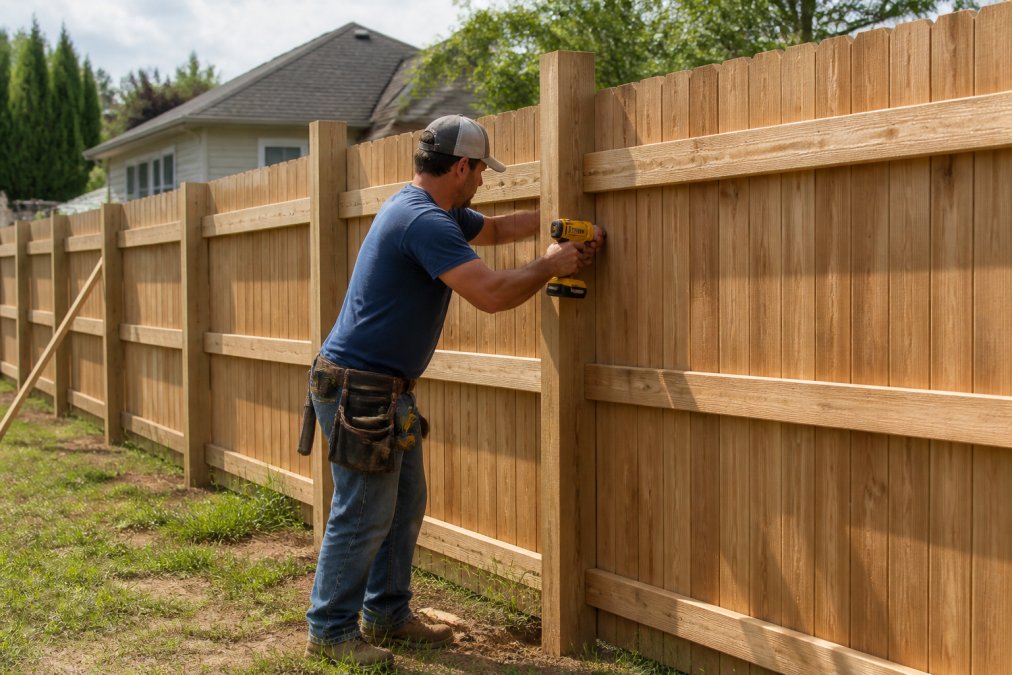
- Post setting with concrete footings dug below the frost line
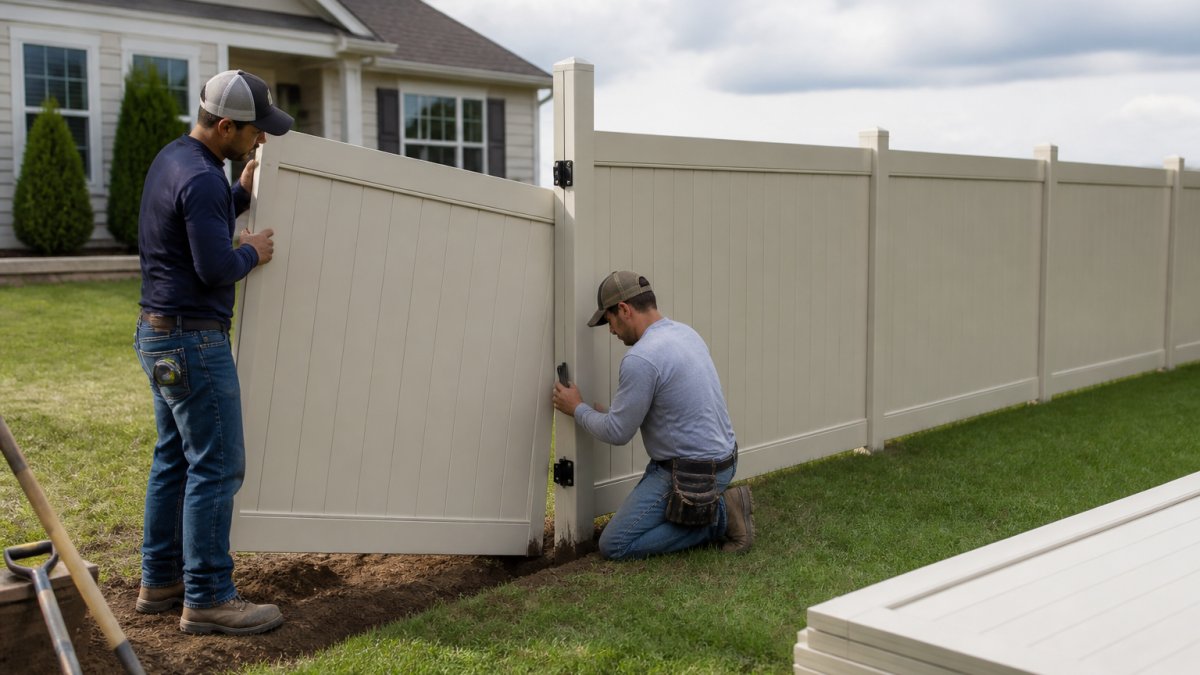
- Final walkthrough to check gate swing, panel alignment, and hardware
The whole sequence usually takes a few days to a few weeks depending on permits and material availability. Ask for the timeline in writing.
Average Cost of Fence Installation Per Foot in 2026
The average cost of fence installation per foot depends on material, terrain, and local labor rates, so any contractor quoting a single national number is guessing. That said, homeowners need a realistic starting range to budget against. The average cost of fence installation per foot depends on material, terrain, and local labor rates, so any contractor quoting a single national number is guessing. Your actual number depends on linear footage, gate count, site conditions, and regional labor rates, so request a written estimate rather than relying on a generic figure.
These are ranges, not quotes. Your actual number depends on linear footage, gate count, site conditions, and regional labor rates, so request a written estimate rather than relying on a generic figure.
What we can tell you is how the bill breaks down. Material costs cover panels, posts, rails, and hardware. Labor costs cover excavation, post setting, and assembly. Add-ons like gate installation, removal of an old fence, and slope work sit on top.
What Drives Labor Costs and Material Costs Up
Several factors push a project above the baseline:
- Terrain: Sloped yards require stepped panels and extra digging; a yard with a significant drop across the run can add to labor costs
- Soil type: Rocky or clay-heavy ground slows post setting; rock excavation may require a auger upgrade or hand-digging
- Fence height: Taller privacy fences (6 ft vs. 4 ft) need deeper footings and more material per linear foot
- Gate count: Each gate is a separate build with heavier hardware; a walk gate and a drive gate add to the installed cost
- Old fence removal: Disposal and haul-away add labor
- Access: Tight side yards or fences running behind obstacles slow the crew and add hours
A flat, clear yard with one gate is the cheapest scenario. Anything else adds time.
How to Read a Fence Estimate Line by Line
A trustworthy estimate itemizes rather than lumping. Look for these line items:
- Linear footage measured, confirm it matches your plat or survey
- Post spacing and depth, posts should be set 2-3 ft deep below the frost line in concrete
- Material grade, cedar vs. pine, 16-gauge vs. 9-gauge chain link, etc.
- Gate hardware, hinges, latches, and self-closing mechanisms vary widely in quality
- Permit fees, usually passed through at cost
- Old fence removal and disposal, confirm whether it's included
- Warranty terms, labor warranty length and what it covers
If a quote doesn't break these out, ask for a revised version. Comparing two lump-sum bids is comparing apples to oranges.
Comparing Fence Materials: Vinyl, Wood, Chain Link, and Iron
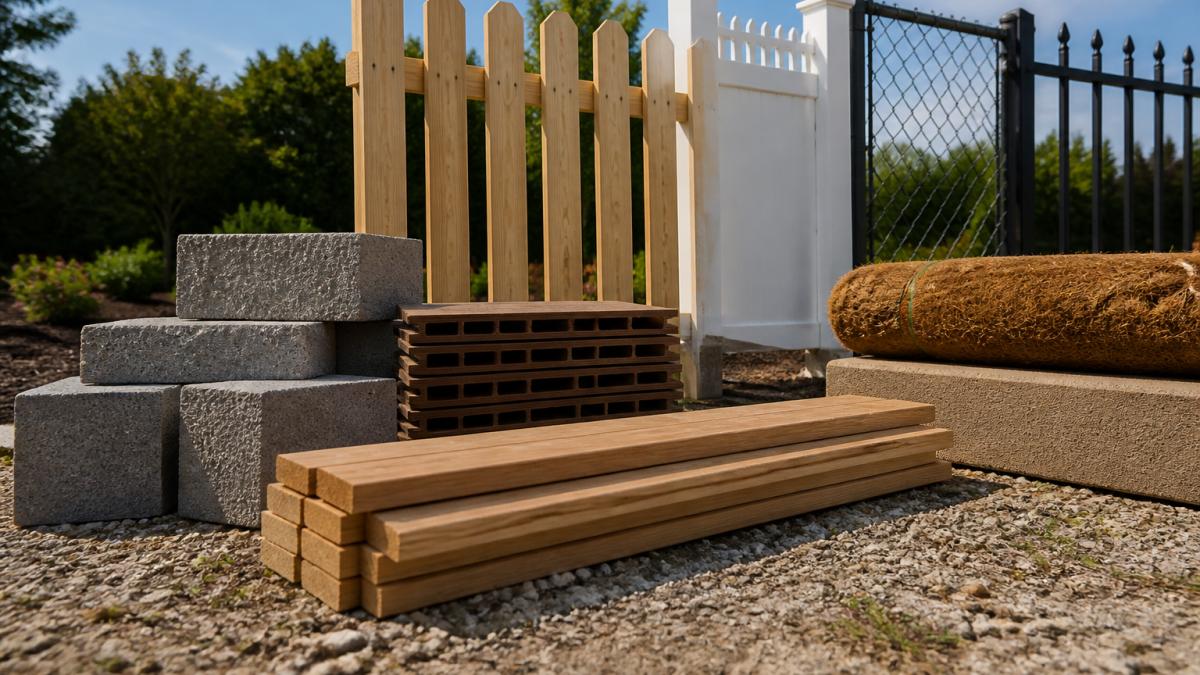
Each material suits a different job, and the right choice depends as much on your climate and soil as on your budget. Vinyl fencing resists rot and needs little upkeep. A wood privacy fence offers the best combination of privacy and traditional looks. Chain link is the budget option for pet containment and security fencing. Aluminum fencing and wrought iron deliver durability and curb appeal at a higher price point.
| Material | Best For | Maintenance Level | Typical Lifespan | Climate Notes |
|---|---|---|---|---|
| Vinyl | Privacy, low upkeep | Low | 20-30+ years | Excels in humid, wet, coastal climates; can become brittle in extreme cold |
| Wood (cedar/pine) | Privacy, classic look | Medium | 10-20 years | Performs well in dry climates; rots faster in humid or wet regions |
| Chain link | Pet containment, security | Low | 15-25 years | Galvanized coating resists rust; coastal salt air shortens lifespan |
| Aluminum | Curb appeal, durability | Low | 30+ years | Powder coating resists corrosion; ideal for coastal and humid areas |
| Wrought iron / steel | Curb appeal, security | Low | 50+ years | Needs periodic repainting in coastal or high-moisture areas |
| Composite | Wood look, low upkeep | Low | 25-30 years | Stable across climates; can fade in intense sun without UV inhibitors |
Composite fencing sits between vinyl and wood on cost, with a wood-grain look and no painting.
Matching Material to Your Climate
This is where most buying guides stop short, and it's the single biggest factor in whether your fence looks new in ten years or needs replacing in five.
Humid and wet climates (Southeast, Gulf Coast, Pacific Northwest): Vinyl and aluminum are the strongest performers because they don't absorb moisture, rot, or host termites. Wood requires aggressive sealing every 1-2 years and still typically fails at ground contact first. Chain link holds up if the galvanized coating is intact, but salt air near the coast accelerates rust.
Arid and desert climates (Southwest, high plains): Wood actually performs well here because low humidity slows rot. Cedar and redwood are excellent choices. Vinyl can become brittle and crack under intense UV and temperature swings, so look for vinyl formulated with UV inhibitors. Metal fencing stays stable but can get hot to the touch.
Cold climates (Northeast, Midwest, mountain states): Frost depth drives post-setting requirements more than material choice. Vinyl can crack in extreme cold if struck, while wood and metal handle freeze-thaw cycles well. Whatever material you choose, posts must be set below the local frost line in concrete, this matters more than the panel material.
Coastal and salt-air climates: Aluminum and vinyl outperform steel and chain link. Powder-coated aluminum resists corrosion best. Wrought iron needs regular repainting to survive salt air.
Wood Privacy Fence vs. Vinyl Fencing: Which Lasts Longer
Vinyl can be a durable option in wet or humid climates. Wood can be repairable, as a damaged picket can often be swapped. A cracked vinyl panel may require replacing a section.
The honest trade-off is this. Wood needs staining or sealing every few years to survive ground contact, and that's where most wooden fences fail first. Vinyl costs more upfront but asks almost nothing of you afterward. If you plan to sell within a few years, wood may be a suitable option. If you plan to stay put for an extended period in a humid climate, vinyl can be a good long-term investment.
A Note on Material Grade
Two fences made of the same material can perform very differently. Chain link comes in different wire gauges and coating weights; thinner wire and lighter coating fail faster. Vinyl varies in wall thickness and formulation, cheaper vinyl cracks sooner. Cedar grades range from clear heartwood to knotty sapwood, and the grade affects both appearance and rot resistance. Ask your contractor what grade they're quoting, and compare quotes on that basis.
Residential Fence Permit Requirements and HOA Rules
Most municipalities require a building permit for fences above a certain height, and nearly every HOA has its own rules on fence height, material, and color. Check both before you buy a single panel, because a fence built without approval can be ordered removed at your expense.
HUD guidance on property boundaries and improvements notes that boundary disputes often stem from unclear property lines, so have your lot surveyed if there's any doubt. Pull your plat map, call your city planning office, and read your HOA covenants. Get approval in writing.
How to Prepare Your Yard for Fence Installation
Preparing your yard shortens the installation timeline and prevents damage. Mark your property lines, locate underground utilities, and clear the fence path of shrubs, rocks, and debris before the crew arrives.
Here's a practical checklist:
- Confirm property lines with a survey or plat map
- Call 811 to mark underground utility lines
- Remove old fencing and haul away debris
- Trim branches and roots along the fence line
- Move vehicles and equipment off the work area
- Discuss gate placement and swing direction with the contractor
Utility marking is free and required in most areas. Digging into a gas or electrical line is dangerous and expensive, so never skip this step.
DIY vs. Professional Installation: A Cost-Benefit Analysis
Professional installation can be a valuable investment over the life of the fence. A DIY build saves on labor but risks shallow posts, misaligned panels, and permit mistakes.
The deciding factors are post depth and footings. Posts must be set below the frost line in concrete, and getting that wrong is the single most common reason fences lean within a year. If you lack the tools, the time, or the soil knowledge for your area, hiring a fence contractor can be a beneficial choice.
Occupational Safety and Health Administration guidance on excavation safety outlines the hazards of digging and trenching, which is worth reviewing before any DIY post-setting project.
How to Choose a Fence Contractor You Can Trust
Choose a contractor who is licensed, insured, and bonded, who performs the work with their own crew rather than subcontracting, and who provides a written estimate with a clear warranty. Those four items separate a reliable company from a risky one.
Ask these questions before signing:
- Are you licensed, insured, and bonded? Ask for proof.
- Do you use your own employees or subcontractors?
- How deep do you set posts, and do you use concrete footings?
- What does the warranty cover, and for how long?
- Can you provide references from similar local projects?
A price matching policy can be a good sign. A lower bid that subcontracts the work and cuts corners on post depth may lead to future repairs. When you compare quotes, compare what's actually included: footing depth, hardware quality, cleanup, and warranty terms.
Conclusion: Getting Residential Fence Installation Right
Getting residential fence installation right comes down to doing the boring parts well: verifying property lines, pulling permits, setting posts below the frost line, and hiring a crew that stands behind its work. Skip any of those and you'll be repairing the fence instead of enjoying it.
Fence Company Lincoln handles the whole project from design to completion with no subcontractors, using vinyl, wood, chain link, and iron materials. We're family owned and operated, fully licensed, insured, and bonded, with more than 30 years in the trade and a price matching policy against competitors. Get started with Fence Company Lincoln and secure your property with a fence built to last.
Frequently Asked Questions
What is the average price to install a fence?
Fence installation pricing depends on the material, fence height, linear feet, terrain, and whether old fencing needs removal. Wood, vinyl, chain link, and iron all carry different material costs and labor costs, and gate installation adds to the total. Because every yard is different, the most accurate figure comes from an on-site cost estimate. Fence Company Lincoln provides free in-home consultations and a price matching policy.
Do I need a permit for residential fence installation?
Many cities and counties require a building permit before residential fence installation, especially for fences over a certain height or those placed on or near property lines. Homeowners associations often impose additional rules on fence height, material, and color. Before you buy materials, check with your local planning department and your HOA. A licensed fence contractor can usually handle the permit paperwork for you and confirm setbacks so your fence stays compliant.
How do I choose between wood, vinyl, and iron fencing?
Wood privacy fence can offer privacy and a natural look, but it needs staining or sealing every few years. Vinyl fencing can resist rot, insects, and fading with minimal maintenance, which can suit pet containment and busy households. Aluminum fencing and wrought iron can deliver security and curb appeal. Think about your climate, how much upkeep you want, and whether the fence is mainly for privacy, pets, or security.
What is the best time of year to install a fence?
Late spring through early fall is the most popular window because the ground is workable and concrete footings cure reliably in mild temperatures. That said, professional crews install fences year-round in most climates. Scheduling in late winter or early spring can mean shorter wait times and more flexible installation timelines. If your ground freezes hard, post setting may take longer, so plan ahead and book your cost estimate early.