 how-to
Prevent Wooden Fence Post Rot at Ground: 2026 Guide
Table of Contents
- Why Wooden Fence Posts Rot at the Ground Line
- Best Wood Preservative for Fence Posts: What Actually Works
- How to Seal Fence Posts Before Installation
- Backfill and Drainage: Gravel vs. Concrete for Post Holes
- Fence Post Rot Repair Methods: Fix vs. Replace
- Climate and Soil Strategies for Long-Lasting Posts
- Maintenance Schedule to Prevent Fence Post Rot
- Frequently Asked Questions
Last Updated: September 11, 2026
Why Wooden Fence Posts Rot at the Ground Line
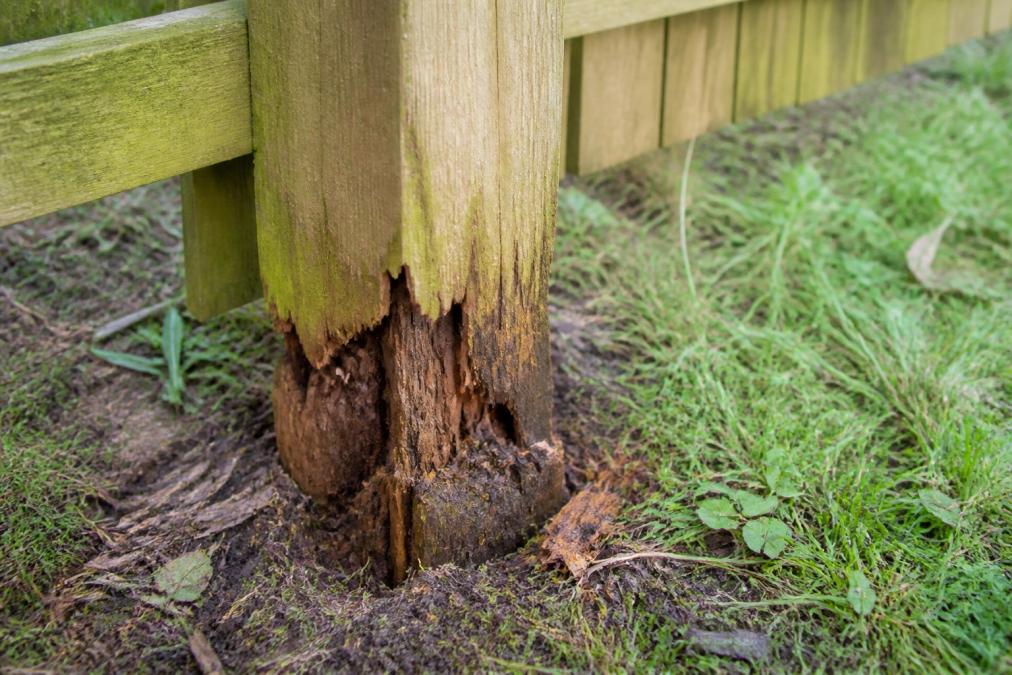
Fence post rot is the premature decay of a wooden post where it meets the soil, and it is the single most common reason wooden fences fail. Fence post rot is the premature decay of a wooden post where it meets the soil, and it is the single most common reason wooden fences fail. The wood above ground often looks fine, the wood below ground looks fine, and the post snaps at the soil line. That's not bad luck, it's physics, chemistry, and biology converging on one narrow band of wood.
The ground-line zone is where a post is simultaneously wet, oxygenated, and warm, exactly what fungal decay needs. Posts that rot there almost always share one of four causes: untreated or under-treated wood, poor drainage, backfill that traps water, or cuts made after factory treatment.
The Ground-Line Zone: Where Wood Meets Soil, Water, and Fungi
The ground-line zone is the roughly 15 centimeters of post straddling the soil surface, and it decays faster than any other part of the fence (fs.usda.gov). Water wicks up from the soil and down from rain and irrigation, so this band never fully dries.
The failure point usually sits just above the soil, not below it. Wood buried deep stays consistently wet and cool, while wood at the surface cycles between soaked and dry, and that cycling opens wood fibers the way repeated freeze-thaw opens asphalt. Once fibers separate, fungal decay moves in fast.
How Moisture and Wood-Destroying Organisms Break Down Posts
Wood-destroying organisms need four things: moisture, oxygen, a food source, and moderate temperatures (fs.usda.gov). A post at the ground line supplies all four. Fungal decay, often called dry rot even though it requires moisture, digests the cellulose and lignin that give wood its structural integrity. By the time you see soft, stringy, or crumbly wood, the post has already lost most of its load-bearing capacity.
The USDA Forest Service Wood Handbook explains that wood kept below about 20 percent moisture content will not support fungal growth. That single number explains why drainage and soil contact matter more than any coating you can brush on.
Best Wood Preservative for Fence Posts: What Actually Works
The best wood preservative for fence posts is a pressure-applied copper-based treatment, but "copper-based" is not a specification. Three chemistries dominate the residential market.
- ACQ (alkaline copper quaternary): copper plus a quaternary ammonium compound. Widely available, effective against fungal decay and termites, but the alkaline carrier can corrode standard steel fasteners. Use hot-dip galvanized or stainless hardware.
- CA (copper azole): copper plus a triazole fungicide. Lower corrosion risk than ACQ, common in big-box ground-contact lumber.
- MCA (micronized copper azole): copper particles dispersed rather than dissolved. Penetrates well, less corrosive to fasteners, and the dominant treatment in newer ground-contact stock.
All three are governed by the American Wood Protection Association (AWPA) use category system, which tells you whether a post belongs in soil:
- UC4A, ground contact, general use: the correct rating for fence posts in most residential soils.
- UC4B, ground contact, heavy duty: for permanent wood foundations and severe decay hazards.
- UC3B, above ground, exposed: rails, pickets, and anything that never touches soil.
Retention level matters as much as the chemistry: a UC4A post carries a higher preservative retention (pounds per cubic foot of wood) than a UC3B deck board of the same species. Ask the supplier for the AWPA use category and retention, not just "treated."
Pressure treatment vs. surface treatment. Pressure treatment forces preservative into the wood under vacuum and pressure, protecting the interior. Surface treatment, brushing, rolling, or dipping, coats the outside and does almost nothing for the buried section. Only pressure-treated, ground-contact-rated material belongs in a post hole.
Moisture-activated preservatives. Products like copper naphthenate and certain borate-based end-cut treatments diffuse through damp wood over time, migrating into the wood around a fresh cut. They are not a substitute for pressure treatment, but they are the right tool for field-cut ends, drilled holes, and notches where the factory treatment was breached.
Naturally rot-resistant species. For homeowners avoiding chemical treatments, a few species hold up in soil without pressure treatment: black locust, osage orange, and old-growth eastern red cedar. Their durability comes from extractives in the heartwood, so only the heartwood, not the sapwood, performs. Expect shorter service life than a UC4A treated post, and still treat every cut end.
How to Seal Fence Posts Before Installation
Sealing fence posts before installation means treating every cut, notch, and drilled hole with a copper-based preservative, because factory treatment only protects the surfaces the factory could reach. A post cut to length exposes raw wood at the bottom, and that end sits in the wettest part of the hole.
Follow these steps:
- Cut posts to final length and let them dry briefly
- Apply copper-based end-cut preservative to every fresh cut, soaking the end grain
- Treat drilled holes for rails and brackets the same way
- Let treated cuts cure per the product label before backfilling
- Slope the post top so water sheds away from the end grain
The end grain absorbs water far faster than the side grain, so it deserves the most attention. A common mistake is sealing the sides and ignoring the bottom, the one surface guaranteed to sit in soil.
Backfill and Drainage: Gravel vs. Concrete for Post Holes
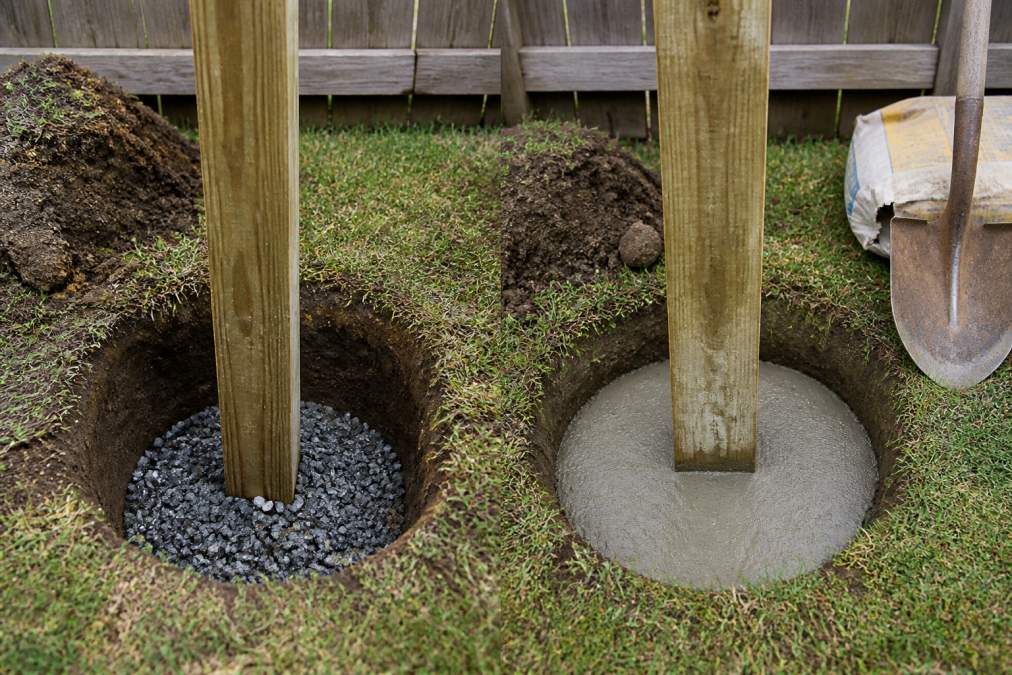
Gravel and concrete both hold posts, but they manage water in opposite ways. Concrete encasement locks a post rigidly and can trap moisture against the wood if the base doesn't drain. Gravel backfill lets water move away, but offers less lateral support unless compacted in lifts.
| Method | Drainage | Lateral Support | Best For |
|---|---|---|---|
| Gravel backfill | Excellent | Moderate | Wet soils, freeze-thaw cycles |
| Concrete encasement | Poor unless crowned | Excellent | Heavy gates, high wind |
| Concrete with gravel base | Good | Excellent | Most residential posts |
| Packed soil | Poor | Low | Temporary fencing only |
The hybrid approach wins most of the time: a gravel base at the bottom of the post-hole, the post set on top, then concrete crowned so water sheds away from the wood. This gives you concrete's structural integrity without turning the hole into a bathtub.
Fence Post Rot Repair Methods: Fix vs. Replace
Fence post rot repair methods fall into two categories: sistering a new post alongside the rotted one, or splicing a new section onto sound wood above the damage. Both work, and both have limits. If rot extends more than a third of the way up the post or the wood feels spongy, replacement is the honest answer.
Use this decision framework:
- Surface rot only, sound core: scrape, treat with preservative, and monitor
- Rot in the top 30 centimeters: splice a new post section using a metal splice plate
- Rot deeper than 30 centimeters or spongy core: replace the post
- Multiple posts failing at once: check drainage across the whole run before replacing
A common mistake is splicing onto wood already compromised above the visible rot. Fungal decay spreads ahead of what you can see, so probe the wood with a screwdriver before you trust it.
Climate and Soil Strategies for Long-Lasting Posts
Most guides treat "climate" as a footnote. In practice, soil chemistry and local weather decide how fast a post fails, which is why two identical fences installed the same weekend can age at completely different rates.
Soil Chemistry: The Variable Nobody Talks About
Soil pH and mineral content drive how preservatives behave over decades.
- Acidic soils (low pH): can accelerate leaching of water-soluble preservative components, particularly the copper-amine complexes in ACQ and CA. Posts in acidic, well-drained soils may lose preservative faster than the retention label implies.
- Alkaline soils (high pH): generally more stable for copper-based treatments, but can corrode galvanized fasteners faster. Stainless hardware is the safer choice.
- Clay-heavy soils: hold water against the wood for days after rain. Drainage, not treatment, is the limiting factor here.
- Sandy soils: drain fast, which is good for the wood but bad for lateral support. Compact gravel backfill in lifts to compensate.
- High-organic soils (peat, muck): support aggressive fungal populations and stay damp. These are the worst-case soils for any post, and the strongest argument for a metal anchor that keeps wood out of the ground entirely.
A simple soil test from a cooperative extension office or hardware-store kit tells you pH and drainage class, enough to pick the right backfill and treatment strategy.
Climate-Specific Strategies
Arid and semi-arid climates. The threat is not constant moisture but irrigation. Posts near lawns, drip lines, or sprinkler heads sit in artificially wet soil. Route irrigation away from post lines, and inspect the ground line after every watering cycle. Termites, not fungi, are often the dominant wood-destroying organism in dry regions.
Hot, humid climates. Fungal decay runs year-round. Airflow and soil contact matter more than any coating. Set posts on a gravel base, crown concrete so water sheds, and inspect twice a year instead of once. Wood that never touches soil, a post anchor or a pier-and-bracket system, is the most reliable answer.
Freeze-thaw climates. Water trapped around a post expands when it freezes and contracts when it thaws, opening cracks in the wood and concrete collar, and every crack is a fungal entry point. Drainage is the priority: gravel base, crowned concrete, and a soil grade sloping away from the post. Avoid a solid concrete plug that traps water at the base.
Coastal and high-wind zones. Salt air corrodes fasteners, and wind loads demand more lateral support. Concrete encasement with a gravel base is usually the right call, paired with stainless or hot-dip galvanized hardware.
Eco-Friendly Alternatives for Pets, Gardens, and Kids
Homeowners with vegetable gardens, pets, or young children often want to reduce chemical exposure. Three options work without abandoning durability:
- Naturally rot-resistant heartwood, black locust, osage orange, and eastern red cedar. No added chemicals, but shorter service life than UC4A treated lumber and heartwood-only performance.
- Metal post anchors and pier systems, the most effective eco-friendly option, because wood that never touches soil never rots from soil contact. The post sits in a bracket above grade, and the anchor takes the ground contact.
- Physical barriers instead of chemical ones, a post sleeve or a gravel-and-drainage detail that keeps the wood dry does more for longevity than any brush-on product, and adds no leachable chemistry to the soil.
If you choose a treated post near a garden, note that modern copper-based treatments (ACQ, CA, MCA) are the standard residential chemistry, and copper is the component of concern for soil accumulation. Keep treated wood out of compost piles and away from edible plant roots.
Maintenance Schedule to Prevent Fence Post Rot
Preventative maintenance is the cheapest rot prevention there is. A post inspected twice a year rarely fails without warning, and early detection turns a replacement job into a repair job.
| Task | Frequency | What to Check |
|---|---|---|
| Visual inspection at ground line | Every 6 months | Soft wood, discoloration, mushrooms |
| Probe test with screwdriver | Annually | Resistance at and below soil line |
| Re-treat cut ends and checks | Annually | Exposed end grain, new cracks |
| Clear soil and mulch away from posts | Every 6 months | Topsoil level above the post base |
| Check drainage after heavy rain | As needed | Standing water in post holes |
Keep topsoil level below the post's treated zone. Piling mulch or soil against a post raises the effective ground line and buries untreated wood, one of the most common causes of premature rot.
The three things that decide whether a post lasts 10 years or 30 are ground-contact-rated treatment, drainage at the base, and keeping soil away from the post. Everything else is secondary.
Rot at the ground line is preventable, but only if the post is treated correctly, set with drainage in mind, and inspected before decay gets ahead of you. If you'd rather not gamble on a repair that fails in two years, Fence Company Lincoln handles installation and repair with ground-contact-rated materials, no subcontractors, and full project management from design to completion. Our team is licensed, insured, and bonded, and we back our work with a price matching policy. Get started with Fence Company Lincoln and secure your space with confidence and a reliable, approachable approach.
Frequently Asked Questions
How do I stop wooden fence posts from rotting at the ground?
The most effective approach combines three steps: seal the post's below-ground section with a copper-based preservative before installation, set it on a gravel base for drainage, and keep soil and mulch below the topsoil line so water sheds away from the wood. Pressure-treated lumber rated for ground contact lasts longer, but factory edge cuts must be re-sealed with a brush-on preservative to restore protection. Inspect annually for soft spots near the ground-line.
Will pressure-treated posts still rot in the ground?
Yes, pressure-treated posts can rot, especially if they are not rated for ground contact or if the factory-cut ends are left unsealed. Treatment chemicals do not always penetrate the full depth of the wood, and moisture-activated preservatives need consistent moisture to work. Posts in poorly drained clay soil or those surrounded by concrete that traps water are at higher risk. Re-sealing cut ends and using a gravel base extends service life.
Does gravel at the bottom of a fence post hole prevent rot?
Gravel helps by allowing water to drain away from the post base rather than pooling around it. A 4-6 inch gravel layer at the bottom of the post-hole, combined with proper drainage away from the fence line, reduces prolonged soil contact and slows fungal decay. Gravel alone will not stop rot if the wood is untreated or the cut ends are exposed, so pair it with a quality preservative and sealed edges for best results.
What is the best sealant for fence posts in the ground?
Copper-based wood preservatives designed for ground contact provide the most reliable protection for below-ground sections. Look for products labeled for subterranean or ground-contact use, and apply them to the entire buried portion plus any factory edge cuts. For above-ground sealing, a waterproofing sealant or exterior-grade stain with UV protection helps. Reapply sealant every 2-3 years, and always treat cut ends immediately after trimming.