 ultimate-guide
Iron Fencing Security Benefits: 2026 Guide
Table of Contents
- Why Iron Fencing Security Outperforms Other Materials
- Deterrence, Impact Resistance, and Climb-Resistant Design
- Iron vs. Aluminum vs. Steel: A Security Comparison
- Security Fence Height Requirements and Zoning Compliance
- Iron Fence Installation Cost Factors and Long-Term Value
- Wrought Iron Fence Maintenance Tips for Lasting Protection
- Smart Security Integration and Environmental Considerations
- Conclusion: Making the Right Choice for Your Property
- Frequently Asked Questions
Last Updated: September 29, 2026
Why Iron Fencing Security Outperforms Other Materials
Iron fencing security delivers a physical barrier that resists cutting, climbing, and impact while holding its shape for decades. This guide from Fence Company Lincoln breaks down the deterrence, compliance, cost, and maintenance factors that decide whether iron is right for your property.
Homeowners and property managers often start with wood or chain link because the upfront numbers look friendlier. Then the fence sags, rots, or gets pushed over, and the replacement math changes fast. Iron solves the durability problem first, which is why it keeps showing up on commercial perimeters and high-visibility residential boundaries.
Below, we'll show you exactly how iron compares to aluminum and steel, what height and zoning rules apply, and how to keep a wrought iron fence in working condition for decades.
Deterrence, Impact Resistance, and Climb-Resistant Design
A trespasser deterrent works on three levels: it makes the property look harder to enter, it physically resists force, and it removes the handholds and footholds that make climbing easy. Iron fencing hits all three.
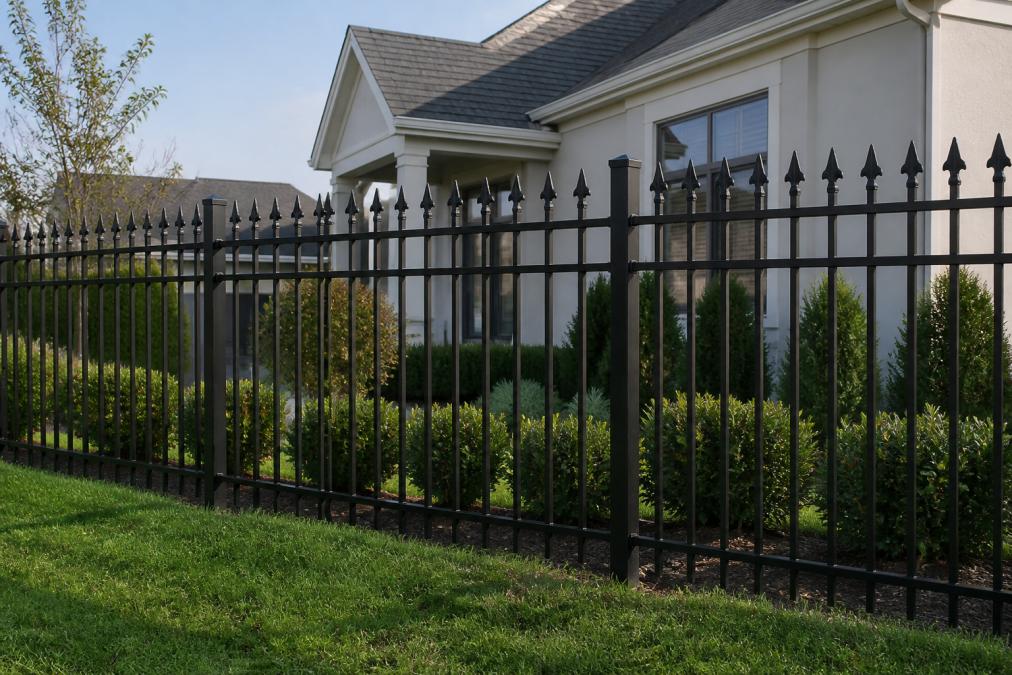
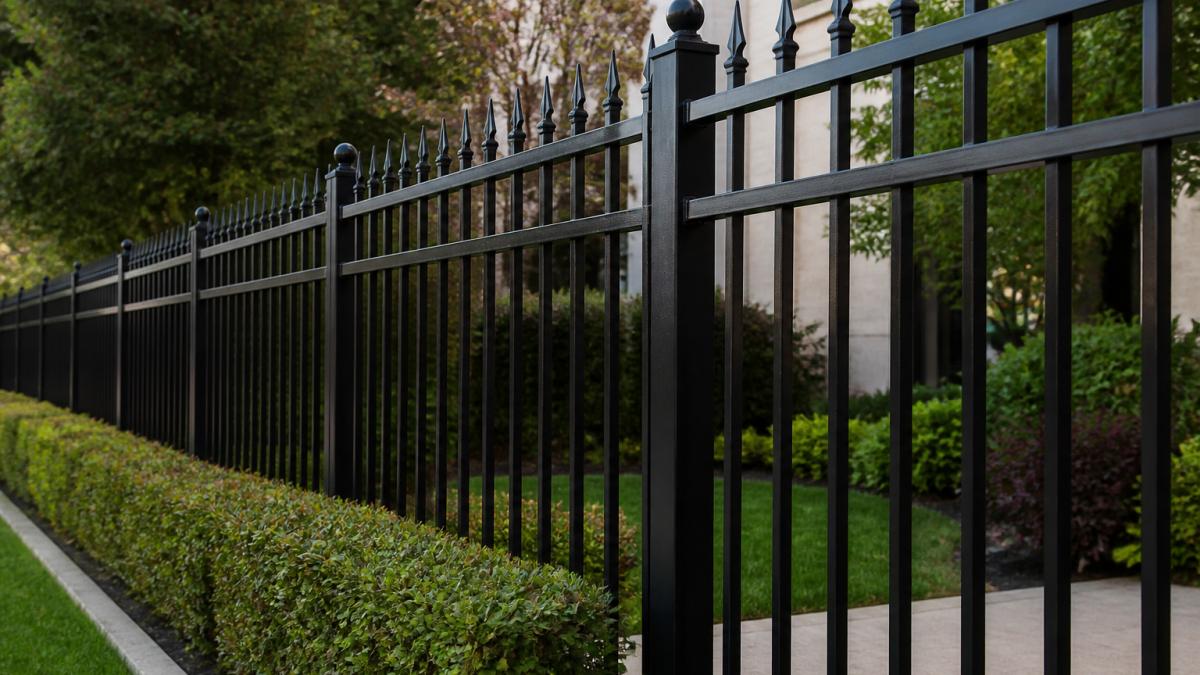
The visual deterrent is the first layer. A vertical-bar fence with spear-top finials signals that someone thought about perimeter security, and most casual intruders move to an easier target. The second layer is structural. Iron's tensile strength means bars bend less under impact than lighter metals, and welded joints hold when a vehicle or a shoulder hits the gate.
The third layer is the design itself. Bars spaced tightly enough to block a foothold, with no horizontal rails at climbing height, remove the ladder effect that makes chain link and split-rail fences easy to scale. A climb-resistant profile is a design decision, not an add-on.
Iron vs. Aluminum vs. Steel: A Security Comparison
Iron wins on raw strength, aluminum wins on weight and rust resistance, and steel sits in the middle on both. The right pick depends on whether you're optimizing for security, maintenance, or budget.
| Material | Strength | Rust Risk | Weight | Best For |
|---|---|---|---|---|
| Wrought iron | Highest | Moderate (needs coating) | Heavy | High-security perimeters, decorative security |
| Aluminum | Moderate | Very low | Light | Coastal properties, low-maintenance boundaries |
| Galvanized steel | High | Low (with galvanizing) | Moderate | Commercial perimeter security |
Wrought iron offers the best impact resistance of the three, which is why it's common on estates, commercial yards, and properties where asset protection matters. The trade-off is weight: heavy panels need deeper posts and stronger installation hardware, and that shows up in the labor line of your quote.
Aluminum is the maintenance-friendly option. It won't rust the way untreated iron can, and powder coating holds up well in humid conditions. Where it falls short is rigidity. A determined intruder can deform a light aluminum panel in a way that iron resists.
Galvanized steel is the practical middle ground for commercial work. The zinc coating provides corrosion resistance, and the material takes powder coating cleanly for a finished look. For most business premises, it's the best balance of cost and structural integrity.
Security Fence Height Requirements and Zoning Compliance
Most residential zoning codes cap front-yard fences at 4 feet and back-yard fences at 6 feet, though local rules vary and commercial properties often face different limits. Always confirm the exact numbers with your local planning office before ordering materials.
Compliance is where a lot of DIY fence projects go sideways. Height limits, setback requirements from the property line, and restrictions on fence style in front yards all fall under zoning regulations that differ by jurisdiction. A fence that's 6 inches too tall can trigger a violation notice and a forced rebuild.
Here's what to check before you buy:
- Maximum height for front, side, and rear yards
- Required setback distance from the property boundary
- Whether corner lots have sight-line restrictions
- HOA covenants that stack on top of city code
- Permit requirements and inspection steps
For commercial properties, security fence height requirements often run taller, and some uses require a specific panel design for intrusion prevention. Pull the current code from your local planning department rather than relying on a neighbor's fence as a reference.
Iron Fence Installation Cost Factors and Long-Term Value
Iron fence installation cost factors come down to four things: linear footage, height, material grade, and site conditions. Pricing depends on linear footage, height, material grade, and site conditions. Treat these as planning brackets, not quotes, your layout, gate count, and terrain move the number more than any per-foot average.
The material itself is the biggest line item, typically 40% to 60% of the total. Wrought iron costs more per foot than aluminum or galvanized steel because the raw stock is heavier and the fabrication is more labor-intensive.
Here's how the four factors interact:
| Cost Factor | What Drives It | Typical Share of Total | How to Control It |
|---|---|---|---|
| Linear footage | Total fence run length | 40-60% (material) | Measure carefully; avoid over-ordering |
| Height | Panel size and post depth | 10-20% | Match height to zoning, not impulse |
| Material grade | Iron vs. steel vs. aluminum | Included in material | Choose by security need, not price alone |
| Site conditions | Ground type, slope, obstructions | 15-25% (labor) | Get a site walk before the quote |
Fence Company Lincoln manages every project from design to completion without subcontractors, ensuring personalized service and secure job sites. This matters when your timeline is tight or you're coordinating multiple rental properties, because a single point of accountability keeps the schedule and the budget from drifting.
Wrought Iron Fence Maintenance Tips for Lasting Protection
Wrought iron fence maintenance tips start with one rule: inspect and touch up the coating before rust gets a foothold. A 30-minute annual walk-through prevents most long-term damage.
A practical annual schedule looks like this:
- Walk the full fence line and check for chipped paint or rust spots
- Scrub rust spots with a wire brush down to bare metal
- Apply a rust-inhibiting primer to the exposed area
- Match the topcoat color and feather the edges
- Check gate hinges and latches for sag and alignment
- Tighten any loose installation hardware
- Clear vegetation away from the base to reduce moisture
Smart Security Integration and Environmental Considerations
Environmental considerations. Iron is a genuinely recyclable material, and steel is one of the most recycled materials in the country, scrap iron and steel get remelted into new products rather than landfilled. A fence that lasts decades avoids the repeated resource use of short-lived alternatives. Powder coating produces fewer volatile organic compounds than traditional wet paint, which matters if you're working near a sensitive area. Wood fencing, by contrast, often carries chemical treatments that complicate disposal at end of life.
Conclusion: Making the Right Choice for Your Property
Choosing a fence is a trade-off between upfront cost, security, and how much upkeep you're willing to take on. Iron wins on security and lifespan; it asks for a modest annual maintenance routine in return.
Frequently Asked Questions
What type of fence is most effective for security?
Iron fencing is widely considered the most effective for security due to its height, strength, and climb-resistant design. Its vertical bars and pointed finials make it difficult to scale, and the heavy-duty construction resists cutting and impact. Many homeowners and businesses choose iron fencing security because it provides a strong physical barrier while still allowing visibility, which can deter trespassers. For maximum effectiveness, pair it with proper gate hardware and lighting.
What are the disadvantages of wrought iron?
Wrought iron can be expensive upfront and requires periodic maintenance to prevent rust, especially in humid climates. It is also heavy, so installation may need reinforced posts. However, these drawbacks are often offset by its long lifespan and low long-term maintenance compared to wood. Regular painting or powder coating can extend its life and maintain its appearance. For many property owners, the durability and security benefits outweigh the initial cost.
How does iron fencing compare to chain link for security?
Iron fencing offers superior security compared to chain link because it is much harder to cut and climb. Chain link can be easily cut with common tools, while iron requires significant effort to breach. Iron also provides a stronger visual deterrent and can be customized with spikes or finials. However, chain link is more affordable and requires less maintenance. For high-security needs, iron is the better choice despite the higher cost.
Can I write off a fence on my taxes?
In some cases, a fence may be tax-deductible if it is installed for business purposes, such as on a rental property or commercial site. The IRS allows depreciation deductions for property improvements that have a useful life of more than one year. However, personal residence fences are generally not deductible. Consult a tax professional to determine if your iron fence qualifies for a write-off based on its use and local regulations.