 ultimate-guide
How to Choose the Best Fence for Backyard: 2026 Guide
Table of Contents
- Start With Your Why: Privacy, Security, or Curb Appeal
- Compare Fence Materials: Which Best Fence Fits Your Yard
- Fence Height Regulations and Zoning Laws You Must Check
- Average Cost of Backyard Fence Installation and TCO
- How to Hire a Professional Fence Contractor
- Climate, Pets, and HOA Rules: Matching Fence to Your Life
- Conclusion: Your Next Step to the Best Fence
- Frequently Asked Questions
Last Updated: September 16, 2026
Start With Your Why: Privacy, Security, or Curb Appeal
Privacy, security, and curb appeal pull in different directions:
- Privacy demands height, tight board spacing, and solid panels. A picket fence fails here no matter how good it looks.
- Security favors visibility and strength. Wrought iron and chain link deter intrusion better than a solid wood wall, because nothing hides behind them.
- Curb appeal rewards proportion and finish. A fence that's too tall or too heavy can drag down a property's look rather than lift it.
Write down your top priority before you look at a single sample. That one decision eliminates half the options immediately.
Compare Fence Materials: Which Best Fence Fits Your Yard
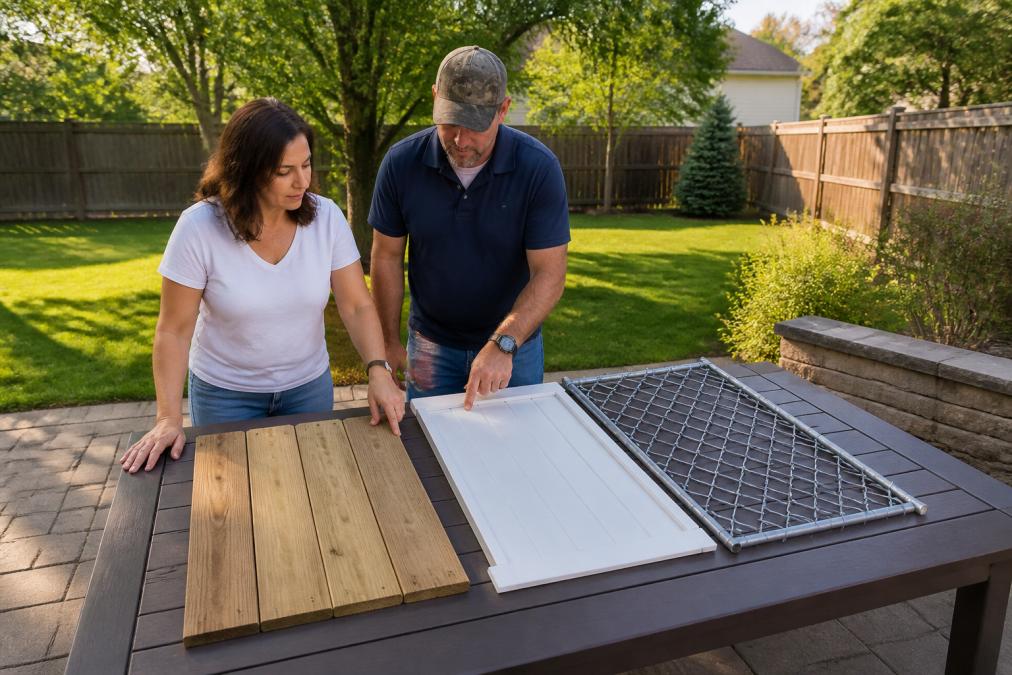
Material choice drives cost, lifespan, and weekend work. The best fence material matches your climate, budget, and tolerance for upkeep, not the highest price tag.
Wood and Cedar: Classic Look, Higher Upkeep
Cedar and pressure-treated lumber remain the most popular residential choices. Cedar resists rot naturally, takes stain well, and delivers the warm, solid look most homeowners picture for a privacy fence.
Vinyl, Composite, and Metal: Low-Maintenance Options
Vinyl and composite cost more up front but ask almost nothing afterward. Vinyl shrugs off moisture, insects, and rot, key in hard freeze-thaw climates, while composite blends wood fiber and plastic for a wood-like look with far less upkeep.
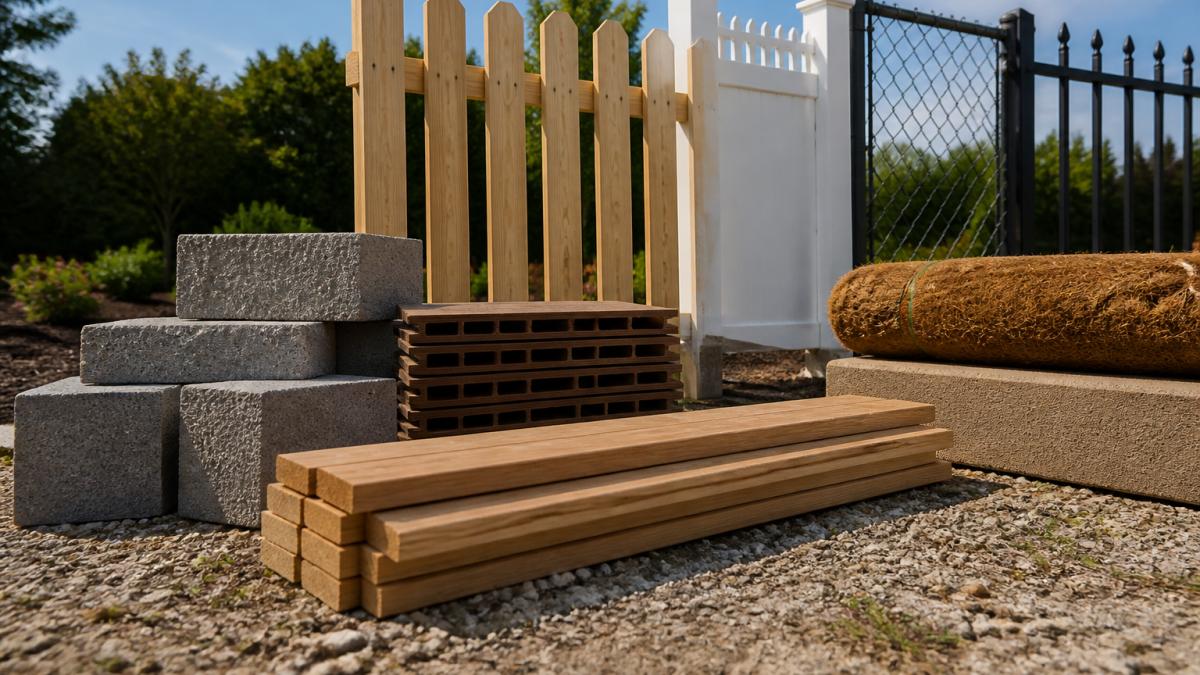
| Material | Upkeep | Best For | Watch Out For |
|---|---|---|---|
| Cedar / pressure-treated wood | Staining every few years | Privacy, classic look | Post rot at the base |
| Vinyl | Rinse as needed | Low-maintenance privacy | Higher upfront price |
| Composite | Minimal | Wood look, no upkeep | Premium cost |
| Wrought iron / aluminum | Touch-up paint | Security, visibility | Cost per foot |
| Chain link | Almost none | Budget, pet containment | Limited curb appeal |
Fence Height Regulations and Zoning Laws You Must Check
Fence height regulations and zoning laws are the step homeowners skip most often, and the one that can force a tear-down. Most municipalities cap front-yard fences well below backyard limits, and corner lots often carry sight-line restrictions near intersections.
Average Cost of Backyard Fence Installation and TCO
The average cost of backyard fence installation depends on linear footage, material, terrain, and gate count, so any single number online is a rough starting point. Think in total cost of ownership rather than sticker price.
The Four Cost Drivers That Actually Move Your Quote
Nearly every fence bid reduces to the same four variables. Understanding them lets you compare quotes apples-to-apples instead of guessing why one is $2,000 higher.
- Linear footage. Fencing is priced per linear foot, so a 150-foot perimeter is the base unit. Measure your actual property line, not your house footprint, the two rarely match.
- Material and grade. Within one material, grade swings price hard. A cedar privacy fence with 1-inch pickets and 4x4 posts costs meaningfully more than the same footprint with thinner pickets and 2x3 rails. Ask which grade a quote assumes.
- Terrain and access. Sloped yards need stepped or racked panels, adding labor. Rocky soil, tree roots, or a line a truck can't reach all add cost. A flat, open lot is the cheapest install.
- Gates and corners. Each gate is a reinforced frame, hinges, and a latch, a discrete line item. Corners and end posts need bracing. Four corners and two gates cost more than a straight run with one gate, even at identical footage.
How to Build a 10-Year TCO Estimate
Total cost of ownership adds three things: initial installation, ongoing maintenance, and how long the fence lasts. Here's the framework most buying guides skip.
- Write down the installed price from your itemized quote.
- Estimate annual maintenance. Wood means staining or sealing on a multi-year cycle plus periodic board and post repair. Vinyl and composite are essentially a rinse and occasional panel replacement. Metal needs touch-up paint on scratches and rust spots.
- Estimate replacement timing. Wood posts set in soil fail first in most installs; needing post replacement within a decade resets part of your cost. Vinyl and composite typically run longer before structural work.
- Add the two together across 10 years and divide by 10 for an annualized cost, that number, not the sticker price, is what you're really comparing.
What to Demand in an Itemized Quote
Get itemized quotes separating materials from labor. Ask specifically:
- How posts will be set, depth, footing diameter, and whether concrete is included
- The post and rail dimensions, and the picket thickness
- Whether gates are reinforced and what hardware is used
- What's excluded: permit fees, old fence removal, haul-away, and any grading
A lower-looking quote often hides thinner posts, fewer concrete footings, or an unreinforced gate. Those shortcuts don't show up on day one, they show up in year three, when the fence starts to lean.
How to Hire a Professional Fence Contractor
Hiring a professional fence contractor comes down to verification, not sales pitch. A legitimate company welcomes the questions below; a cut-rate operator dodges them.
Run through this checklist before you sign anything:
- Confirm the contractor is licensed, insured, and bonded, and ask to see proof
- Ask whether the work is performed by in-house crews or subcontracted out
- Request the post-setting method in writing (depth, concrete footings)
- Get a written warranty covering both materials and installation
- Ask for local references from projects similar to yours
- Confirm the timeline in writing, with a start and completion date
- Verify the price-matching or quote terms so nothing changes mid-project
The lowest bid usually isn't the cheapest fence. It's the one most likely to need repair or replacement first, which is where the real cost shows up.
Climate, Pets, and HOA Rules: Matching Fence to Your Life
Matching a fence to your life means weighing climate, pets, and HOA rules together, because they often conflict. A material that handles your winters may be banned by your covenant, and a fence that contains a large dog may be too tall for your front yard. Work through all three before you commit.
Climate-Specific Material Recommendations
Most guides list materials generically. Climate is what actually determines how long a fence lasts, so start here.
Fencing for Pets and Children
For pets, priorities shift from looks to containment. A few mechanics matter more than material:
- No gaps at the base. A determined dog tests the bottom rail first. Run the fence line tight to grade, or add a bottom rail low enough that nothing squeezes under.
- Height matched to the animal. A fence a dog can see over is one it will try to get over. Match height to the animal's jump, not a generic standard.
- A gate that latches securely. The gate is any fence's weakest point. Self-latching hardware and a reinforced frame matter more than panel style.
- Sightlines for kids. For young children, a solid privacy fence removes sightlines from the house. An open style, picket, aluminum, wrought iron, lets you watch the yard from a window.
HOA and Legal Compliance Checklist
- Pull your local zoning ordinances. Confirm the maximum height in each yard position, front, side, and rear limits often differ.
- Check setback rules. Find how far the fence must sit from the property line, and whether a corner lot carries sight-line restrictions near intersections.
- Confirm whether a permit is required. Rules vary widely by jurisdiction, so check your city or county planning department directly for current limits.
- Read your HOA covenant. Covenants often go stricter than the city, spelling out approved materials, color palettes, and fence styles.
- Get HOA approval in writing before ordering materials. An HOA can require removal of a fence that meets every municipal code but violates the covenant.
- Verify property lines. Get a survey if the boundary is unclear. Installing a fence over the line can spark a neighbor dispute and, in some cases, require you to move the structure at your own expense.
Sustainable options like composite made partly from recycled material are increasingly accepted by HOAs and worth raising with your board. If your covenant is silent on a material, ask for a written ruling rather than assuming it's allowed.
Conclusion: Your Next Step to the Best Fence
The hardest part of choosing a fence isn't picking a material. It's the paperwork and groundwork before anyone digs a post hole: zoning limits, HOA covenants, property lines, and a realistic long-term budget.
Frequently Asked Questions
What is the best type of fence for a backyard?
The best type depends on your priorities. Wood and cedar offer classic looks and privacy but need staining and sealing. Vinyl and composite cost more upfront but are maintenance-free and resist rot. Chain link is budget-friendly for pet containment but offers little privacy. Aluminum or wrought iron provides security and curb appeal. For most homeowners, a vinyl privacy fence balances durability and low upkeep, while cedar suits those who prefer natural wood.
Should I get a 5 or 6 foot fence?
A 6-foot fence is standard for privacy and security, blocking sightlines and deterring intruders. A 5-foot fence works for pet containment or marking property lines without feeling enclosed. Check local zoning ordinances first: many areas cap front-yard fences at 4 feet and allow 6 feet in backyards. HOA restrictions often mirror these limits. If you need extra height for privacy, consider a 6-foot fence with a lattice top for airflow.
How do I determine my property lines before installing a fence?
Start by locating your property survey or plat map, often included in closing documents. If you do not have one, hire a licensed land surveyor to mark corners and lines. Never rely on old fence posts or neighbor estimates. Installing a fence even a few inches onto a neighbor's property can lead to disputes or forced removal. Once lines are marked, check local setback rules, which may require a gap between the fence and the property line.
What maintenance is required for different fence materials?
Wood fences need staining or sealing every 2 to 3 years to prevent rot and warping. Vinyl and composite fences require occasional cleaning with soap and water, typically once a year. Chain link needs little beyond rinsing and checking for rust. Aluminum and wrought iron may need touch-up paint if scratched. Regardless of material, inspect posts, gates, and hardware annually. Proper concrete footings and deep post burial extend lifespan and reduce repairs.