 how-to
How Deep Should Fence Posts Be Buried: A Complete Guide
Table of Contents
- The 1/3 Rule: Why Depth Matters for Fence Posts
- Frost Line Requirements for Fence Posts
- Calculating Total Post Length and Burial Depth
- Fence Post Hole Diameter and Soil Considerations
- Tools for Digging Fence Post Holes
- Setting Fence Posts in Gravel vs Concrete
- Step-by-Step Installation Process
- Common Mistakes to Avoid
- Frequently Asked Questions
Last Updated: September 4, 2026
The 1/3 Rule: Why Depth Matters for Fence Posts
Most contractors recommend burying at least one-third of the post length. A 6-foot fence requires posts buried 2 feet below grade, leaving 4 feet above ground. This ratio works because the buried section resists lateral pressure from wind and soil movement.
Deeper burial increases resistance to overturning forces. Posts buried too shallowly will lean, shift with frost heaving, or pull loose under wind load. The 1/3 rule provides a reliable baseline for standard residential fencing, though specific conditions may require more depth.
At Fence Company Lincoln, we've set thousands of posts across varying soil conditions. The 1/3 rule gets you in the ballpark, but soil type, frost depth, and fence height all influence the exact number.
Frost Line Requirements for Fence Posts
Frost line depth varies by region and should dictate burial depth in cold climates. When soil freezes, moisture expands and shifts. Posts set above the frost line will heave upward over winter, breaking concrete footings and misaligning panels.
In northern states, the frost line can reach 4 feet or more. Southern regions may see only a few inches of frost penetration. The National Weather Service frost depth guidance provides regional context, but local building codes offer the most accurate figure for your area.
Posts must extend below the frost line to prevent heaving. In deep frost zones, this requirement often supersedes the 1/3 rule. A 6-foot post in a 4-foot frost zone needs deeper burial, requiring a longer post to maintain proper above-ground height.
Calculating Total Post Length and Burial Depth
Total post length equals above-ground fence height plus burial depth. For a 6-foot privacy fence with 2-foot burial, each post must be 8 feet long. Add the burial depth determined by the 1/3 rule or frost line, whichever is greater. Account for yard slope, as downhill posts may need extra length to maintain a level top rail.
| Fence Height | Recommended Burial Depth | Total Post Length |
|---|---|---|
| 4 feet | 18-24 inches | 6 feet |
| 6 feet | 24-30 inches | 8 feet |
| 8 feet | 30-36 inches | 10 feet |
These figures assume moderate soil and no extreme frost conditions. Verify your local frost line before finalizing measurements.
Fence Post Hole Diameter and Soil Considerations
Hole diameter should be roughly three times the post width. For a standard 4x4 post, use a 12-inch diameter hole to allow room for gravel drainage and concrete or backfill material.
How Soil Type Affects Stability and Required Depth
Soil composition determines burial depth and backfill method. Different soil types resist lateral pressure and retain moisture differently.
Clay soil expands when wet and contracts when dry, loosening posts over time. Water pools around post bases, accelerating rot and rust. Posts in clay need 6-12 inches deeper burial than the 1/3 rule suggests (30 inches for a 6-foot fence instead of 24). Concrete footings should extend 2-3 inches above grade and slope away from the post to shed water.
Sandy soil drains rapidly but offers minimal lateral resistance. Posts need wider holes (14-16 inches for a 4x4) and concrete footings to distribute weight. Burial depth can be slightly shallower than clay (24 inches for a 6-foot fence) because drainage eliminates frost heave risk. However, sandy soil's poor lateral grip means taller fences or high-wind zones demand deeper burial.
Loamy soil with balanced sand, silt, and organic content provides the most stable base. Posts typically follow the standard 1/3 rule without modification. Both gravel and concrete backfill perform well.
Rocky or compacted soil requires the deepest holes and concrete footings that lock around rocks. Burial depth should match or exceed the 1/3 rule. Holes may need hand-digging to avoid damaging the post.
Identifying Your Soil Type
The USDA soil survey resources provides detailed soil maps by county, showing soil type, drainage class, and bearing capacity. Enter your address to find your soil series name and characteristics. Local extension offices can also perform simple soil tests.
A quick field test: Dig a small hole 12 inches deep and fill it with water. If water drains in under an hour, you have sandy or loamy soil. If it remains after 4 hours, you have clay. This drainage rate directly informs whether you need concrete (poor drainage) or can use gravel (good drainage).
Hole Diameter Adjustments by Soil Type
Standard 12-inch diameter works for loam and clay. In sandy soil, increase to 14 inches to allow a thicker concrete collar. In rocky soil, the hole diameter is constrained by what you can physically dig; prioritize depth over diameter, as rocks themselves provide lateral support once concrete sets around them.
Tools for Digging Fence Post Holes
Manual diggers work for small projects under 10 posts. For tougher ground, a manual auger provides more torque. Power augers save time: one-person models handle most residential jobs, while two-person augers suit rocky soil. Renting is cost-effective for weekend projects. Always check for underground utilities before digging.
Setting Fence Posts in Gravel vs Concrete
Gravel, concrete, and foam each offer distinct trade-offs in drainage, stability, repairability, and lifespan depending on soil type and climate.
Gravel Backfill and Drainage
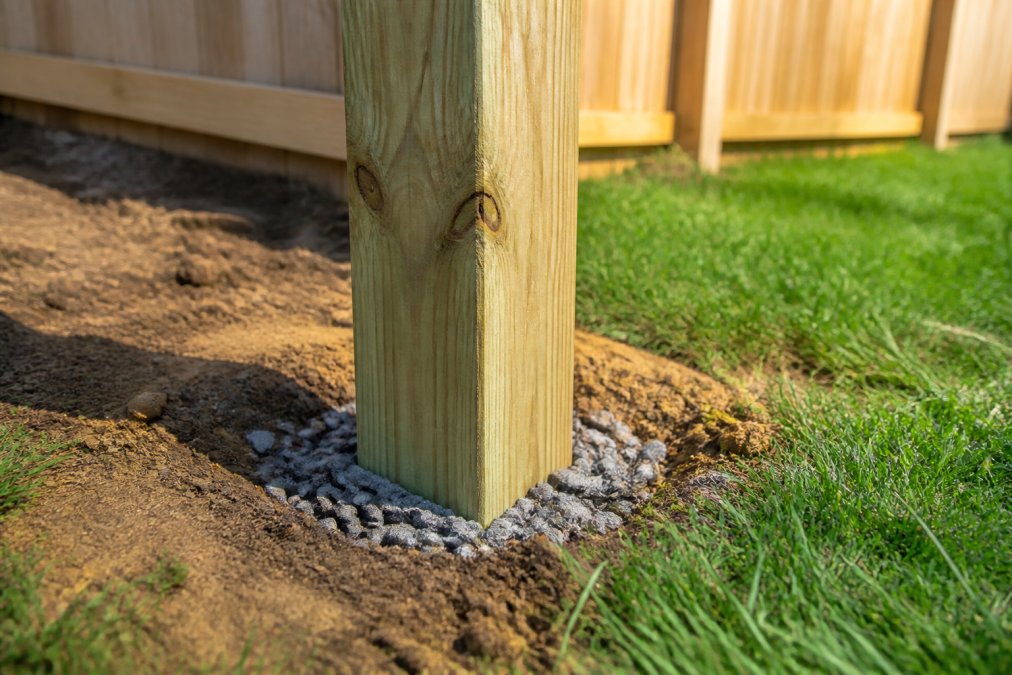
Gravel backfill drains well and allows easy post replacement. It provides less lateral support than concrete and works best for shorter fences (4-5 feet) in stable soil or posts needing replacement within 10-15 years. A gravel base at every hole prevents direct soil contact and improves drainage. Use landscape fabric between gravel and soil to prevent soil migration.
Concrete Footing for Maximum Strength
Concrete footings deliver the strongest hold for gate posts, corner posts, and high-wind exposure. Dry-set concrete is faster but requires adequate soil moisture; it works poorly in arid climates. Pour concrete sloped away from the post and keep it 1-2 inches below grade to prevent water pooling and rot. Concrete reaches 80 percent strength in 7 days and full strength in 28 days. Its main drawback is permanence: removing a concrete-set post requires a jackhammer or extensive digging.
Expanding Foam and Modern Alternatives
Expanding polyurethane foam combines benefits of gravel and concrete. It provides lateral support comparable to concrete, drains better, and is easier to remove. Advantages: fast installation (30 minutes), good drainage, easier removal, works in wet soil. Disadvantages: costs 2-3 times more than concrete or gravel, degrades under UV exposure, less proven long-term data (15 years vs. 50+ for concrete). Foam is most cost-effective for gate posts, corner posts, or when future replaceability matters.
Hybrid Approach: Gravel Base Plus Concrete or Foam
A hybrid method combines benefits: place 6 inches of gravel at the hole bottom for drainage, then backfill with concrete or foam above. This prevents standing water while providing lateral support.
Choosing the Right Method by Scenario
Use gravel for short fences (under 5 feet) in stable loamy soil with good drainage if you may replace posts within 10 years. Use concrete for tall fences (6+ feet), poor drainage (clay), high wind, or 20+ year lifespan. Use foam for fast installation, wet soil, future replaceability, and higher budget. Use hybrid for maximum drainage plus lateral support.
Step-by-Step Installation Process
Before You Dig: Call 811 and Check for Utility Lines
Call 811 at least two full business days before digging. This free service dispatches utility companies to mark underground lines with color-coded paint and flags. Red marks electrical lines, yellow marks gas, orange marks communications, blue marks water, and green marks sewer.
Digging without a locate can damage infrastructure, cause service outages, or create serious safety hazards. The Call 811 Before You Dig official site explains the process and your responsibilities as a homeowner. Even for shallow post holes, utility lines can sit just inches below the surface.
Digging, Setting, and Tamping
- Mark post locations with stakes and string lines.
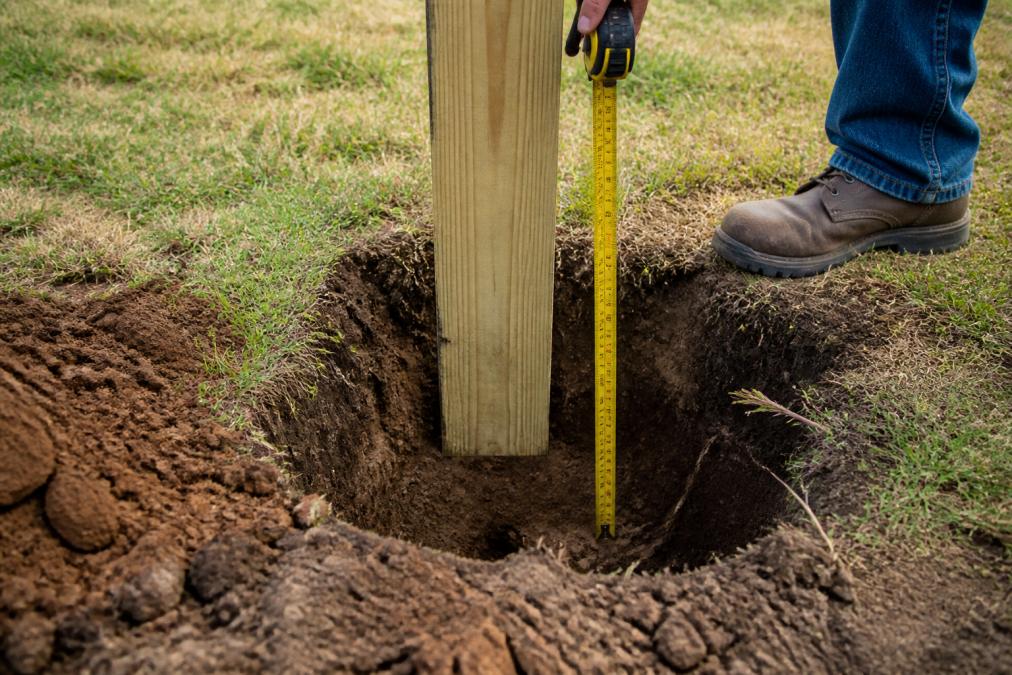
- Dig each hole to calculated depth plus 6 inches for gravel base.
- Add 6 inches of crushed gravel and tamp firmly.
- Place the post and check plumb on two adjacent sides.
- Brace temporarily with stakes and 2x4s.
- Backfill with concrete or gravel in 6-inch layers, tamping between each.
- Slope the top away from the post.
- Allow concrete to cure 24 hours before attaching rails or panels.
Leveling and Vertical Alignment
Plumb posts in both directions before backfilling. A 1-degree lean becomes visibly noticeable over an 8-foot panel run. Check post spacing before concrete sets to ensure standard 6- or 8-foot panels fit without gaps. Corrections while concrete is wet take minutes; after curing, they require breaking out the footing.
Common Mistakes to Avoid
Common errors: burying posts too shallow (buy posts 2 feet longer than finished fence height), skipping the gravel base (direct soil contact causes rot), failing to check plumb during backfill (recheck after each layer), and rushing concrete cure (wait full cure time before attaching panels).
Getting the depth right protects your investment for decades. A fence that leans within its first year reflects poor installation, not poor materials. The Fence Company Lincoln team brings over 30 years of experience to every project, managing installation from design to completion with fully licensed, insured, and bonded crews. We handle wood, vinyl, chain link, and iron fencing. Get started with Fence Company Lincoln and secure a fence that stands straight for years to come.
Frequently Asked Questions
How deep should an 8 ft fence post be buried?
An 8-foot fence post should be buried 2 to 3 feet deep, following the 1/3 rule where approximately one-third of the total post length goes below grade. For an 8-foot post, this means 2.5 feet is typical, but depth also depends on your frost line, soil type, and whether you're using gravel or concrete backfill. Frost line depth in your region may require deeper burial for structural integrity and to prevent heaving during freeze-thaw cycles.
Does the frost line affect how deep I should dig my fence posts?
Yes, frost line depth is critical. Posts must extend below the frost line to prevent heaving, where ground freezes and expands, pushing posts upward. Frost line depth varies by region, deeper in northern areas, shallower in southern areas. In colder climates, you may need to bury posts 3 to 4 feet deep or more. Check your local frost line requirements before digging; burying below this depth ensures your fence maintains vertical alignment through winter months.
What's the difference between setting fence posts in gravel versus concrete?
Gravel backfill allows drainage and is faster to install but offers less lateral pressure resistance and may settle over time. Concrete footing provides superior structural support, prevents lateral movement, and lasts longer, making it ideal for high-wind areas or load-bearing applications. Concrete costs more and takes longer to cure but delivers better long-term stability. For residential fences, concrete is recommended where wind load is a concern; gravel works for lighter-duty applications with good drainage.
What tools do I need to dig fence post holes?
Essential tools include a post hole digger (manual or powered auger), a shovel, a level for vertical alignment, a tape measure, and a tamping tool for compaction. For larger projects, a powered auger saves time and effort. You'll also need a wheelbarrow for soil removal and a bucket for water if tamping. Before starting, call 811 to mark utility lines, this prevents costly damage and ensures safe digging.