 ultimate-guide
Commercial Fence Zoning Regulations Explained for Owners
Table of Contents
- Why Commercial Fence Zoning Regulations Matter for Property Owners
- Maximum Fence Height for Commercial Property: What Most Zoning Codes Allow
- Commercial Fence Permit Requirements: What You Need Before You Build
- Setbacks, Easements, and Right-of-Way: Where Your Fence Can Legally Stand
- How to Apply for a Fence Variance When Your Plan Does Not Fit the Code
- Materials, Design Standards, and Security Fencing Rules
- Temporary Fencing, Maintenance Rules, and Liability Risks of Non-Compliant Fences
- Frequently Asked Questions
Last Updated: September 23, 2026
Why Commercial Fence Zoning Regulations Matter for Property Owners
Commercial fence zoning regulations govern how tall, where, and with what materials a business property can install fencing, and violating them can force removal at your own expense.
Maximum Fence Height for Commercial Property: What Most Zoning Codes Allow
The maximum fence height for commercial property is typically 6 feet in most commercial and industrial districts, though many codes allow up to 8 feet in industrial zones. Height is measured from finished grade, not from a retaining wall or berm.
Height Limits by Zoning District
Height allowances shift by zoning classification:
| Zoning District | Typical Max Height | Common Restriction |
|---|---|---|
| Residential-adjacent commercial | 4-6 ft | Solid fence facing homes |
| General commercial | 6 ft | Front yard limited to 3-4 ft |
| Industrial zone | 8 ft | Barbed wire allowed with permit |
| Highway/commercial corridor | 6-8 ft | Landscaping buffer required |
Check your municipal code directly; a zoning administrator can confirm your district's limit in one phone call.
Corner Lot and Intersection Visibility Rules
Corner lots carry extra restrictions because of sight triangles. Most codes prohibit fences taller than 3 to 4 feet within a specified distance of the intersection, and the same applies near driveways and alleys.
Commercial Fence Permit Requirements: What You Need Before You Build
A commercial fence permit is usually required for any new fence or replacement over a set height, and the application runs through your city's land development division or building department.
The Four Permit Pathways You Will Actually Encounter
Most municipalities route commercial fence permits through one of four tracks:
| Permit Pathway | Typical Trigger | Review Time | Who Signs Off |
|---|---|---|---|
| Over-the-counter (staff-level) | Rear or side fence, under height cap, no easement | Same day to 3 business days | Permit clerk or plans examiner |
| Administrative review | Front yard fence, or fence over the base height cap | 1-3 weeks | Zoning administrator |
| Design review | Fence in a historic district, overlay zone, or corridor with design standards | 3-8 weeks | Design review board or commission |
| Conditional use or special permit | High-security fencing, fences over 8 feet, or fences in a residential-adjacent commercial zone | 4-12 weeks | Planning commission or board of adjustment |
Documents and Site Plans Usually Required
Most permit applications ask for the same core package:
- A current property survey showing the property line and any easements
- A site plan marking the proposed fence line and setback distances
- Fence specifications: height, material, and post spacing
- Contractor licensing and insurance documentation
- A completed permit application with the property owner's signature
Two items cause most delays. A survey older than a few years may be rejected if the jurisdiction requires a current boundary survey, adding one to three weeks before you file. And if the fence touches a right-of-way, the application often needs a separate encroachment permit from public works or transportation, which runs on its own timeline.
What Triggers a Denial or a Stop-Work Order
Permit denials cluster around a handful of recurring issues:
- Fence line crosses an easement or right-of-way. The zoning reviewer will not approve a fence inside a utility easement or public right-of-way, even if the fence is otherwise compliant.
- Height measured from the wrong datum. If your site plan shows height measured from a retaining wall, berm, or finished pad instead of finished grade at the fence line, the reviewer will reject the calculation.
- Missing sight triangle at a corner or driveway. Fences near intersections, alleys, and drive aprons must respect the sight triangle, and a plan that ignores it will be flagged.
- Incomplete contractor documentation. An unlicensed or uninsured contractor on the application is an automatic hold in most jurisdictions.
A stop-work order is the more expensive outcome. Once issued, the project is frozen until the fence is permitted retroactively or removed, and many jurisdictions assess a penalty multiplier on the permit fee. Retroactive permits are discretionary in some cities, meaning the reviewer can refuse to legalize a fence that would not have been approved in the first place.
How to Shorten the Timeline
Approval timelines range from a few days for a simple chain link run to several weeks if the fence touches a right-of-way or requires design review.
Setbacks, Easements, and Right-of-Way: Where Your Fence Can Legally Stand
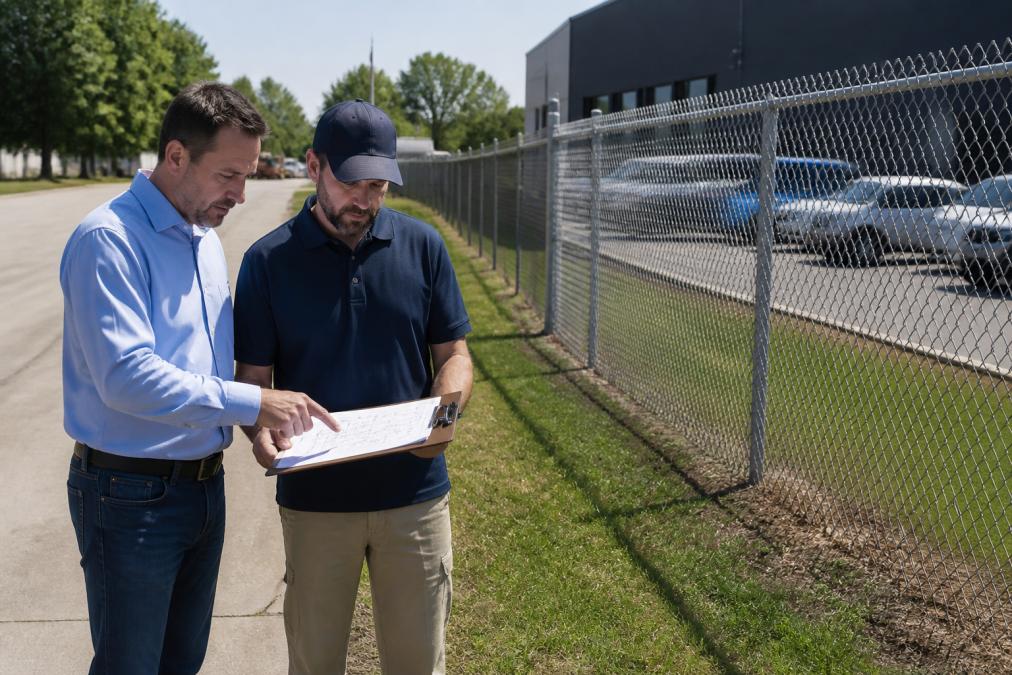
Setback requirements determine how far a fence must sit from the property line, and they are not uniform around a parcel. Front setbacks are usually strictest, side and rear more forgiving, and any easement or right-of-way strips away your right to build there entirely.
How to Apply for a Fence Variance When Your Plan Does Not Fit the Code
A fence variance is a formal request to the zoning board to allow a deviation from the code when strict compliance creates a hardship. It is not a loophole and not guaranteed, but it is the correct path when your property genuinely cannot meet the standard.
What to Include in a Variance Request
A strong variance package does most of the persuading before you speak. Include:
- A clear statement of the specific code section you need relief from
- Evidence of hardship unique to your parcel, not shared by the whole district
- A site plan showing the proposed fence and why alternatives fail
- Letters from adjacent property owners if they support the request
- Photos documenting the site conditions driving the request
Materials, Design Standards, and Security Fencing Rules
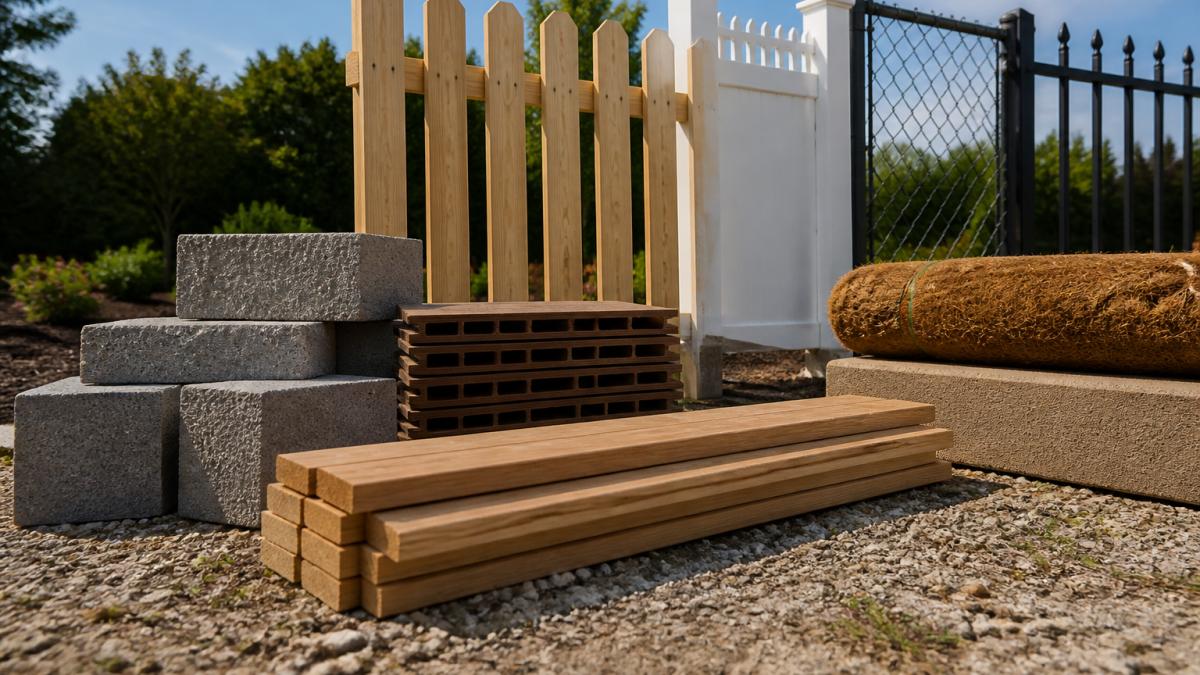
Materials and design standards control what your fence is made of, not just how tall it stands. Many commercial districts restrict chain link in front yards, require vinyl or iron in visible areas, and mandate landscaping buffers along certain frontages.
Standard Materials and Where They Are Restricted
Most commercial codes treat fence materials on a sliding scale from most permissive to most restricted:
| Material | Typically Allowed | Typically Restricted |
|---|---|---|
| Chain link (galvanized) | Industrial, rear and side yards | Front yards in commercial corridors, historic districts |
| Chain link (vinyl-coated) | Most commercial districts | Historic districts, some design overlays |
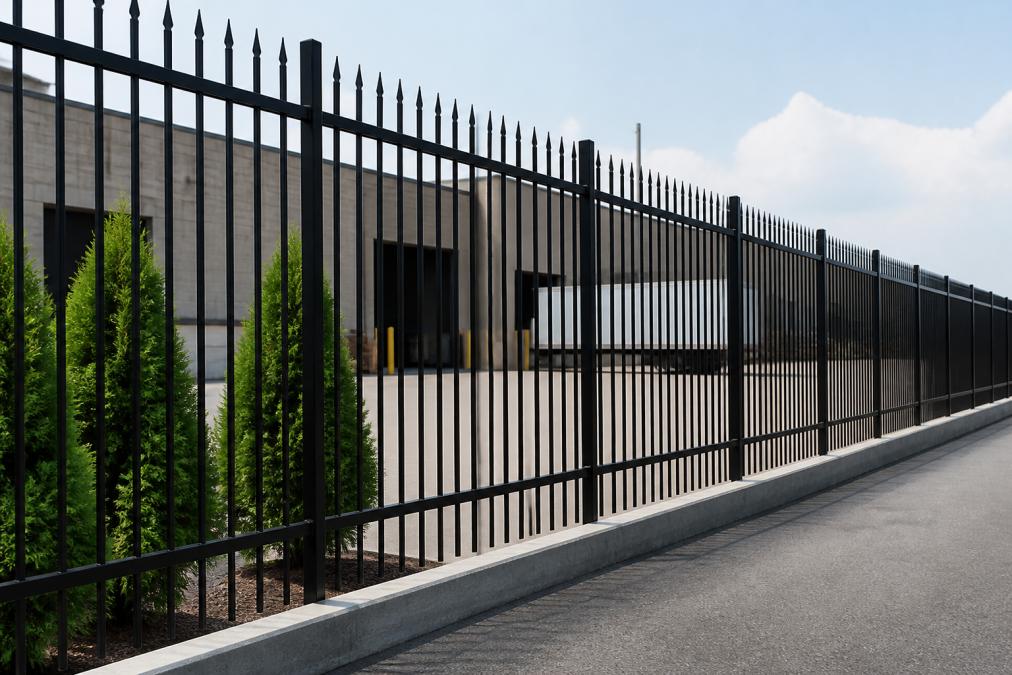
| Ornamental iron or aluminum | Most districts, including front yards | Rarely restricted |
| Vinyl or composite privacy | Rear and side yards, screening applications | Front yards in some corridors |
| Wood | Rear and side yards | Front yards, commercial corridors, fire-prone zones |
| Masonry or block | Most districts with height limits | Height caps often lower than for open fencing |
Barbed Wire, Razor Wire, and Electrified Fencing
High-security fencing is regulated separately from standard perimeter fencing:
- Barbed wire is prohibited in residential and most general commercial districts, and allowed in industrial districts only with a permit. Even where permitted, it usually cannot face a public street or adjacent residential property, and it must be mounted at a minimum height above grade, commonly 6 feet, so it is out of reach from the ground.
- Razor wire and concertina wire face stricter limits than barbed wire. Many jurisdictions prohibit it outright in commercial districts and allow it only in heavy industrial zones, often with a conditional use permit and a requirement that it not be visible from a public right-of-way.
- Electrified fencing is the most heavily regulated. Most commercial codes prohibit it entirely, and where it is allowed it typically requires a permit, a posted warning sign at intervals along the fence line, a UL-listed energizer, and compliance with the International Electrotechnical Commission's standards for electric fence controllers. Some jurisdictions also require a manual disconnect accessible to emergency responders.
The same security fence can be legal on one side of a zoning boundary and prohibited on the other. An industrial parcel abutting a commercial or residential zone often has a condition requiring the security fence to be set back from the shared property line and screened from the neighboring use.
Screening and Landscaping Buffers
Where security fencing is permitted, it is frequently conditioned on screening:
- A landscaped buffer strip of a specified width between the fence and the property line or right-of-way
- Evergreen plantings at a minimum height and spacing, often with an irrigation requirement
- Opaque screening, masonry wall, slats, or fabric, to block the view of the security fence from public areas
- Maintenance obligations that run with the property, meaning a future owner inherits the landscaping requirement
Design Review in Overlay and Historic Districts
If your property sits in a design overlay, historic district, or corridor with adopted design standards, the fence material and appearance are reviewed by a design review body, not just a zoning administrator. Common standards require:
- A specific color palette for painted or powder-coated fencing
- A maximum percentage of opacity for front-yard fencing
- Consistent fence style along a corridor, sometimes matching adjacent parcels
- Prohibition of exposed fasteners, raw galvanized finishes, or temporary-looking materials
Temporary Fencing, Maintenance Rules, and Liability Risks of Non-Compliant Fences
Temporary fencing follows different rules than permanent fencing, but the exemption is narrower than most owners assume. Construction fencing is usually permitted for a defined project window and still must meet height and setback limits.
Frequently Asked Questions
Do I need a building permit to install a commercial fence?
Most municipalities require a building permit for commercial fence installation, though rules vary by jurisdiction. You will typically need to submit a permit application, a site plan showing the proposed fence location, and sometimes a property survey. Some areas allow fences under a certain height without a permit, but commercial districts usually have stricter requirements than residential zones. Always check with your local zoning administrator or land development division before ordering materials or scheduling installation.
What are the standard height restrictions for commercial fences?
Maximum fence height for commercial property commonly ranges from 6 to 8 feet in most zoning codes, but industrial zones sometimes allow taller fences for security screening. Height limits are measured from the finished grade, not from the base of the posts. Front yard fences in commercial districts are often capped lower than side and rear fences. Corner lots may have additional restrictions near intersections to preserve sight lines for drivers. Your local zoning ordinance is the final authority.
What happens if my fence does not comply with local zoning codes?
A non-compliant fence can trigger fines, forced removal at your expense, and liability issues if someone is injured because of the violation. Your property insurance may also deny claims related to a fence that was built without proper permits or that violates setback or height rules. If you receive a notice of violation, you can either bring the fence into compliance, apply for a variance, or appeal the decision. Acting quickly usually reduces the cost and hassle.
What steps should I take if my fence plan violates local zoning codes?
Start by reviewing the specific code section you are violating, then decide whether you can adjust the design to comply. If a smaller or differently placed fence will not meet your needs, file a variance request with your zoning board. Include a site plan, photos, and a written explanation of why the variance is justified. Hiring a licensed fence contractor familiar with local codes can help you prepare a stronger application and avoid repeated delays.