 ultimate-guide
Commercial Fence Repair for Property Managers: 2026 Guide
Table of Contents
- Why Commercial Fence Repair Is a Property Manager Issue
- Commercial Fence Repair: 5 Common Problems and Fixes
- Does Homeowners Insurance Cover Fence Repair?
- Emergency Fence Repair for Property Managers
- A Commercial Fence Maintenance Checklist
- Budgeting for Fence Repair and Replacement
- Vendor Vetting Checklist for Property Managers
- Conclusion: Protect Your Perimeter and Your Liability
- Frequently Asked Questions
Last Updated: September 5, 2026
Why Commercial Fence Repair Is a Property Manager Issue
A sagging gate or leaning chain link is more than an eyesore; for a property manager, commercial fence repair is a direct liability and tenant-safety concern. Every day a damaged perimeter stays unrepaired, you carry the risk of unauthorized access, theft claims, or injury.
Most guides treat fence repair as a simple vendor call. In practice, it is a capital expense intersecting with insurance, safety standards, and tenant retention.
Commercial Fence Repair: 5 Common Problems and Fixes
Commercial fencing fails in predictable ways. Recognizing the material and failure mode tells you whether you need a quick fix, section replacement, or full restoration.
Chain Link Repair: Rust, Tears, and Leaning Posts
Chain link suffers from three distinct issues. Surface rust compromises wire integrity over time, tears from vehicle impact or vandalism create security gaps, and leaning posts signal inadequate concrete footings or soil erosion.
A leaning post cannot be straightened and forgotten; it must be reset with proper concrete depth, typically below the frost line (cement.org). Torn fabric can often be re-stretched and tied, but heavily rusted sections are better replaced than patched.
Wrought Iron and Steel: Structural Integrity Issues
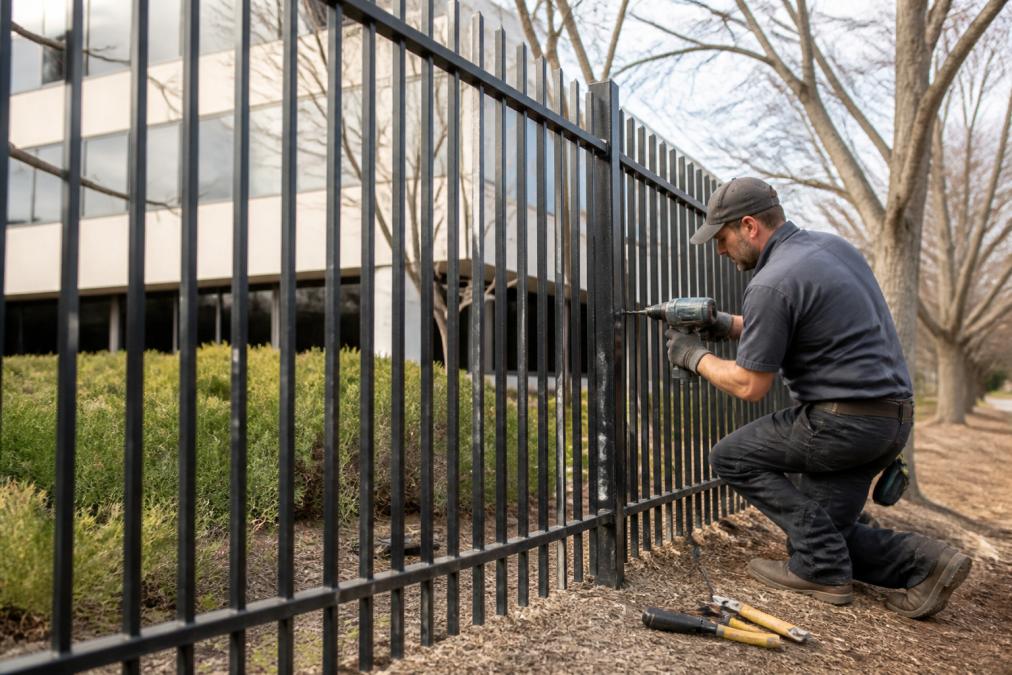
Wrought iron fencing fails at the welds and the base. Look for cracked joints where pickets meet rails, and inspect the base of each post for rust that has eaten through the metal. These issues compromise the structural integrity of the entire run.
Surface rust can be ground down and refinished, but deep pitting that weakens the metal calls for section replacement. A common mistake is painting over active rust, which traps moisture and accelerates the deterioration underneath.
Vinyl Fence Maintenance: Cracks and Impact Damage
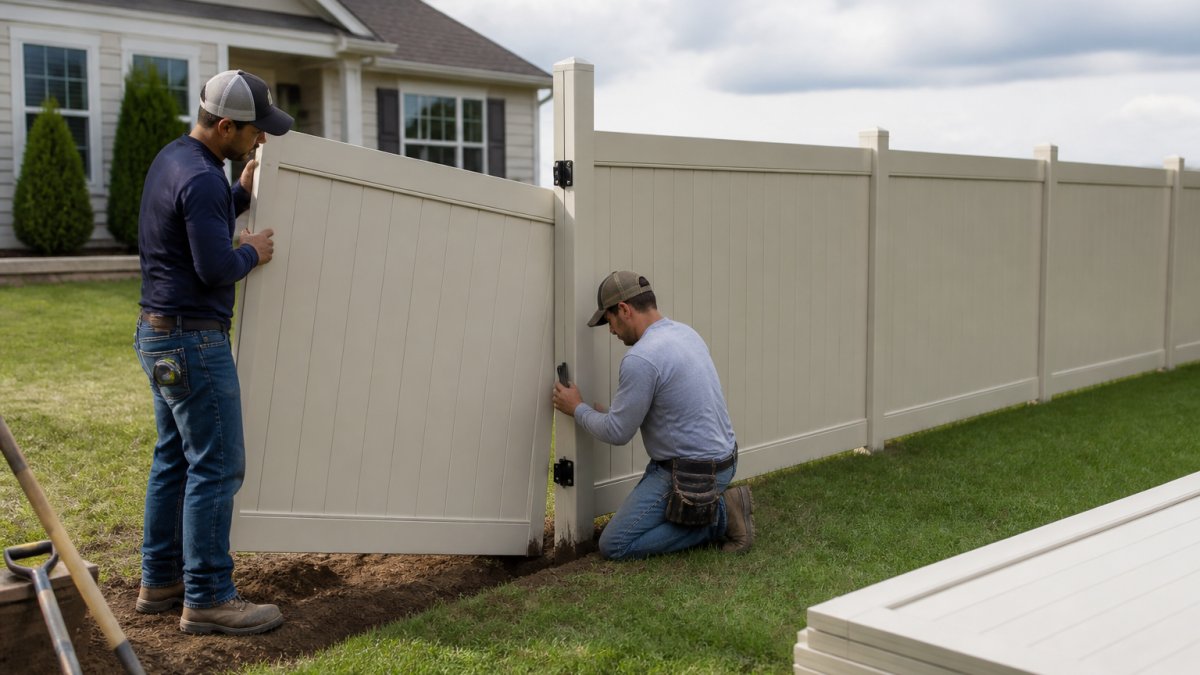
Vinyl offers low upkeep, but it is not indestructible. Impact from mowers or vehicles causes cracks and splits, and extreme temperature swings can make the material brittle. Unlike wood, cracked vinyl cannot be effectively patched; the damaged panel or rail must be removed and replaced.
Vinyl fence maintenance also means checking that the internal aluminum or steel reinforcement hasn't shifted. A panel that looks fine from the street can be loose at the base, creating a hazard in high winds.
Does Homeowners Insurance Cover Fence Repair?
Fence damage is not automatically covered, and rules differ sharply between homeowners and commercial property policies.
Why Homeowners Coverage Is the Wrong Frame of Reference
A standard homeowners policy covers fence repair if damage results from a named peril like storm, fire, or vehicle impact; gradual deterioration, rust, and normal wear are excluded (iii.org). Commercial policies often treat perimeter fencing as a building structure, but coverage still depends on the cause of loss.
The Liability Angle: When a Fence Failure Becomes Your Problem
A fence falling on a pedestrian, a gate swinging into a car, or a breach leading to theft can create liability claims exceeding repair costs by an order of magnitude. Most commercial general liability policies will defend you, but a preventable failure, one you knew about from a prior inspection but deferred, can be treated as negligence.
Documenting Damage for Insurance and Liability Claims
Before you call a contractor, document everything. Take dated photos of the damage from multiple angles, note the suspected cause and date of the incident, and get a written estimate from a licensed contractor. According to guidance on property insurance claim documentation best practices, thorough photo evidence and a detailed repair estimate are the foundation of a successful claim. Do not begin permanent repairs before the adjuster has inspected the site, as this can void your claim.
For liability defense, keep a log of every quarterly inspection, including photos of areas that look sound. If a claim arises six months after a repair, that log is your evidence that the failure was sudden and not a known, ignored hazard.
The Certificate of Insurance (COI) Requirement
Before any contractor sets foot on site, require a Certificate of Insurance naming the property owner and your management company as additional insureds. This is not a formality. If a subcontractor's employee is injured while repairing a fence on your property, the COI determines whether the claim lands on the contractor's policy or on yours. A vendor who cannot produce a COI within 48 hours is a liability risk regardless of how competitive their bid is.
What to Do When the Claim Is Denied
Insurers often deny fence claims on grounds of "wear and tear" or "pre-existing condition." If that happens, your inspection log is your best appeal tool. If your quarterly inspection from three months prior shows the fence was sound, you have evidence the storm or impact was the proximate cause. Without that log, the insurer's default assumption of deterioration will stand. The preventative maintenance schedule below is not just a budget tool; it is an insurance policy in itself.
Emergency Fence Repair for Property Managers
When a storm topples a section of your perimeter or vandals cut through chain link, you need a response plan prioritizing security and safety. Emergency fence repair is about restoring the barrier quickly, not fixing aesthetics.
Triage: Assess, Secure, Document, Repair
Your first move is a site assessment to identify the breach and hazards like exposed nails or sharp metal. Secure the area, photograph the damage for your insurance claim, and contact a repair service offering emergency response.
A structured triage protocol helps you avoid the two most common mistakes: over-securing a minor breach (wasting budget) and under-securing a major one (accepting liability). Use this sequence:
- Assess the breach size and access risk. A 4-foot gap in a rear alley fence behind a retail strip is a different risk profile than a 4-foot gap on a school playground or a data center loading dock. Classify the breach as low, medium, or high risk based on what is behind the fence and how easily the gap is reached from the public right-of-way.
- Secure to the level of the risk, not the size of the hole. For high-risk breaches, a temporary chain link panel with driven posts can be installed in under an hour. For low-risk breaches, a locked gate or even a secured plywood barrier may be acceptable overnight. The goal is to restore the barrier's function, denying unauthorized access, not its appearance.
- Document before you touch anything. Photograph the breach from both sides, capture the surrounding ground condition (erosion, standing water, tire tracks), and note the time you discovered it. This documentation is your evidence for both the insurance claim and any tenant or neighboring property dispute about who is responsible.
- Call for emergency service with a clear scope. Tell the contractor the breach size, the material, and your risk classification. Ask specifically: "Can you restore the barrier today, or will this be a temporary secure followed by a scheduled repair?" A reputable contractor will be clear about which service you are receiving and the timeline for the permanent repair.
Temporary Securing vs. Full Restoration: The Cost Trade-Off
Temporary securing, such as a temporary gate or panel, restores the barrier for security compliance but is not a permanent fix. Full restoration addresses underlying damage, including resetting posts and replacing fabric.
A temporary panel installation typically runs a fraction of a full section replacement, but it does not address the root cause, a leaning post, eroded footing, or impact-damaged rail. Deferring full restoration means paying for the temporary secure again when the next storm hits the same weak point. Temporary securing is only cost-effective when permanent repair cannot be scheduled within 72 hours, or when damage is so extensive that a full engineering assessment is needed before rebuilding.
After-Hours Response: What to Demand From Your Vendor
Emergency repair is not a 9-to-5 service. Before you need it, confirm your contractor offers a true 24/7 response line, not just voicemail checked the next morning. Ask about average response time for a high-risk breach and whether they carry temporary panel stock on their trucks.
The Security Compliance Angle
For properties with security compliance obligations, controlled access, equipment storage, or tenant safety requirements, a breached fence may trigger a reporting obligation to the property owner, security vendor, or insurer. Check your security plan for notification windows.
A Commercial Fence Maintenance Checklist
Preventative maintenance is cheaper than emergency repair. A structured inspection routine catches small issues before they become security breaches or liability claims.
Quarterly Inspection Points
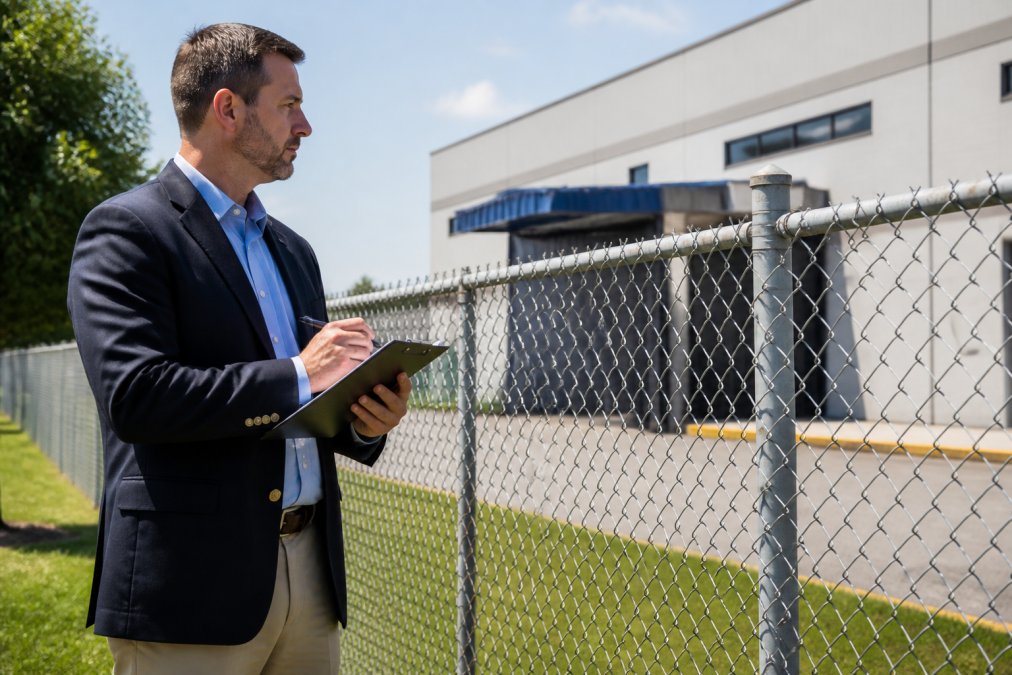
Every quarter, walk the full perimeter. Check gates for sagging and proper latching, inspect posts for leaning or movement, and look for rust, tears, or impact damage. Verify that access control hardware, such as keypads or card readers, is functioning and that no vegetation is pushing against the fence line.
Annual Professional Site Assessment
Once a year, bring in a professional for a detailed site assessment. A trained eye will spot hairline cracks in welds, subtle post shift, and corrosion that a property manager might miss.
Budgeting for Fence Repair and Replacement
Fence repair is a recurring line item, not a one-time expense. Property managers who treat fencing as a reactive cost pay emergency rates and deal with tenant complaints.
Preventative Maintenance Schedules and CapEx Planning
Build a preventative maintenance schedule aligned with quarterly inspections. Budget for minor repairs annually and plan for section replacement over a longer cycle based on the material's expected lifespan.
Vendor Vetting Checklist for Property Managers
Choosing the wrong contractor leads to shoddy work, callbacks, and liability exposure. Use this checklist to vet any fence repair vendor before you sign a contract.
- Verify the contractor is fully licensed, insured, and bonded for commercial work
- Confirm they handle the project with their own crews and do not subcontract the labor
- Ask for references from other property managers or commercial sites
- Request a written, itemized estimate that separates materials, labor, and disposal
- Confirm they offer a maintenance contract or warranty on the installation
- Check that they can handle multiple job sites if you manage a portfolio
A contractor who checks every box reduces your risk and extends the longevity of your investment. Fence Company Lincoln provides this level of service, managing projects from design to completion with a price matching policy.
Conclusion: Protect Your Perimeter and Your Liability
Managing commercial fencing balances security, safety, and budget. Successful property managers treat fence repair as planned maintenance, not a reactive scramble.
A reliable partner makes this easier. Fence Company Lincoln brings over 30 years of experience to commercial fence repair, handling vinyl, wood, chain link, and iron without subcontractors. Their fully licensed, insured, and bonded team delivers secure job sites and durable results, backed by a price matching policy. Get started with Fence Company Lincoln and protect your perimeter with confidence.
Frequently Asked Questions
What are the common signs that a commercial fence needs professional repair?
Look for leaning or loose posts, rusted or broken chain link, sagging gates, cracked vinyl panels, and corroded welds on iron fencing. Walk the full perimeter quarterly and check for gaps at the base that could allow unauthorized access. If a gate fails to latch or a section shifts when pushed, schedule a professional repair before the damage spreads or creates a safety hazard.
Does homeowners insurance cover fence repair for commercial properties?
No. A standard homeowners insurance policy does not apply to commercial property. If you manage a commercial site, you need a commercial property policy, which typically covers fence damage from sudden events like fire, vehicle impact, or severe storms. Gradual wear, rust, and lack of maintenance are excluded. Check your policy limits and deductibles, and document damage with photos before starting any repair work.
How do you budget for ongoing commercial fence maintenance?
Set aside a percentage of your property's operating budget for fence upkeep. A practical approach is to create a Capital Expenditure (CapEx) plan that tracks the age and condition of each fence section. Expect to pay more for repairs on older materials like wrought iron versus chain link. Request a repair estimate from your vendor annually to forecast costs and avoid surprise expenses from emergency failures.
Who is responsible to repair a fence on a commercial property?
The property owner is responsible for maintaining the fence and ensuring it meets safety standards. As a property manager, you act on the owner's behalf: you schedule inspections, approve repair estimates, and coordinate vendors. If a fence defect causes an injury, liability typically falls on the property owner, which makes timely repairs and documented maintenance critical for risk mitigation.
What is the typical turnaround time for commercial gate and fence repairs?
Turnaround time depends on the scope of work and material availability. Emergency repairs to secure a breach often happen within 24 to 48 hours. Non-urgent repairs, such as replacing a section of chain link or fixing a gate operator, are usually scheduled within one to two weeks. Get a written timeline from your vendor before work begins, especially for gate automation issues that affect access control.
What are the OSHA requirements for commercial perimeter fencing?
OSHA does not mandate perimeter fencing for every commercial site, but it requires employers to keep premises free of recognized hazards. Fencing must be sound to protect workers and the public from hazards like open pits, electrical equipment, or construction zones. If your fence secures a hazardous area, it must meet specific strength and height standards. Consult a licensed contractor familiar with local building codes for compliance.